

Uncategorized
How to Choose the Right Wheelchair for Elderly & Patients

How to Choose the Right Wheelchair for Elderly & Patients
Choosing the right wheelchair is about more than price. Comfort, safety, mobility, body size, portability and everyday usage all play an important role in finding the right mobility solution.
Choosing the Right Wheelchair Can Make Everyday Mobility Easier
A wheelchair is not simply a mobility product. For elderly people and patients with limited mobility, it can directly influence comfort, safety, independence and daily convenience.
The right wheelchair depends on several factors including the user’s mobility level, body size, physical condition, intended usage, home environment and caregiver support.
Understanding these factors before buying can help families and caregivers make a more informed decision.
Explore Mobility Aids →
What Should You Check Before Buying?
A wheelchair should match the user’s physical requirements as well as the environment where it will be used.
Mobility Level
Check whether the user can walk, self-propel or requires caregiver assistance.
Correct Size
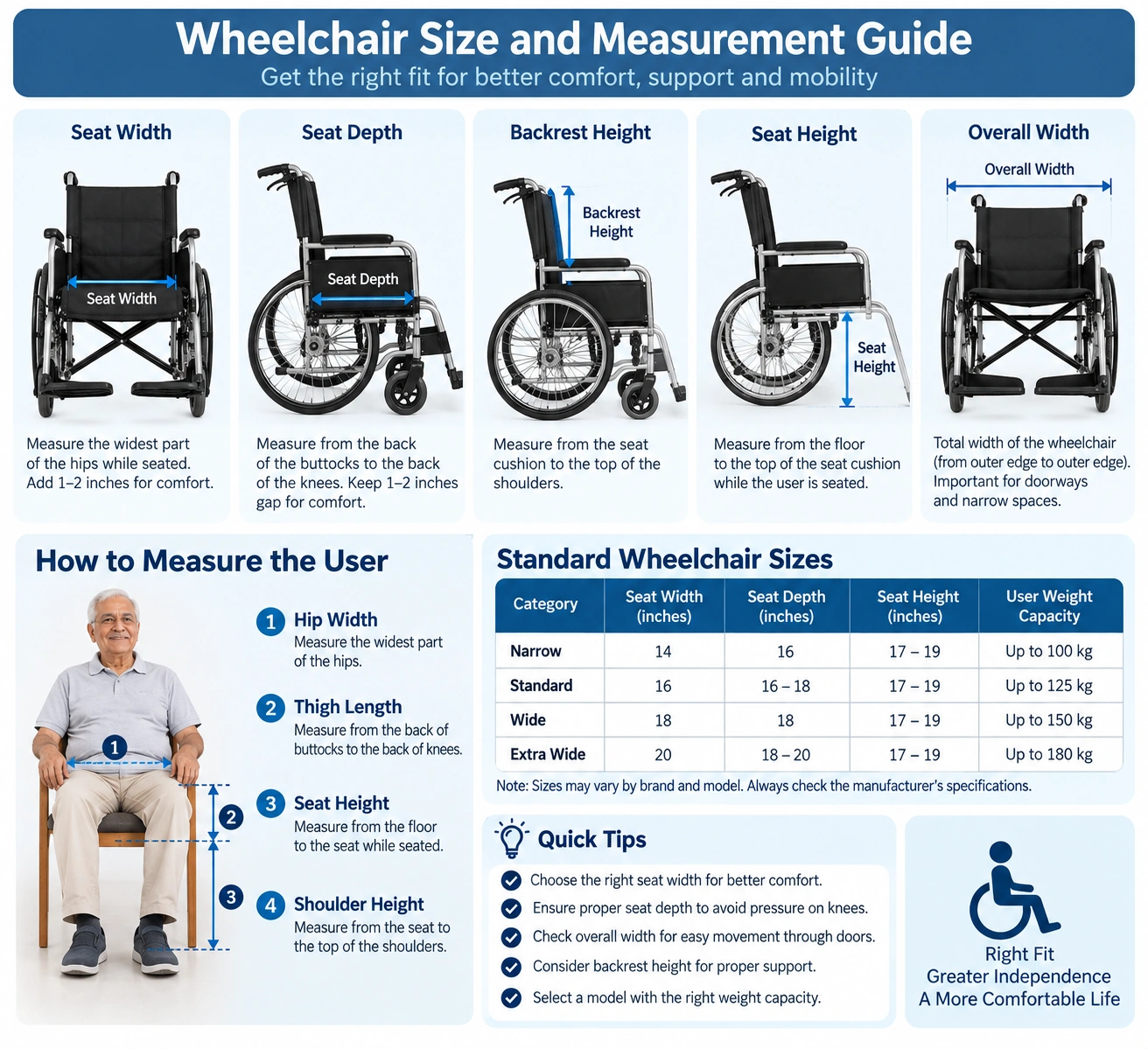
Consider seat width, seat depth, seat height and overall wheelchair dimensions.
Weight Capacity
Always verify the manufacturer’s recommended maximum user weight.
Usage Environment
Consider whether the wheelchair will mainly be used indoors, outdoors or both.
Different Types of Wheelchairs
Different wheelchair designs are intended for different mobility requirements. Understanding these differences can make the selection process easier.

Manual Wheelchair
Manual wheelchairs are commonly used by elderly people and patients who require assistance with mobility. Depending on the design, the user may self-propel or a caregiver may push the chair.
- Home use
- Hospital visits
- Short-distance mobility
- Self-propelled or caregiver-assisted use
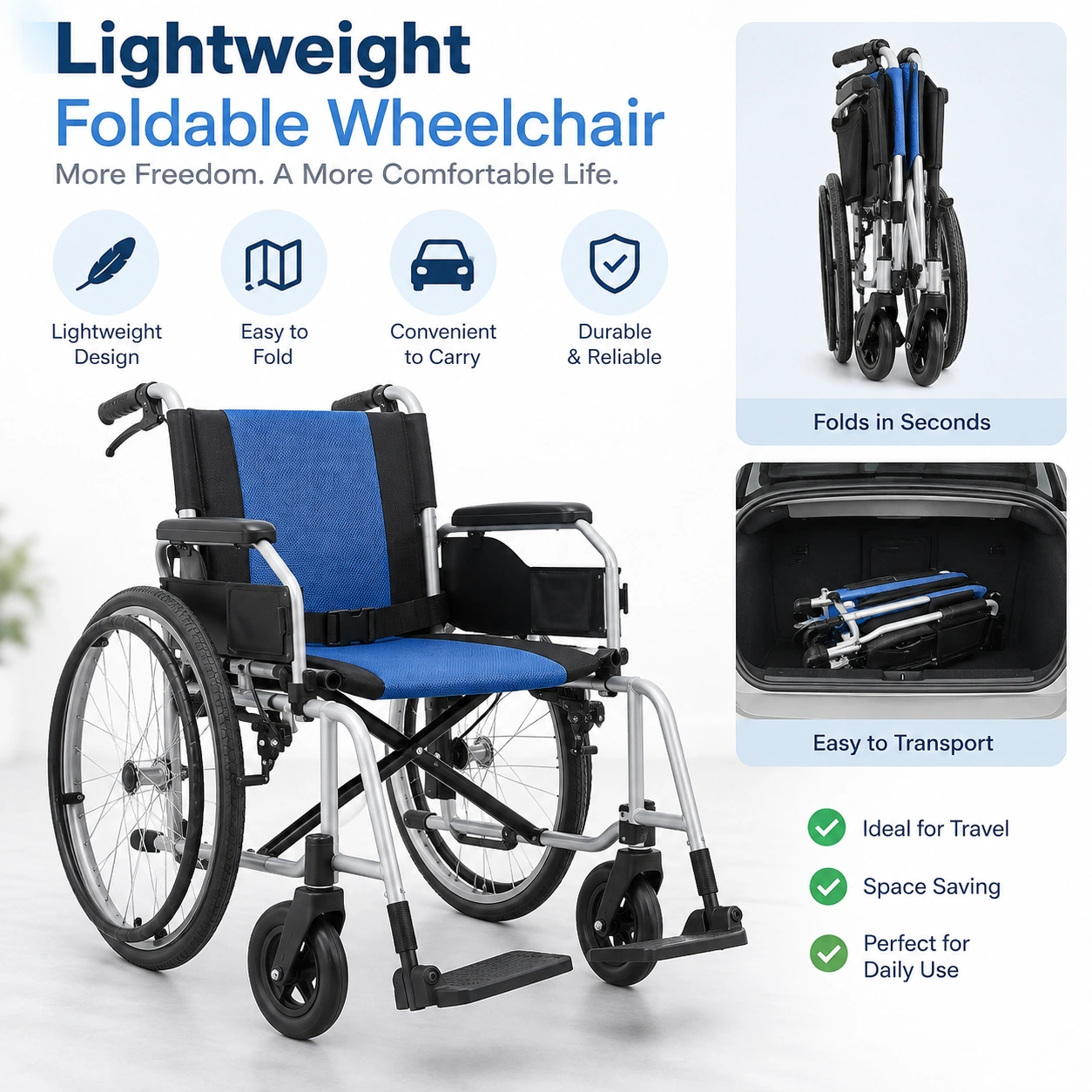
Lightweight Wheelchair
Lightweight wheelchairs can be easier to lift, carry, fold and transport, making them useful for families who frequently travel or visit hospitals.
- Easy transportation
- Car-friendly design
- Convenient storage
- Caregiver-friendly handling

Transport Wheelchair
Transport wheelchairs are generally designed to be pushed by another person and can be useful when the patient cannot independently propel a wheelchair.
- Caregiver-assisted mobility
- Hospital visits
- Short-distance transportation
- Easy handling

Reclining Wheelchair
Reclining wheelchairs allow the backrest to move backward and can provide additional positioning options for certain users who spend extended periods in the chair.
- Additional positioning
- Extended sitting
- Backrest adjustment
- Caregiver support
10 Important Factors to Consider
Before buying a wheelchair, consider the user’s physical requirements, comfort, safety and the environment where the wheelchair will be used.
User’s Mobility Level
Determine whether the user can walk, self-propel the wheelchair or requires caregiver assistance.
User’s Body Weight
Always check the wheelchair’s maximum recommended weight capacity.
Seat Width
Measure the user’s hip width and compare it with the manufacturer’s seat specifications.
Seat Depth
Correct seat depth can affect comfort, leg positioning, posture and pressure distribution.
Seat Height
Consider how easily the user can sit, stand and transfer from a bed or chair.
Backrest Support
Consider backrest height, support, reclining capability and trunk control.
Footrests & Leg Rests
Look for adjustable, removable or swing-away footrests where appropriate.
Armrests
Choose an armrest design that supports comfort and transfers according to the user’s needs.
Wheel & Tyre Design
Consider the surfaces and environments where the wheelchair will be used.
Braking System
Check that the brakes are accessible, easy to operate and keep the wheelchair stationary when required.
What Wheelchair Measurements Should You Check?
A wheelchair may be comfortable for the user but still be unsuitable for the home if it cannot pass through doors or hallways.
Indoor vs Outdoor Wheelchair Requirements
The environment where the wheelchair will be used can significantly influence which features you should prioritize.
| Feature | Primarily Indoor | Indoor + Outdoor |
|---|---|---|
| Compact Size | Very Important | Important |
| Maneuverability | Very Important | Important |
| Portability | Important | Very Important |
| Wheel Design | Smooth Indoor Surfaces | Depends on Terrain |
| Frame Durability | Important | Very Important |
| Folding | Useful | Highly Useful |
How to Choose a Wheelchair for an Elderly Person
Elderly users may have different mobility and strength requirements. Comfort, ease of transfer, maneuverability and caregiver handling should all be considered.
Looking for a Wheelchair for Daily Patient Mobility?
Explore Respikart’s wheelchair collection and compare mobility options based on your requirements.
View WheelchairsCommon Wheelchair Buying Mistakes
Buying Without Measuring
Do not assume one standard wheelchair size will fit every user.
Focusing Only on Price
Comfort, safety, durability and suitability are also important.
Ignoring Home Accessibility
Always check doors, hallways, bathrooms and available turning space.
Choosing the Wrong Type
Manual, transport and reclining wheelchairs serve different needs.
Forgetting Transportation
Check folded size and weight if the wheelchair will travel in a car.
Ignoring Weight Capacity
Always verify the manufacturer’s maximum recommended user weight.
Wheelchairs Available at Respikart
Browse wheelchair options available through Respikart’s Mobility Aids collection and compare products according to your requirements.

Medemove Basic Wheelchair
A practical mobility option for home, hospital and assisted mobility needs.
View Product →
Hero Mediva MHL 1009
A practical wheelchair option designed for everyday mobility support.
View Product →
Hero Mediva MHL 1006-C
A multifunction wheelchair designed for mobility, reclining support and bedside toileting convenience.
View Product →Frequently Asked Questions
Which wheelchair is best for elderly people?
The best wheelchair depends on the person’s mobility, body measurements, strength, comfort requirements and intended use. There is no single wheelchair that is suitable for every elderly person.
Is a lightweight wheelchair better for seniors?
A lightweight wheelchair can be easier to transport and handle, especially for caregivers. However, it should still provide adequate stability, comfort and weight capacity.
What is the difference between a manual wheelchair and a transport wheelchair?
A manual wheelchair may allow the user to propel themselves, while a transport wheelchair is generally designed to be pushed by a caregiver.
What wheelchair is best for home use?
For home use, choose a wheelchair that is appropriately sized for the user and can comfortably pass through the home’s doors, hallways and other frequently used spaces.
How do I know which wheelchair size I need?
Measure the user’s hip width, leg length and other relevant dimensions, then compare them with the manufacturer’s specifications. Also measure doorways and other areas where the wheelchair will be used.
Should I buy a wheelchair online?
Buying online can be convenient, but always check the wheelchair’s dimensions, weight capacity, features, warranty, availability and return policy before purchasing.
Need Help Choosing the Right Wheelchair?
Compare wheelchair options available at Respikart and choose according to the user’s mobility, comfort and daily requirements.
