

Elderly Care, Equipment, Home Healthcare, Mobility Aids, Patient Support, Rehabilitation Equipment
Mobility Aids for Elderly and Patient Care

Mobility Aids for Elderly & Patients
A practical guide to choosing wheelchairs, walkers, walking sticks and commode chairs for safer and more comfortable patient care at home.
For many families, the need for a mobility aid begins with a simple everyday difficulty—an elderly parent holding onto furniture, struggling to stand, avoiding stairs or needing assistance to reach the bathroom.
The right mobility aid can provide additional support while helping a person manage everyday movement with greater confidence and independence.

Understanding the Main Mobility Aids
Mobility equipment is not a one-size-fits-all category. The right choice depends on how much support the person needs, how independently they can move and where the equipment will be used.
Wheelchairs
For users with limited walking ability or longer-distance mobility needs.
Walkers
For users who can walk but need additional stability.
Walking Sticks
For lighter balance and walking support.
Commode Chairs
For patients who need easier bathroom access at home.

Choosing the Right Wheelchair
Wheelchairs are available in different configurations depending on the user’s mobility, caregiver support and transportation requirements.
A manual wheelchair can be suitable when a caregiver is available to assist, while self-propelling models can provide greater independence for users who have sufficient upper-body strength.
Electric wheelchairs are another option for users who require powered movement and cannot comfortably propel a manual chair.
View WheelchairsThe most important question is not “Which mobility aid is most popular?” but “Which level of support does this person actually need?”

Walkers for Additional Stability
Walkers provide a broader support base than a conventional walking stick and may be useful for elderly users or people recovering from surgery or injury.
Fixed walkers generally provide strong stability, while wheeled versions can allow a smoother walking movement for users who can safely control them.
Explore Walking AidsWalking Sticks & Canes
A walking stick may be appropriate for someone who remains generally mobile but needs some additional balance support while walking indoors, outdoors or on stairs.

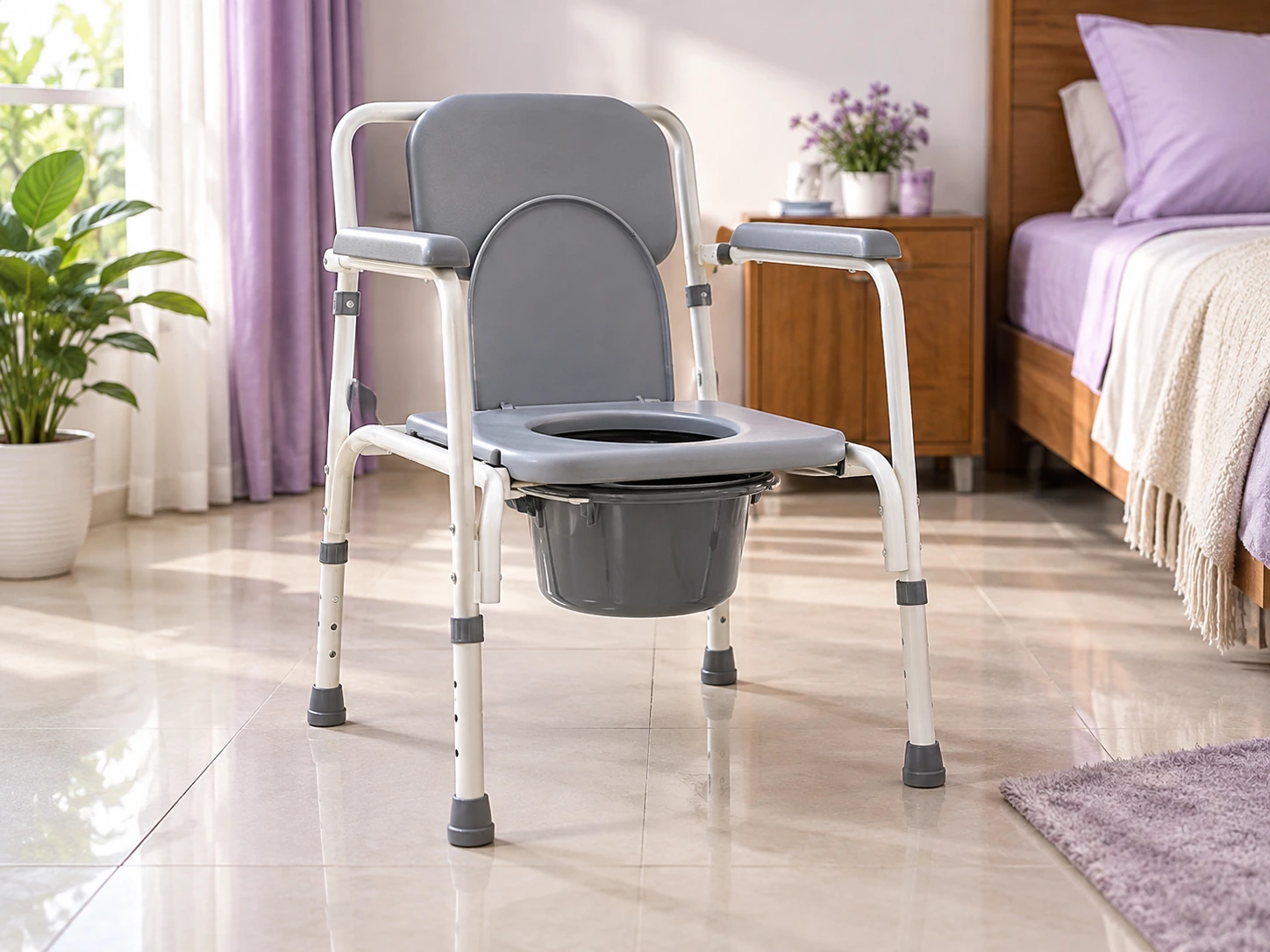
Commode Chairs for Home Patient Care
For patients with significantly reduced mobility, reaching a conventional bathroom can become difficult and sometimes unsafe.
A bedside commode can provide a practical alternative. Depending on the patient’s needs, families may consider models with armrests, height adjustment or wheels.
View Commode ChairsMobility Aid Comparison
| Mobility Aid | Best Suited For | Support | Things to Check |
|---|---|---|---|
| Walking Stick | Light balance assistance | Low | Height, grip and stability |
| Walker | Users needing more walking stability | Moderate | Frame, wheels and control |
| Manual Wheelchair | Limited walking or longer distances | High | Seat size, weight and portability |
| Electric Wheelchair | Users needing powered mobility | High | Battery, controls and environment |
| Commode Chair | Limited bathroom mobility | Supportive | Height, arms and weight capacity |
What to Check Before Buying
Check the equipment’s stated weight limit.
Check dimensions, seat width and height.
Consider folding and transportation requirements.
Important for wheelchairs and wheeled commodes.
Especially important for frequent cane or walker use.
Check doors, corridors and bathroom space.
Looking for Mobility Aids?
Browse Respikart’s mobility equipment range online.
Mobility Aids for Home Care in Delhi NCR
Respikart provides medical and home healthcare equipment for patients and families looking for practical care solutions.
Customers in areas such as Delhi, Noida, Gurgaon, Ghaziabad and Faridabad can explore the available mobility equipment online.
The mobility-aid category includes wheelchairs, walking aids, commode chairs and related products.
Browse the complete Respikart Mobility Aids range →Need Help Choosing a Mobility Aid?
If you are unsure whether a wheelchair, walker, walking stick or commode chair is appropriate, consider discussing the patient’s mobility requirements with a doctor or physiotherapist before purchasing.
Explore Mobility Aids Call RespikartFrequently Asked Questions
What are mobility aids used for?
Which mobility aid is suitable for an elderly person?
When should someone use a walker instead of a walking stick?
Are wheelchairs available at Respikart?
Are commode chairs useful for home care?
Can a patient use different mobility aids?
