

DeVilbiss Products, Elderly Care, Equipment, Home Healthcare, Medical Equipment, Oxygen Concentrator, Patient Recovery, Patient Support, Philips Products, ResMed Products, Respiratory Equipment, Sleep Apnea
Oxygen Concentrator Guide: Buying, Renting & Home Use
Oxygen Concentrator Guide: Buying, Renting & Home Use
Understand how oxygen concentrators work, what 5 LPM and 10 LPM mean, when renting may make sense, and how to use oxygen equipment safely at home.
What Is an Oxygen Concentrator?
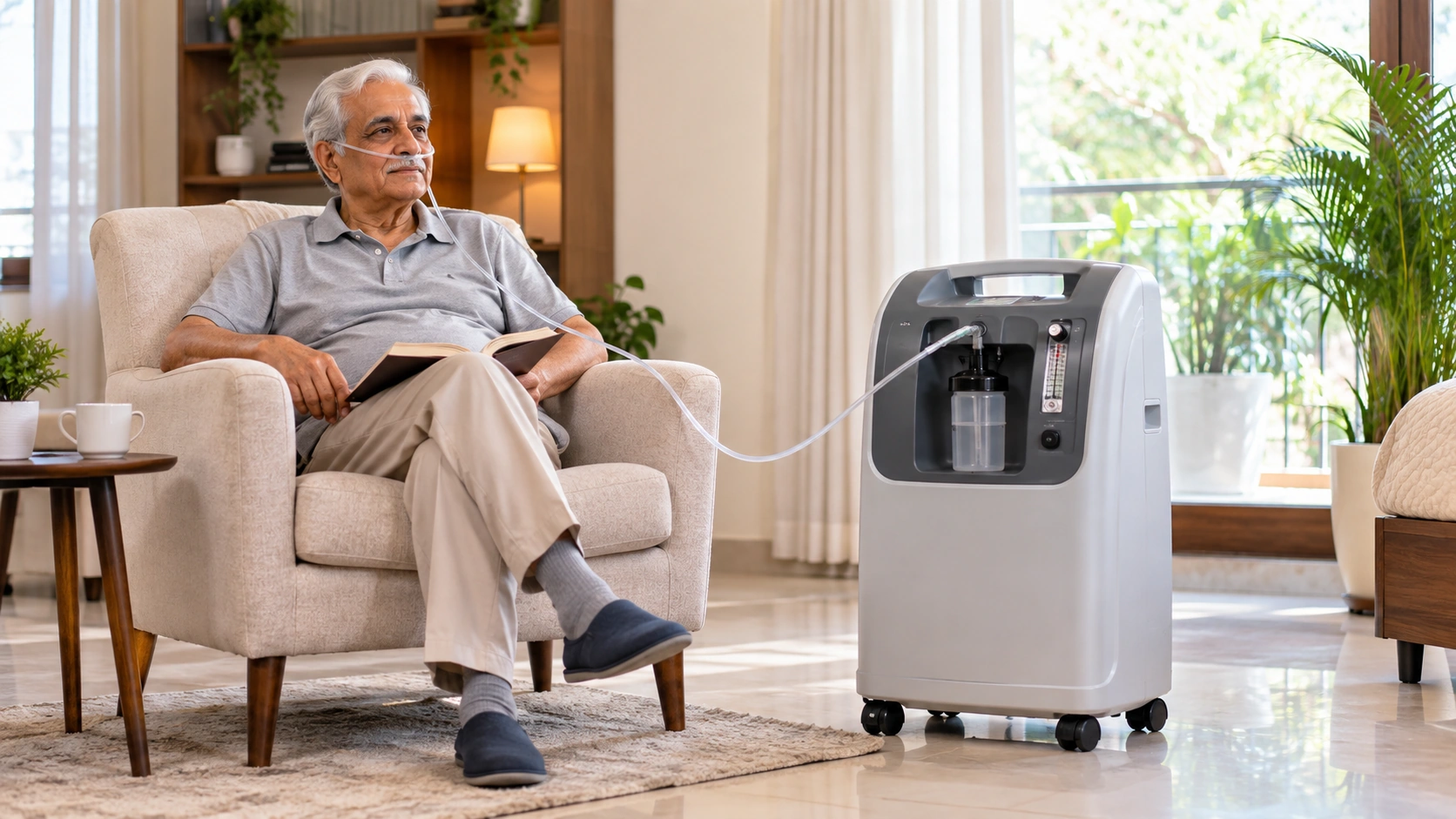
An oxygen concentrator can make home oxygen therapy easier to manage. Instead of storing and replacing oxygen cylinders, the machine takes in the air around it, removes most of the nitrogen, and supplies oxygen-rich air through a nasal cannula or mask.
For families, choosing one is rarely as simple as selecting the machine with the highest LPM number. The right device depends on the patient’s prescribed oxygen flow, expected duration of therapy, mobility requirements, and available backup arrangements.
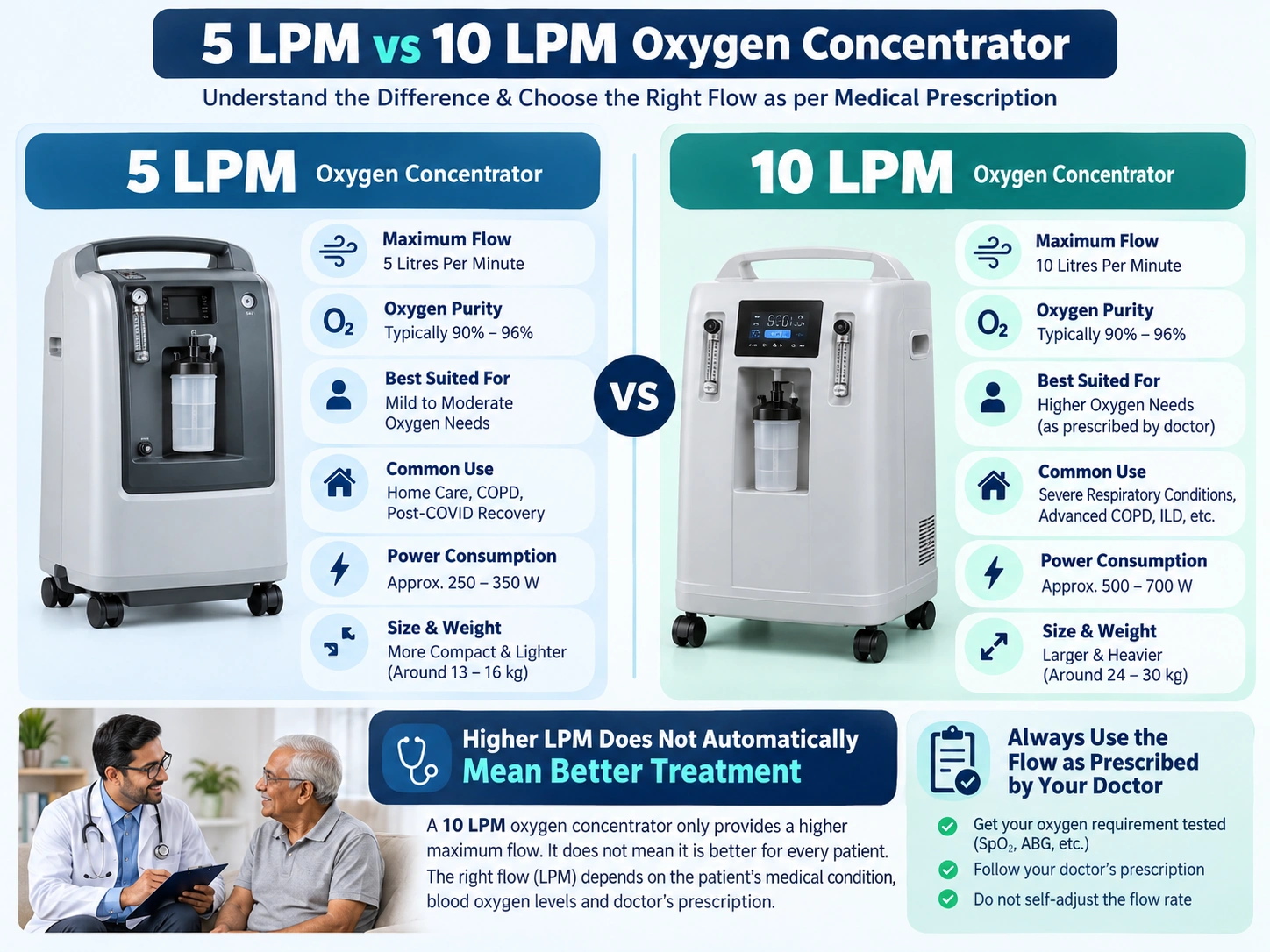
Most importantly, LPM should not be selected simply because a higher number sounds better. The required oxygen flow should be determined by the treating doctor according to the patient’s condition and oxygen needs.
Why Choosing the Right Concentrator Matters
The wrong machine can create problems for both the patient and the family looking after them.
A concentrator with insufficient capacity may not meet the prescribed oxygen requirement. On the other hand, purchasing a larger and more expensive machine than necessary may add avoidable cost.
Families should also consider electricity requirements, operating noise, available space, routine maintenance and the differences between stationary and portable devices.
How Does an Oxygen Concentrator Work?
The basic process is straightforward. The machine draws room air through an intake filter and compresses it. That air then passes through sieve beds containing zeolite.
Zeolite preferentially absorbs nitrogen, leaving an oxygen-rich gas that is delivered to the patient. This process is known as pressure swing adsorption (PSA).
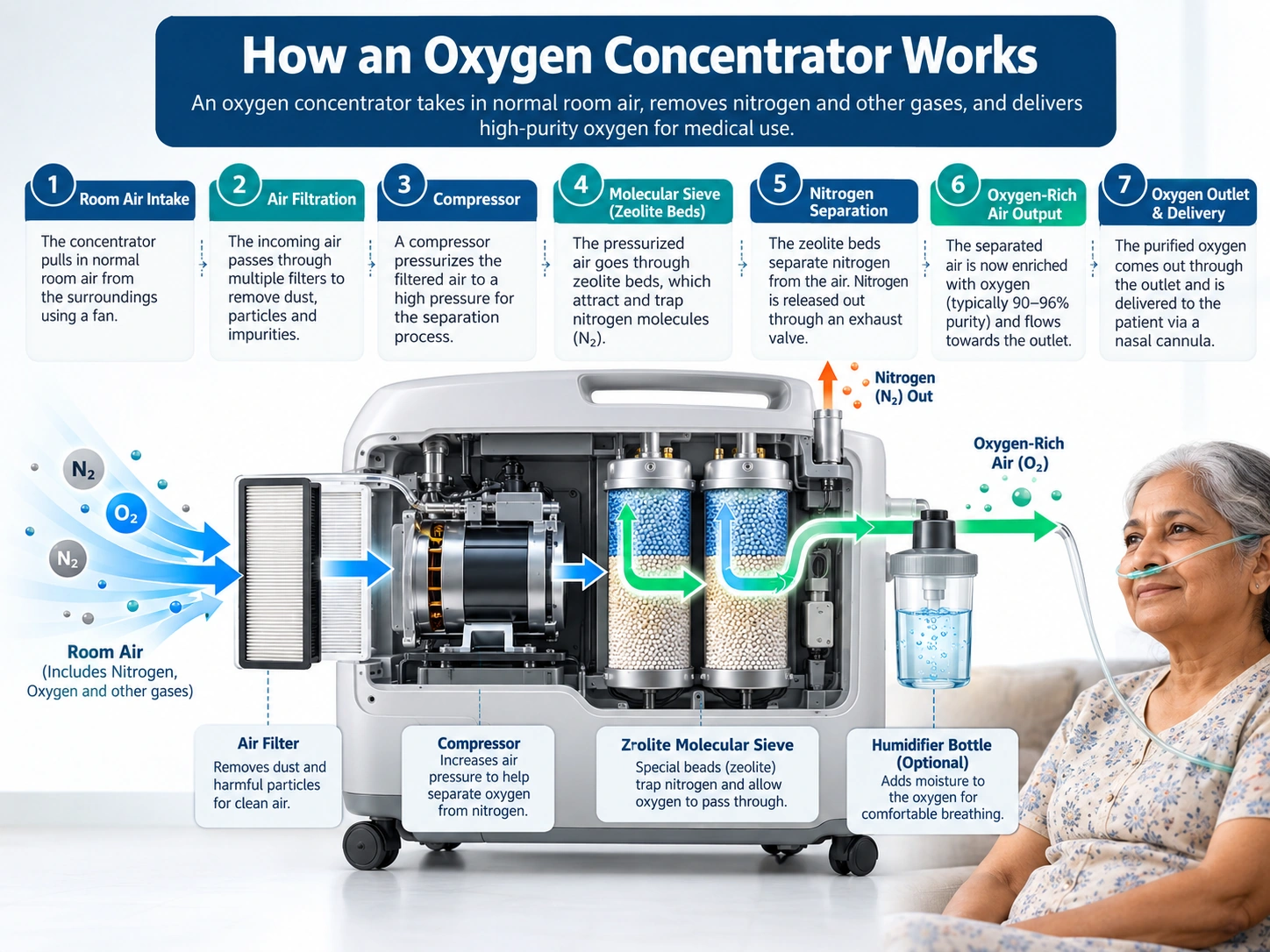
Depending on the machine and its flow setting, oxygen concentration can typically be in the range of about 87% to 96%. The concentrated gas is then delivered through tubing to a nasal cannula or, where prescribed, a mask.
Unlike an oxygen cylinder, a concentrator does not store a large supply of compressed oxygen. It produces oxygen-rich gas while it is operating.
Oxygen Concentrator vs Oxygen Cylinder
This is one of the first questions families often ask after home oxygen has been prescribed.
Oxygen Concentrator
A concentrator uses electricity to continuously produce oxygen-rich gas from room air. It does not need routine cylinder refilling, which can make it convenient for regular home use.
However, a standard concentrator cannot continue operating during a power failure unless an appropriate battery or backup power arrangement is available.
Oxygen Cylinder
A cylinder contains oxygen that has already been compressed and stored. It does not require electricity to deliver oxygen.
Its supply is finite. Once the cylinder is empty, it needs to be refilled or replaced.
Can You Use Both?
Yes. Some households keep a concentrator for regular daily therapy and maintain an oxygen cylinder as a backup for power failures.
The exact arrangement should depend on the patient’s prescription and the advice of the treating healthcare professional.
What Does 5 LPM vs 10 LPM Mean?
LPM means litres per minute. It describes the oxygen flow delivered by the device.
5 LPM Oxygen Concentrator
A 5 LPM concentrator is a common category for home oxygen therapy and may be appropriate when the patient’s prescribed flow falls within the machine’s operating range.
10 LPM Oxygen Concentrator
A 10 LPM concentrator provides a higher maximum flow and may be used when a patient has been prescribed a higher oxygen flow.
Benefits of Using an Oxygen Concentrator at Home
- It produces oxygen continuously while connected to a suitable power source.
- There is no routine cylinder-refilling process.
- It can be convenient for long-term daily use.
- Portable models can make movement outside the home easier for suitable patients.
- Once correctly installed, the basic controls are relatively straightforward.
- Stable patients may be able to manage prescribed oxygen therapy at home instead of making frequent trips for oxygen supplies.
The suitability of a concentrator still depends on the patient’s medical needs and the device’s specifications.
Challenges to Consider Before Buying
An oxygen concentrator is not completely maintenance-free. Consider the following practical factors before purchasing.
Buying vs Renting: Which Makes Sense?
The answer mainly depends on how long the patient is expected to need the machine.
Buying an Oxygen Concentrator
Buying may make sense when oxygen therapy is expected to continue for many months or years.
The main advantage is availability: the machine remains with the family and there is no recurring rental charge.
Renting an Oxygen Concentrator
Renting can be useful when the need is temporary or uncertain, such as during recovery after surgery or an acute illness.
Renting may also allow families to become familiar with a machine before committing to a purchase.
Common Uses of Home Oxygen Concentrators
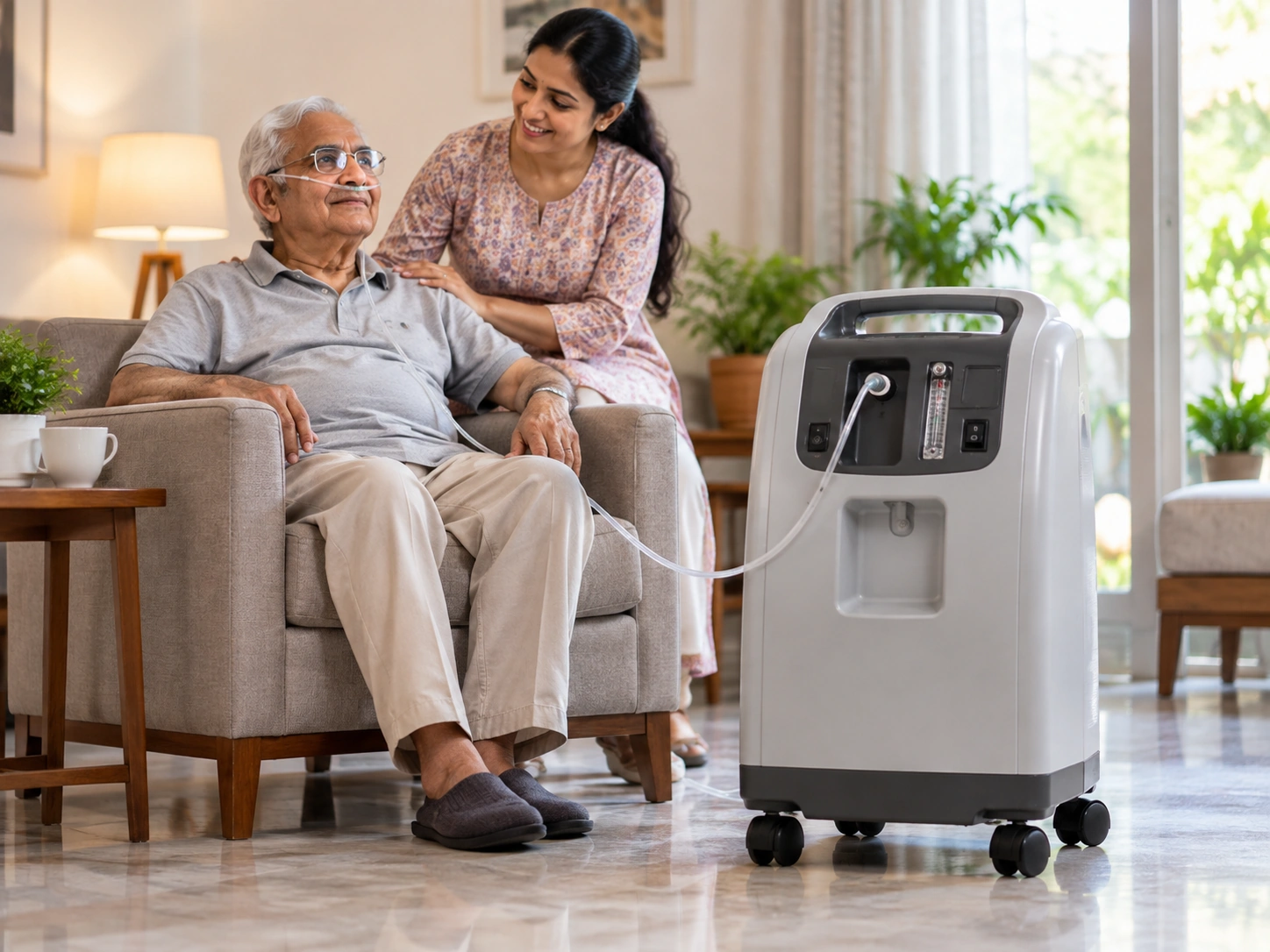
Home oxygen may be prescribed in situations where a patient has low blood oxygen levels or needs supplemental oxygen.
- Chronic obstructive pulmonary disease (COPD)
- Pulmonary fibrosis and other interstitial lung diseases
- Recovery from certain respiratory illnesses
- Some patients recovering after major surgery
- Palliative or end-of-life respiratory comfort care
- Certain sleep-related oxygen problems when oxygen has specifically been prescribed
Not every person with these conditions needs oxygen therapy. The decision should be based on clinical assessment and the treating doctor’s prescription.
Step-by-Step: Setting Up an Oxygen Concentrator at Home
What Has Changed in Oxygen Concentrator Technology?
Portable oxygen concentrators have become smaller and easier to carry than many older models. Depending on the device, some offer battery operation and pulse-dose oxygen delivery.
With pulse-dose delivery, oxygen is released when the machine detects an inhalation rather than delivering the same continuous flow at all times. This can help conserve battery power in suitable patients.
Some newer devices also include monitoring features that can record usage information or support remote monitoring.
Common Mistakes to Avoid
Best Practices for Safe Home Use
Oxygen itself is not flammable, but it supports combustion and can make a fire burn much faster.
- Keep oxygen equipment away from cigarettes, candles, gas flames and other ignition sources.
- Do not smoke near the patient or equipment.
- Keep the machine in a well-ventilated area.
- Leave sufficient space around the air vents.
- Follow manufacturer cleaning and servicing instructions.
- Keep a suitable backup power arrangement or oxygen cylinder where recommended.
- Keep oxygen tubing away from walkways to reduce fall risks.
- Use a pulse oximeter when your healthcare professional has advised monitoring.
- Follow the prescribed flow rate rather than changing it based only on symptoms.
Practical Tips for Families
If you are unsure whether buying a machine is the right decision, renting one first can sometimes be practical, particularly when the expected duration of oxygen therapy is unclear.
A rental period can also help the patient and caregiver become familiar with the machine, tubing, cannula, noise level and day-to-day handling.
When advised by the healthcare team, families may find it useful to maintain a simple record of oxygen use and oxygen saturation readings. This information can be discussed during follow-up appointments.
What Is the Future of Home Oxygen Therapy?
Home oxygen equipment continues to become more portable, quieter and easier to monitor.
Portable designs, improved batteries, pulse-dose technology and connected monitoring features may make oxygen therapy more convenient for some patients. Rental and subscription models may also become more common as home healthcare expands.
The basic principle remains the same: the equipment must be matched to the patient’s medical requirement.
Looking for Oxygen Equipment in Delhi NCR?
Respikart provides medical equipment solutions for patients and families, including oxygen concentrators and other home-care equipment. If you are considering renting or buying, compare the machine’s flow capability, duration of need and backup requirements before choosing.
Key Takeaways
- An oxygen concentrator takes room air and produces oxygen-rich gas without routine cylinder refilling.
- The required LPM should be based on a doctor’s prescription.
- A higher LPM rating does not automatically mean better treatment.
- Renting can be practical for temporary or uncertain needs.
- Buying may be worth considering when oxygen therapy is expected to continue long term.
- Standard concentrators require electricity, so a backup plan is important where power cuts are common.
- Proper ventilation, filter maintenance, servicing and fire safety are essential.
- Portable and stationary concentrators have different capabilities and are not interchangeable for every patient.
Final Thoughts
Choosing an oxygen concentrator is less about finding the biggest or most expensive machine and more about finding the right machine for the patient’s prescription and daily routine.
Before buying or renting, check the required flow rate, expected duration of therapy, power requirements, portability, maintenance needs, warranty or rental terms and backup arrangements.
Most importantly, do not change the oxygen flow or start long-term oxygen therapy based only on information found online. The device, flow rate and duration of oxygen therapy should be decided with a qualified healthcare professional who understands the patient’s condition.
Frequently Asked Questions
What is an oxygen concentrator used for?
Is an oxygen concentrator better than an oxygen cylinder?
How do I know if I need a 5 LPM or 10 LPM concentrator?
Should I rent or buy an oxygen concentrator?
Is it safe to use an oxygen concentrator at home?
Can an oxygen concentrator work without electricity?
How often does an oxygen concentrator need maintenance?
Need Help Choosing the Right Oxygen Equipment?
Explore Respikart’s oxygen equipment and rental options, or speak with the team about your equipment requirement.
