

Sleep Apnea
How to Clean and Maintain Your CPAP Machine at Home
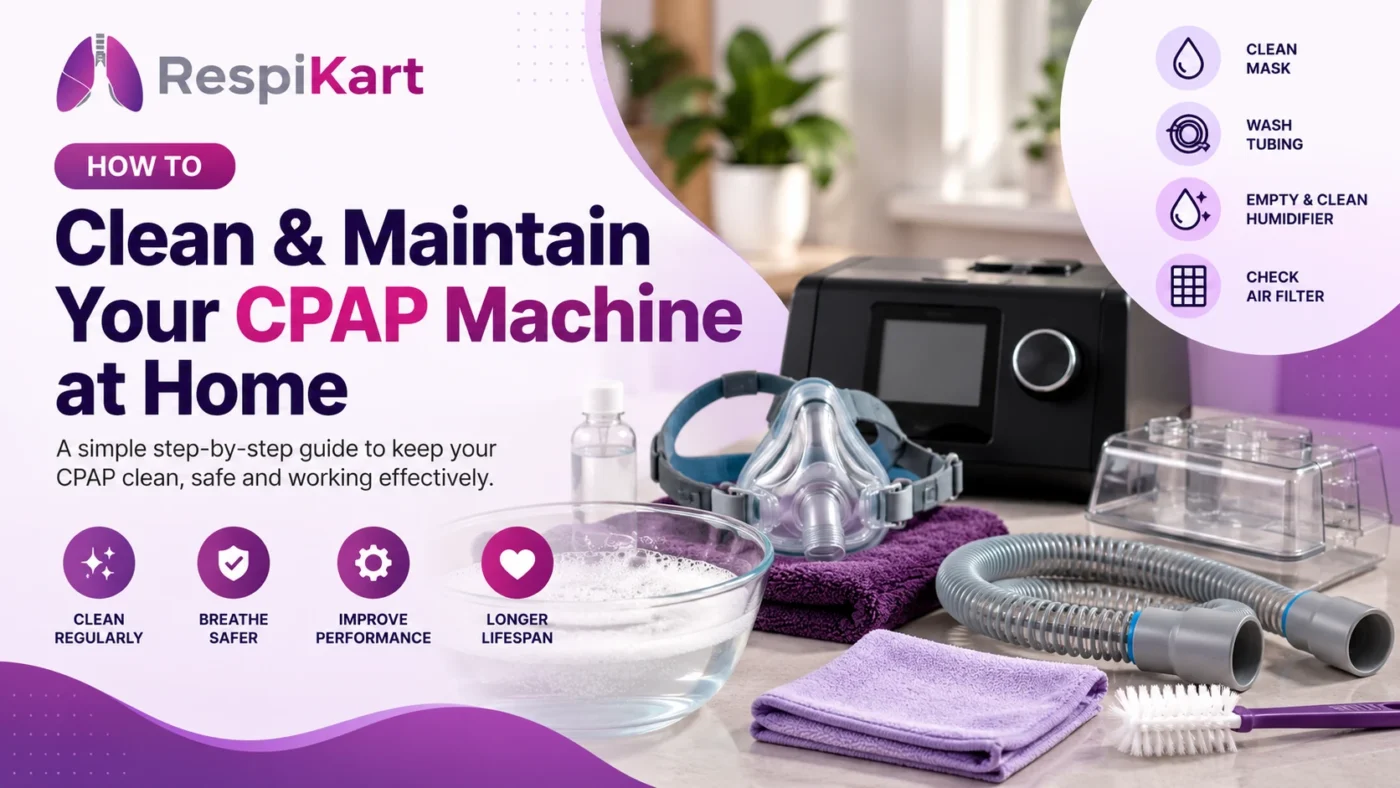
How to Clean & Maintain Your CPAP Machine at Home
From daily mask care to weekly deep cleaning, discover an easy routine to help maintain your CPAP equipment.
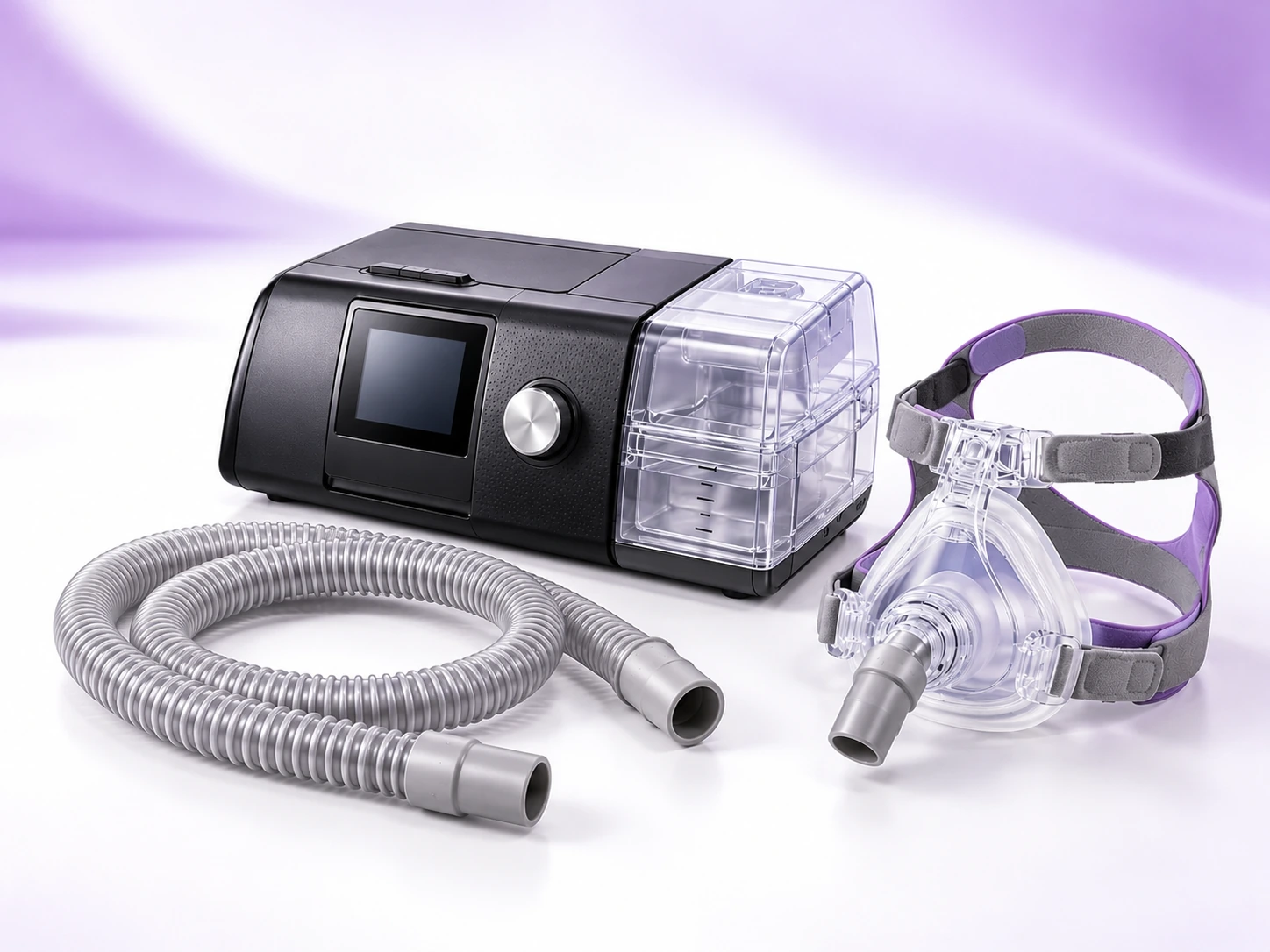 ✦ Daily Care
✓ Clean Equipment
✦ Daily Care
✓ Clean Equipment
Small Cleaning Habits. Better CPAP Care.
CPAP therapy is a regular part of life for many people with obstructive sleep apnea. While the machine delivers prescribed positive airway pressure, its mask, tubing and humidifier need appropriate cleaning and inspection.
Skin oils, moisture and everyday dust can build up on CPAP accessories. Keeping these components clean helps maintain comfort, protects equipment condition and makes it easier to identify wear before it becomes a bigger problem.
At Respikart, we help customers explore respiratory care equipment for home use. This guide explains a practical cleaning routine, with particular attention to daily care, washable components and replacement signs.
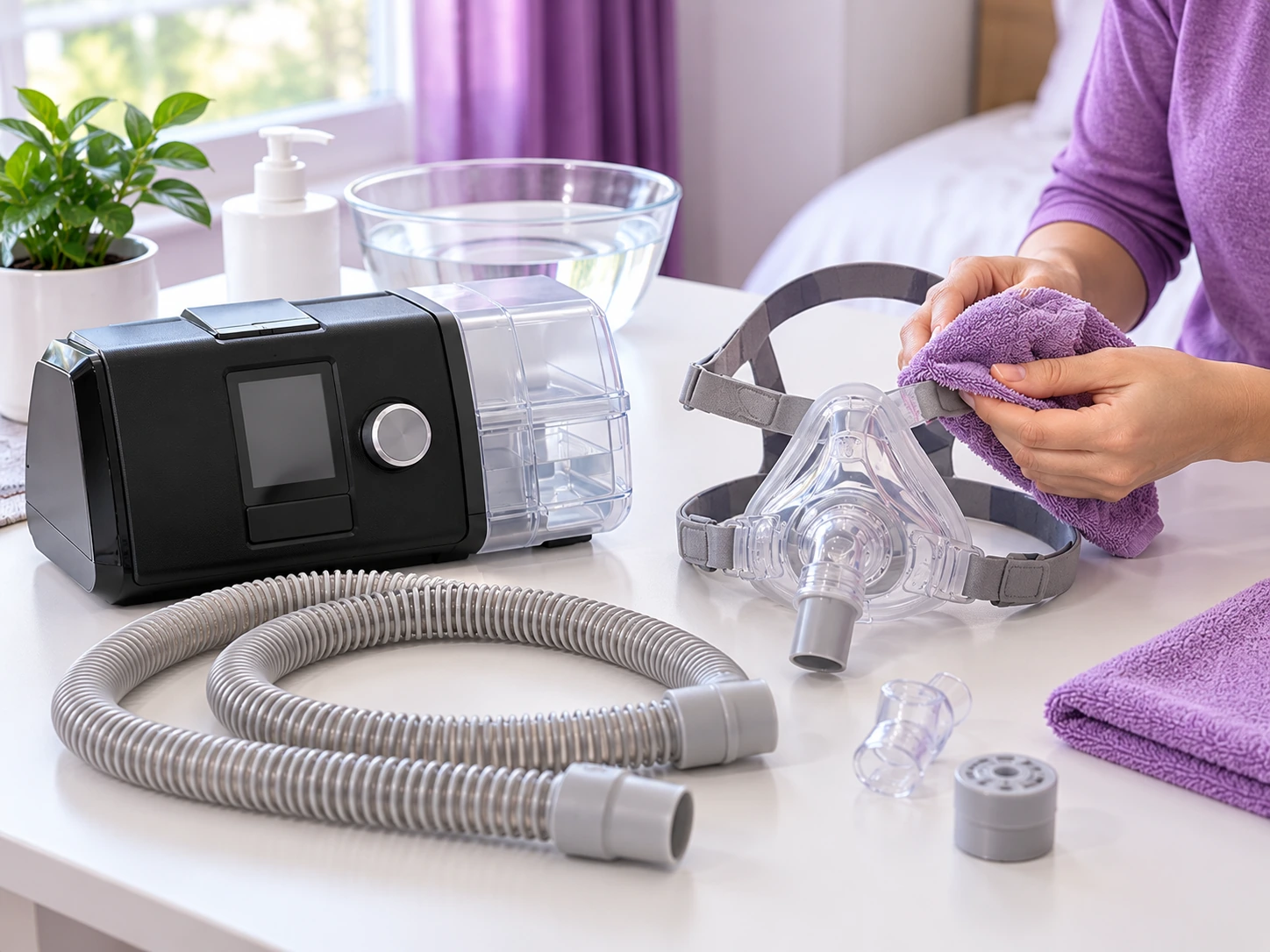
Wipe or clean the mask cushion as directed, empty the humidifier chamber after use, wash approved removable components at the recommended interval, and inspect the filter regularly. Allow washed parts to dry fully. Always follow the cleaning instructions for your particular CPAP model.
Why CPAP Cleaning Deserves Attention
Good equipment hygiene is about more than keeping your machine looking new.
Better Hygiene
Regular cleaning removes skin oils and residue from washable mask surfaces.
Equipment Care
Inspection and proper cleaning help you spot damaged components and prevent avoidable wear.
Mask Comfort
A clean, well-maintained cushion can support a comfortable fit and a consistent mask seal.
CPAP Cleaning Schedule at a Glance
Build a repeatable routine around your manufacturer’s instructions.
Every Morning ☀️
- Empty leftover humidifier water
- Clean or wipe the mask cushion
- Check for visible residue
- Allow appropriate parts to air-dry
Weekly 🫧
- Wash approved mask components
- Clean washable tubing
- Wash the humidifier chamber
- Rinse and dry completely
Regular Checks 🔍
- Inspect the air filter
- Check mask cushion condition
- Look for cracks or leaks
- Follow replacement intervals
Note: This is a general guide. Some CPAP components require more frequent cleaning or different methods.
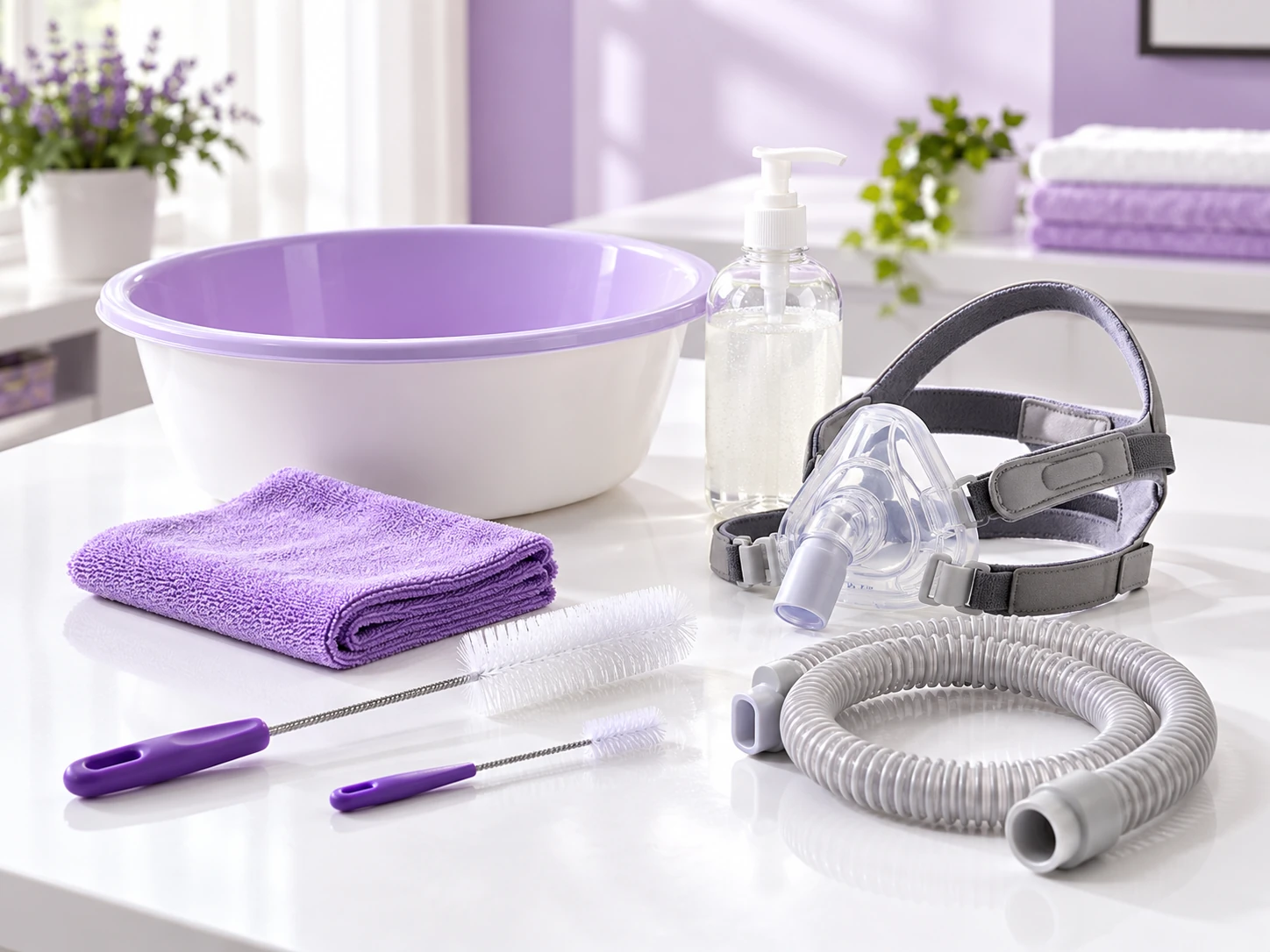 ✓ Simple Homecare Essentials
What Do You Need to Clean a CPAP Machine?
Most approved manual-cleaning routines use ordinary supplies rather than expensive gadgets. Always confirm which products and cleaning methods your equipment manufacturer permits.
- Mild, unscented liquid soap
- Warm water and a clean basin
- A soft, clean cloth
- A clean drying surface or rack
- Distilled water, where specified for the humidifier
Your Daily CPAP Cleaning Routine
Keep the everyday routine simple and consistent.
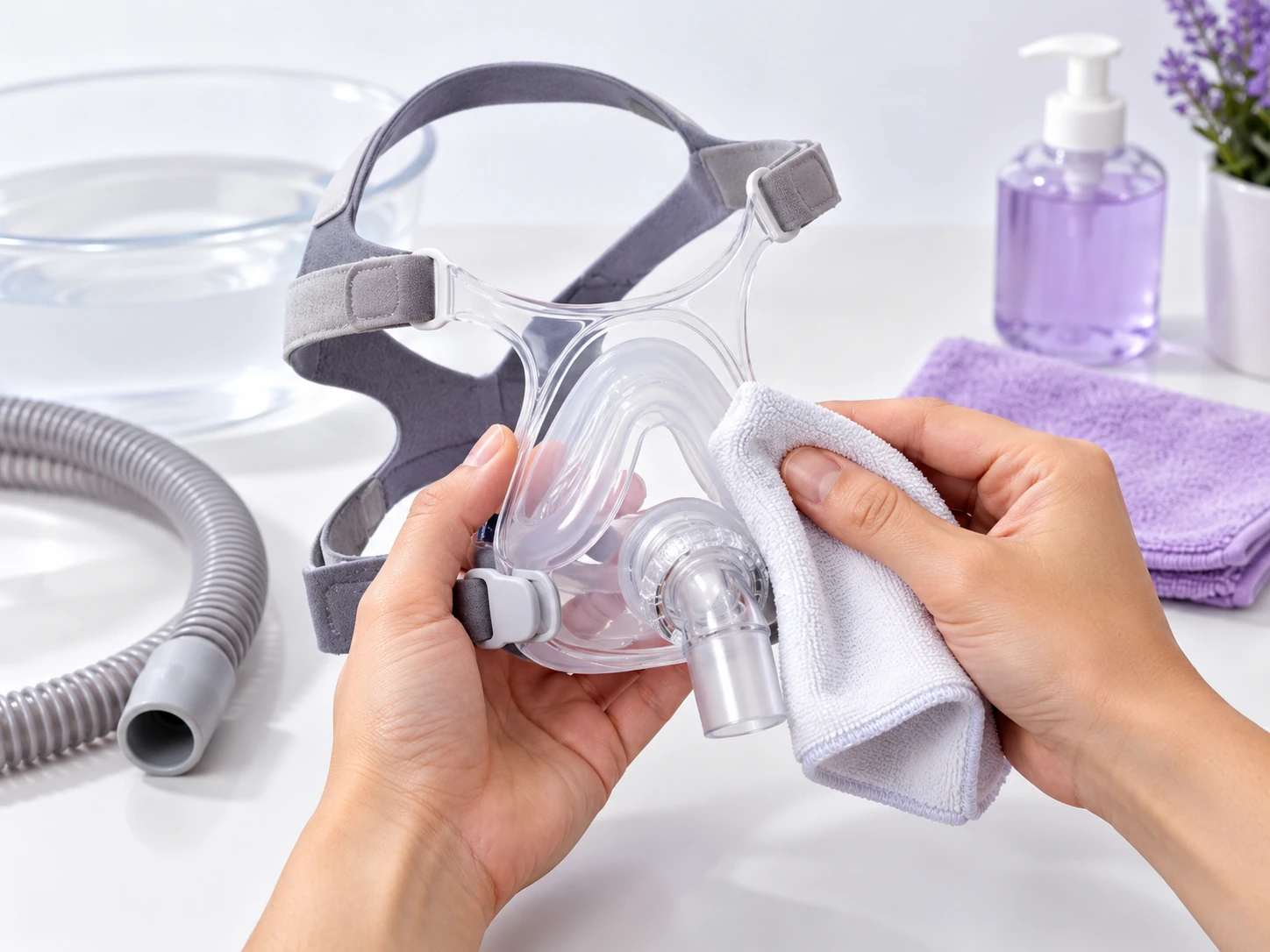
01. Clean the Mask Cushion
Remove accumulated skin oils using the method approved for your mask. Inspect the cushion for cracks, stickiness or changes in shape.
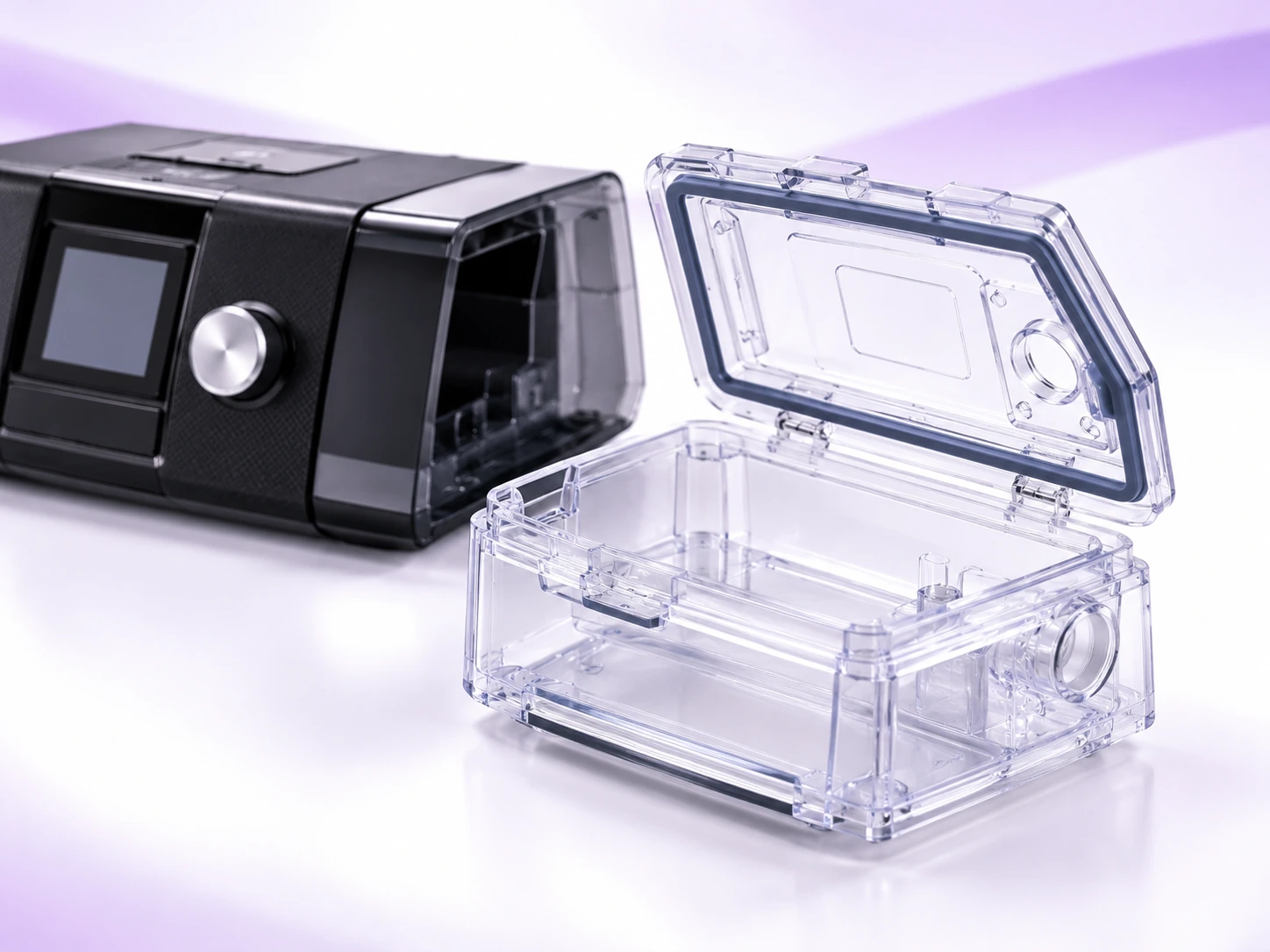
02. Empty the Humidifier
Discard leftover water after use and let the chamber dry as instructed. Avoid leaving water standing in the chamber between uses.
Turn off and disconnect the machine before cleaning. Never immerse the motor unit or electrical parts in water. Wipe the exterior only as directed by the user manual.
How to Wash CPAP Parts Step by Step
Follow these general steps only for components identified as washable in your manual.
Give Your Accessories a Proper Wash
Set aside time to wash the mask components, breathing tube and humidifier chamber according to their respective instructions. Gentle cleaning, thorough rinsing and complete drying are essential.
Do not wash heated tubing, filters or mask parts unless their specific instructions permit it.
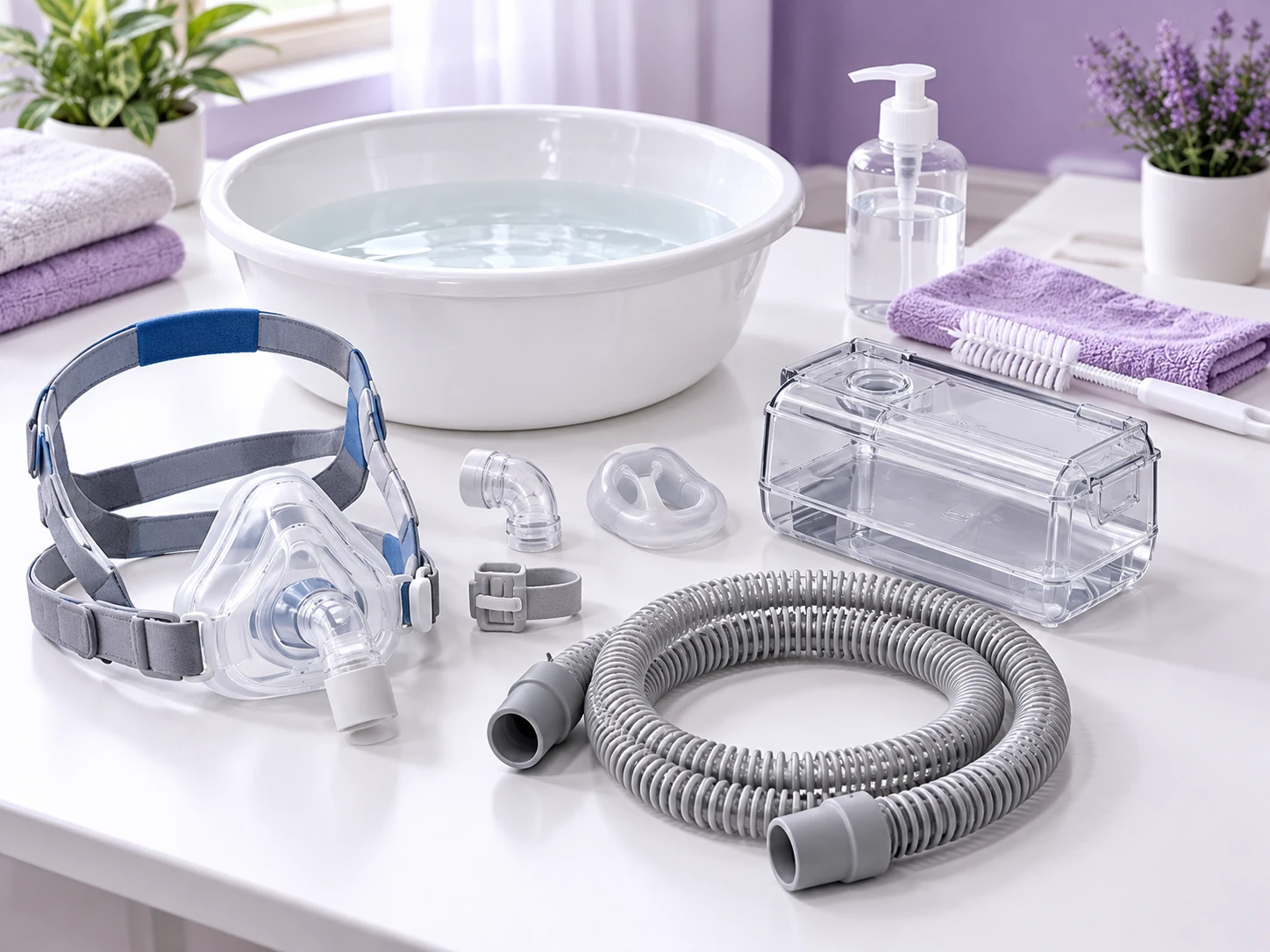 Weekly Cleaning Guide
Disconnect the Components
Turn off the machine, disconnect the power and carefully remove the mask, tubing and water chamber according to the user manual.
Prepare Mild Soapy Water
Use a clean basin with warm water and a small amount of manufacturer-approved mild soap.
Wash Gently
Clean approved washable components without abrasive scrubbing. Follow the tubing manufacturer’s instructions for washing the inside of the hose.
Rinse Thoroughly
Remove all soap residue from washed parts, including inside the tube where applicable.
Allow Complete Air-Drying
Place components in a clean, ventilated area away from direct sunlight or excessive heat.
Reassemble and Inspect
Reconnect only when completely dry. Check that seals, connectors and tubing are properly attached before use.
Filter & Humidifier Maintenance
Two areas that deserve regular inspection.
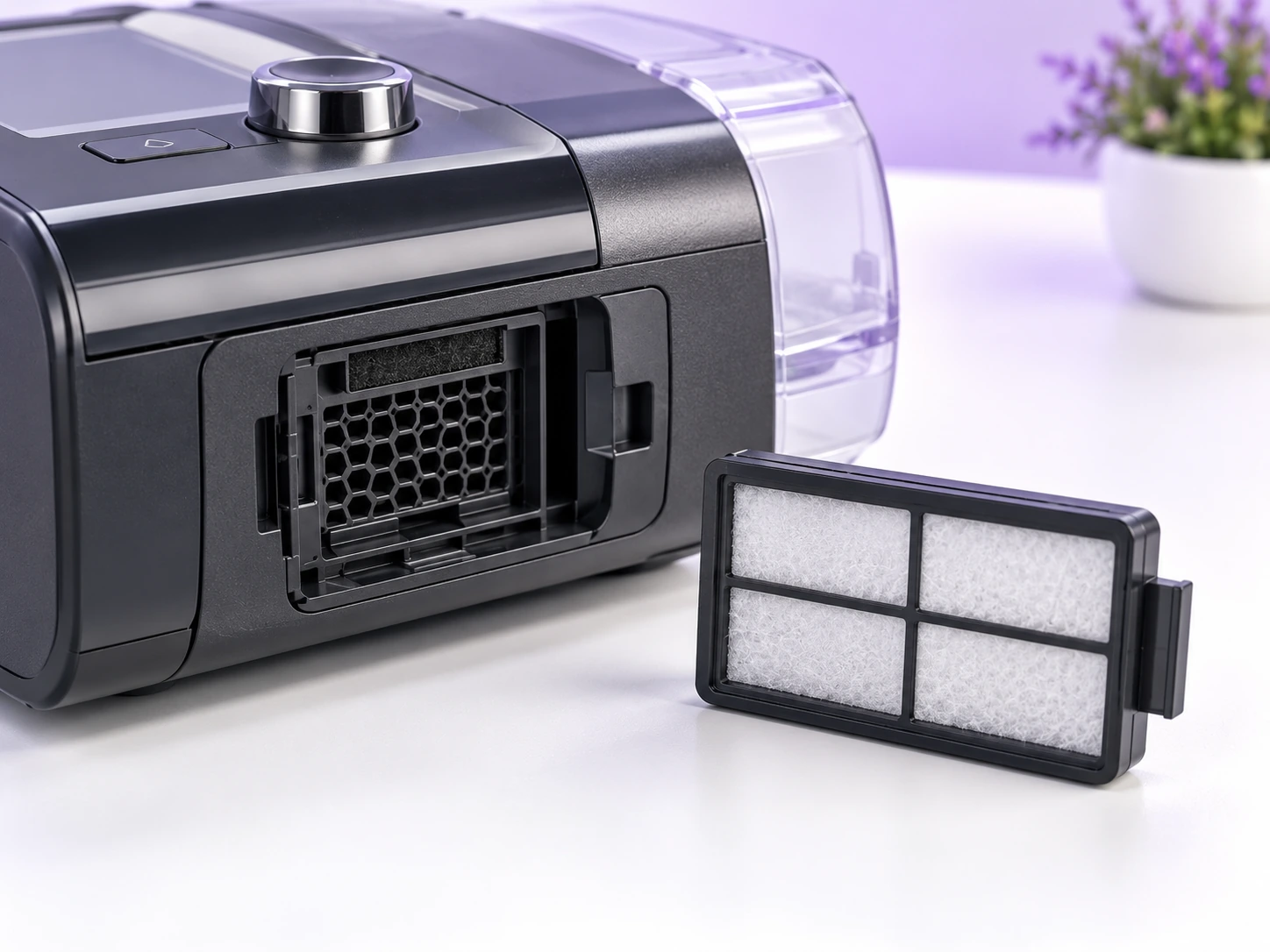
🌬️ CPAP Air Filter
Air filters collect airborne dust. Disposable filters should be replaced, not washed. Reusable filters may be washed only when permitted by the manufacturer and must be completely dry before reinstallation.
Dusty surroundings may make more frequent inspection necessary.
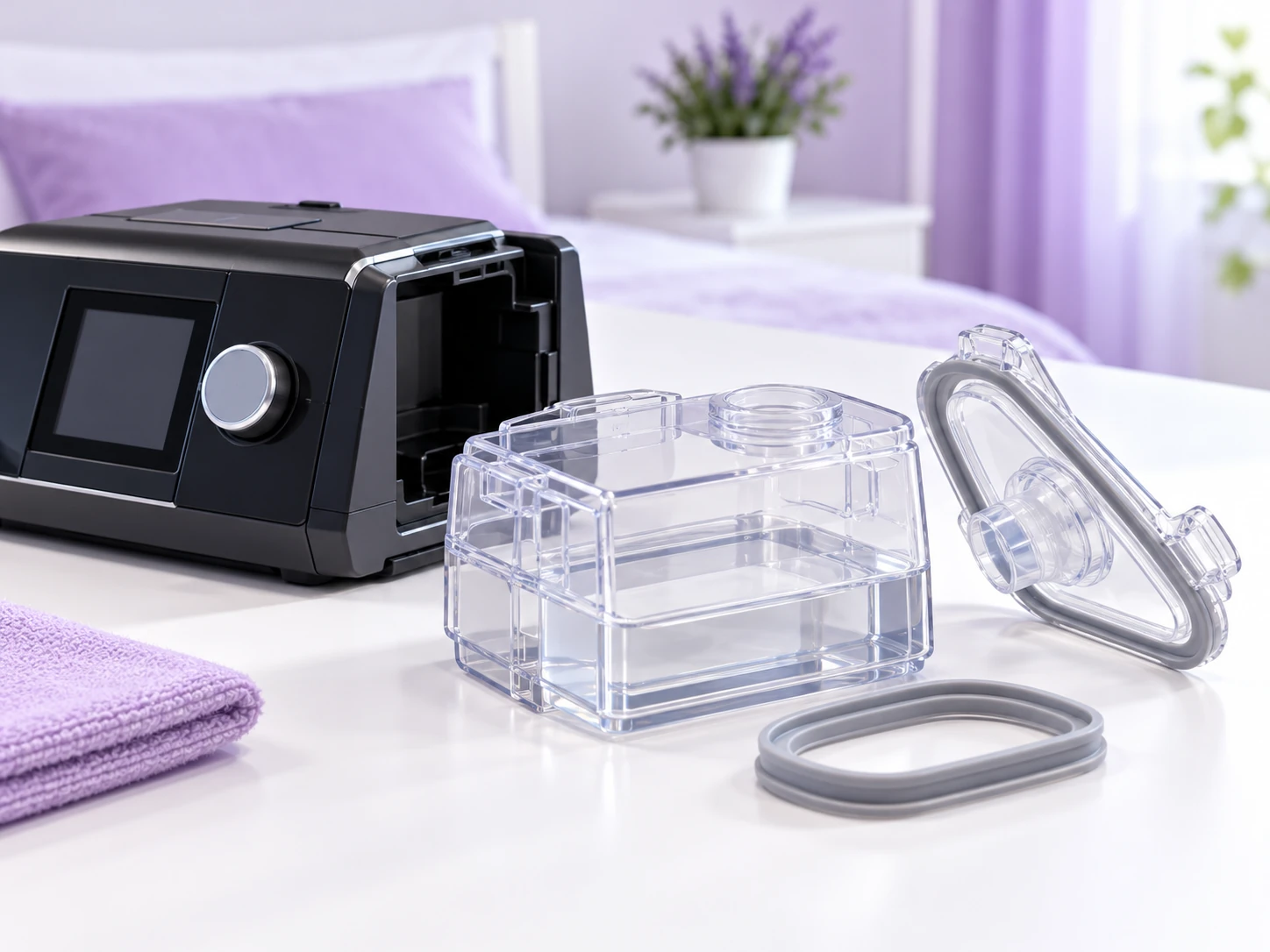
💧 CPAP Humidifier
Empty leftover water, clean the chamber on its specified schedule and inspect it for deposits or damage.
Distilled water is commonly recommended to reduce mineral scale. Always follow the water requirements of your specific model.
When Should You Replace CPAP Parts?
Cleaning maintains usable accessories, but it cannot repair components that are worn out.
| Component | Warning Signs | Recommended Action |
|---|---|---|
| Mask Cushion | Cracks, deformation, stickiness, recurring leaks | Replace when worn or at the manufacturer’s recommended interval |
| Headgear | Stretched straps or damaged clips | Replace when a secure, comfortable fit is no longer possible |
| Breathing Tube | Cracks, holes or damaged connectors | Replace damaged tubing promptly |
| Air Filter | Dust accumulation or visible damage | Follow the filter-specific inspection and replacement schedule |
| Water Chamber | Cracks, leaks or persistent deposits | Replace when damaged or no longer cleanable as instructed |
CPAP masks, filters, tubing and water chambers are not universally interchangeable. Match accessories to your exact machine and mask model.
Explore Respiratory Equipment at Respikart →What Should You Never Do?
Incorrect cleaning methods can damage accessories or leave unwanted residue.
When Should You Contact Your CPAP Provider?
Routine cleaning is useful, but certain problems require additional support. Contact your equipment provider if you notice a persistent odour, visible mould, damaged tubing, unusual machine behaviour or repeated leaks that do not resolve after checking the fit.
If you experience recurring nasal or sinus symptoms, or changes in your sleep apnea symptoms, speak with your doctor or sleep specialist.
Never open the motor unit or attempt internal repairs yourself.
 Inspect • Maintain • Replace
Your CPAP Care Checklist
- Keep up with the daily mask and humidifier care routine.
- Wash compatible removable parts at the recommended interval.
- Use approved mild cleaners and rinse thoroughly.
- Allow washed parts to dry completely before reconnecting.
- Inspect filters, cushions, tubing and seals for wear.
- Follow your manufacturer’s instructions for cleaning and replacement.
Looking for a CPAP Machine or Homecare Equipment?
Explore respiratory care products and equipment options at Respikart. Our team can help you enquire about suitable models and product availability.
Frequently Asked Questions
Helpful answers to common CPAP cleaning and maintenance questions.
How often should I clean my CPAP machine?
Clean or wipe the mask cushion and empty the humidifier chamber as directed, generally after each use. Wash approved removable parts regularly, often weekly, and inspect the filter according to your model’s instructions.
Can I use tap water in my CPAP humidifier?
Distilled water is commonly recommended because it helps reduce mineral deposits. Follow your manufacturer’s water-quality instructions and empty leftover water regularly.
Can I clean my CPAP mask with shampoo or regular soap?
Use mild, unscented soap or another cleaning product approved for your mask. Avoid strong fragrances, harsh detergents and products that may leave irritating residue.
How do I dry CPAP tubing properly?
After washing tubing that is approved for cleaning, allow it to drain and air-dry in a clean, ventilated location away from direct sunlight. Ensure it is completely dry before reconnecting.
Should I wash or replace the CPAP filter?
Disposable filters should be replaced. Reusable filters may be washed only when their manufacturer permits it, and must be completely dry before being reinstalled.
How do I know when CPAP parts need replacing?
Look for cracks, loose connectors, stretched headgear, damaged seals, persistent leaks and cushions that have lost their shape. Follow the manufacturer’s replacement schedule.
Are ozone or UV CPAP cleaning devices safe?
Some manufacturers advise against these devices because they may damage certain materials or affect warranty coverage. Check the manufacturer’s guidance before using one. Approved manual cleaning remains the dependable routine.
Make CPAP Cleaning a Consistent Habit
Maintaining a CPAP machine at home does not have to be complicated. A consistent cleaning routine, regular inspection and timely replacement of worn components can help keep your equipment in good working condition.
Because cleaning methods vary by device, your manufacturer’s user manual should always be the main reference. For respiratory equipment enquiries, explore Respikart.com or speak with the Respikart team.
Medical note: This article provides general equipment-care information, not individual medical advice. Consult your clinician for therapy concerns.
