

Uncategorized
Home Medical Equipment Delivery to High-Rise Apartments: Lift, Stairs & Access Planning
Sep
Home Medical Equipment Delivery to High-Rise Apartments: Lift, Stairs & Access Planning
A practical guide to planning safe and smooth delivery of hospital beds, oxygen concentrators, CPAP/BiPAP machines, patient monitors and other home medical equipment.
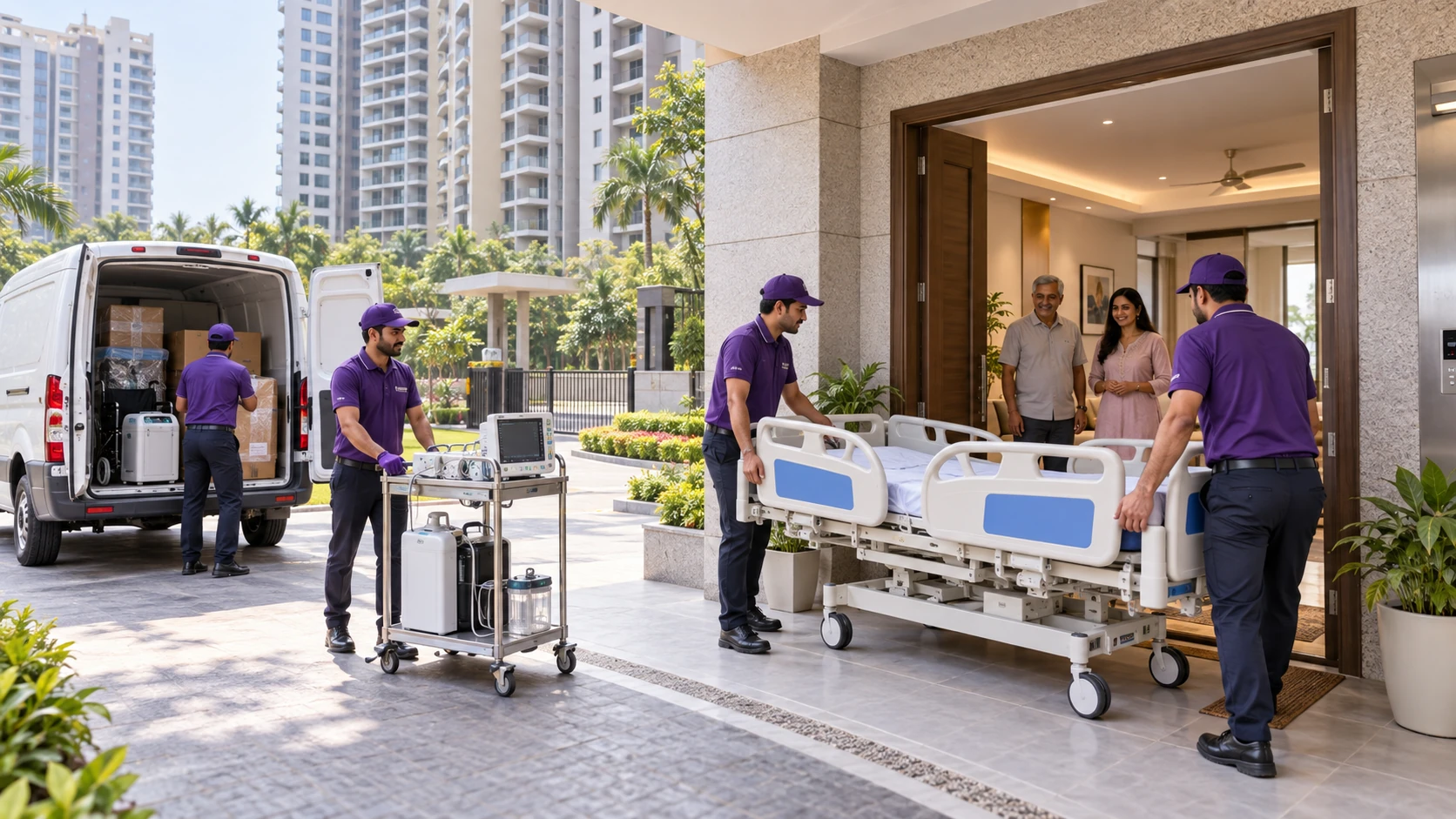
Getting medical equipment delivered to a home is not always as simple as providing an apartment address. In high-rise buildings, gated societies and multi-storey apartments, the delivery route can include the society gate, parking area, building entrance, lift, corridor, apartment door and finally the patient’s room.
Equipment such as hospital beds , oxygen concentrators, oxygen cylinders, CPAP/BiPAP machines, suction machines and patient monitors can have different transportation and placement requirements.
Why Access Planning Matters Before Medical Equipment Delivery
Medical equipment can differ significantly in weight, dimensions, shape and portability. A compact CPAP machine may be easy to carry, while a hospital bed may require considerably more space throughout the delivery route.
The important point is to plan the complete route, rather than checking only whether the delivery vehicle can reach the building.
Before delivery, check the entrance, lift, doors, corridors, staircase, parking and final placement area. These checks become particularly important when equipment is required urgently.
1. Check the Lift Before Delivery
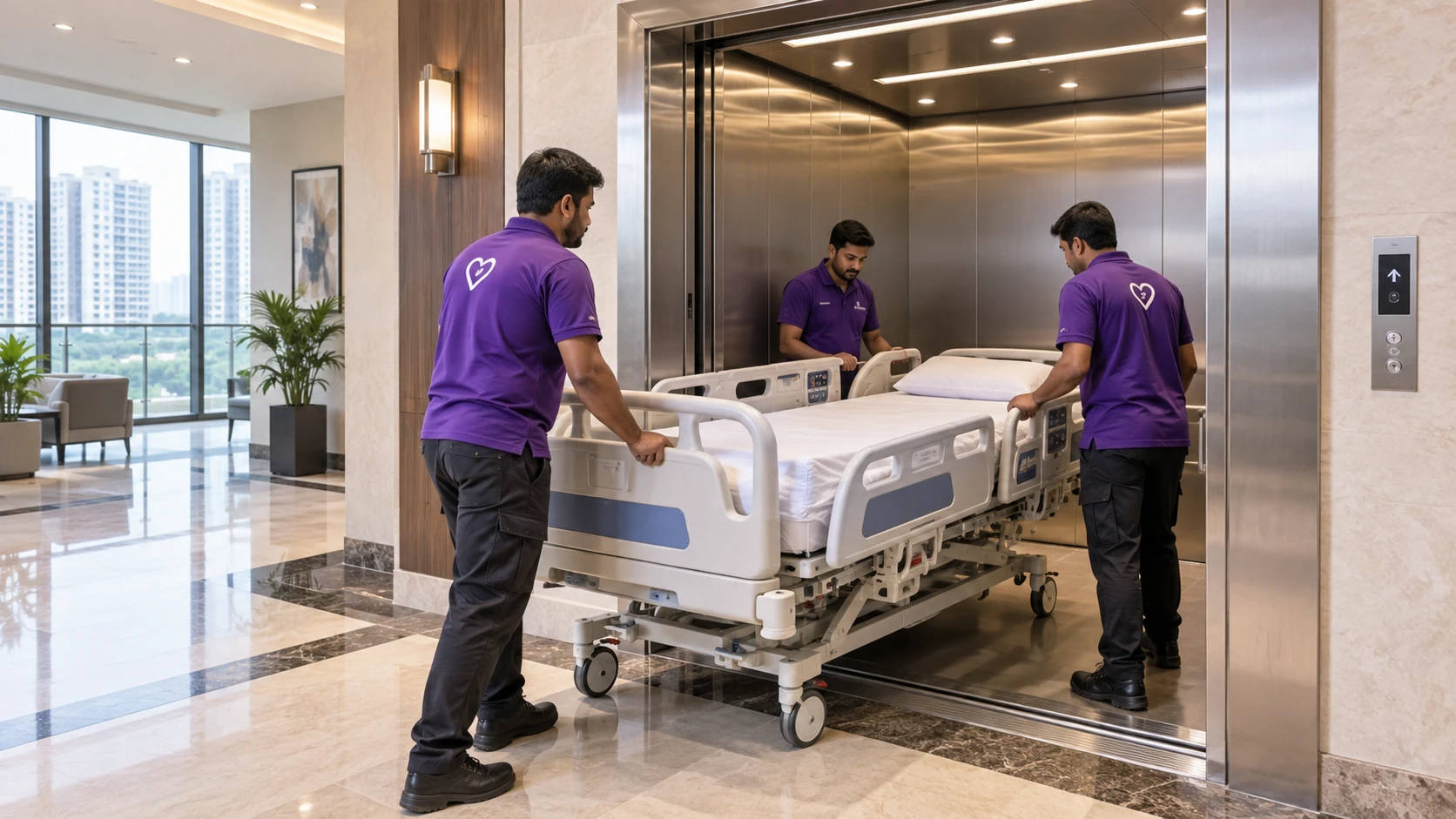
The first step for a high-rise apartment is to confirm whether a passenger or service lift is available and operational.
For larger equipment, check:
- Lift availability
- Lift weight capacity
- Lift door opening
- Internal lift dimensions
- Service lift availability
- Society rules for using the service lift
2. Measure the Complete Access Route for Bulky Equipment
For large equipment such as hospital beds, measuring only the lift is not enough. The equipment must be able to travel through every important point between the building entrance and the patient’s room.
Building Entrance
Check the clear usable width of the entrance and whether there are any fixed obstacles.
Lift Door
Measure the actual usable opening when the lift doors are completely open.
Apartment Door
Check whether the equipment can pass through the apartment entrance without obstruction.
Bedroom Door
Do not overlook the bedroom entrance. This is often the final access point for a hospital bed.
3. Hospital Bed Delivery Needs Extra Attention
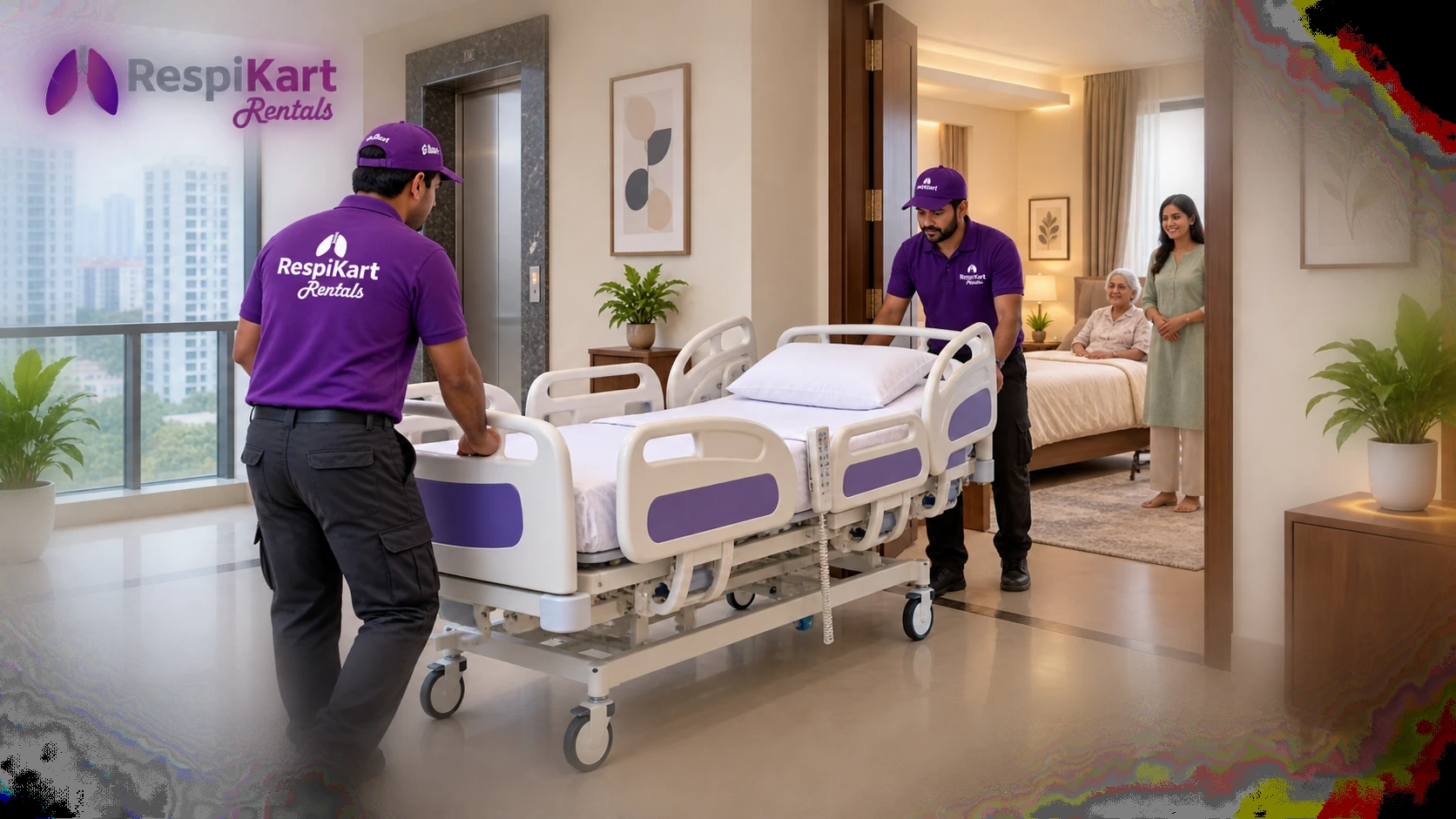
Hospital beds are among the larger pieces of home-care equipment, so their delivery route should be considered before booking.
Check these points in advance:
- Main building entrance width
- Lift door width
- Lift cabin dimensions
- Corridor width
- Apartment entrance
- Bedroom entrance
- Turning space
- Final placement area
Respikart’s rental range includes different hospital bed options for home-care requirements. You can explore the Hospital Beds on Rent in Delhi NCR before making your rental decision.
4. Equipment-Wise Access Planning
Not every medical device requires the same level of access planning. A useful approach is to consider the equipment type before arranging delivery.
Oxygen Concentrator
Check the building entrance, lift and final placement area. The intended location should also have appropriate electrical access and sufficient ventilation according to the manufacturer’s instructions.
View Oxygen Concentrators on Rent →CPAP Machine
CPAP machines are compact, but the bedroom setup should be prepared before delivery. Keep suitable space for the device, tubing and accessories.
View CPAP Machines on Rent →BiPAP Machine
BiPAP machines generally require less physical access space, but the patient’s room should be ready for safe placement, power connection and tubing management.
View BiPAP Machines on Rent →Oxygen Cylinder
Oxygen cylinder delivery requires appropriate handling and safe placement. Keep oxygen equipment away from smoking, open flames and ignition sources.
View Oxygen Cylinders on Rent →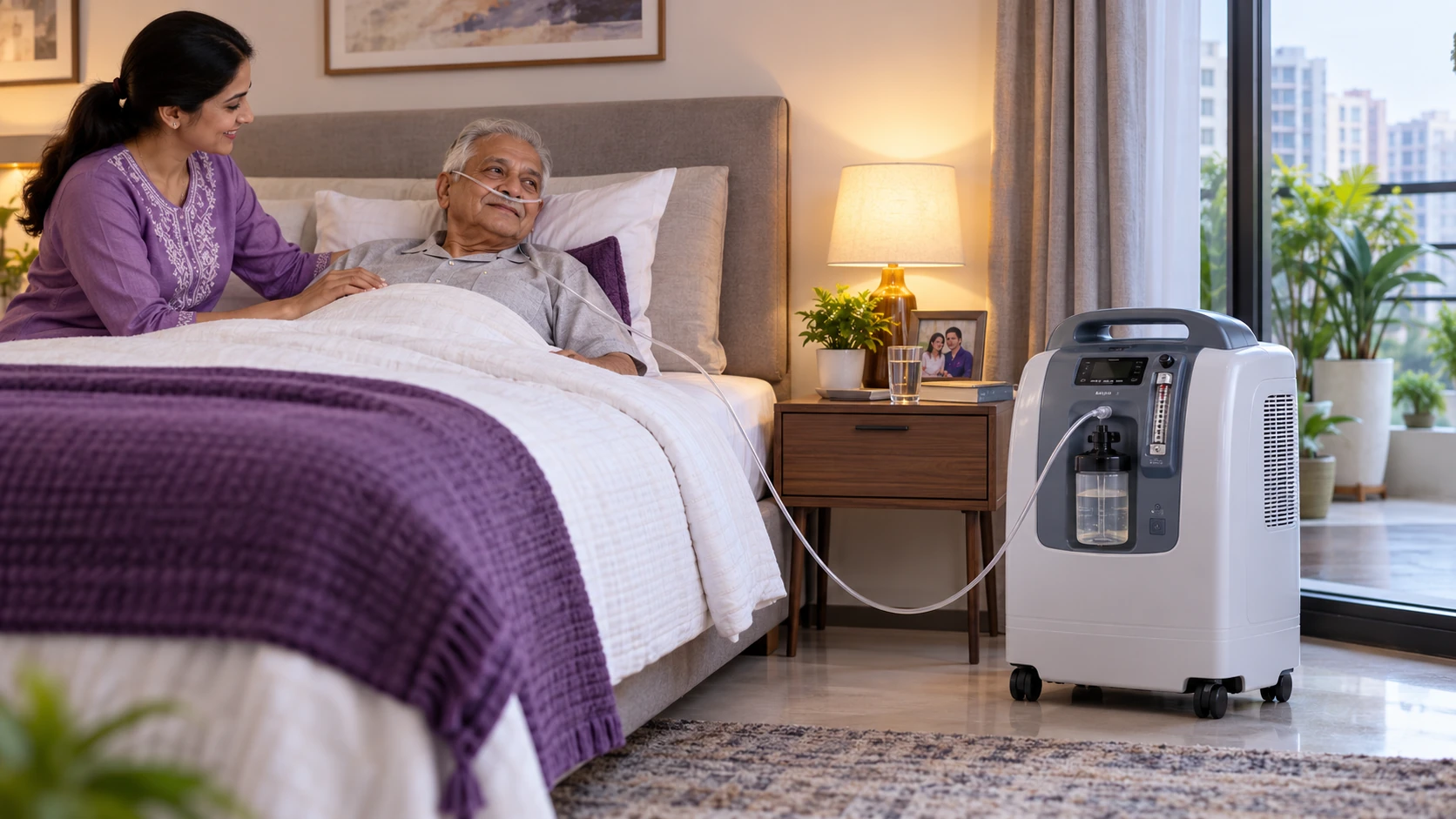
5. Check Your Apartment Society’s Delivery Rules
High-rise societies may have their own rules for outside vendors, delivery vehicles and service lifts. Checking these rules before delivery can prevent avoidable waiting.
6. Plan Parking and Unloading Before the Delivery Team Arrives
For large medical equipment, the distance between the delivery vehicle and the building entrance can make a practical difference.
Before delivery, find out whether the vehicle can enter the society and where it can safely stop for unloading.
If parking is far from the lift, inform the delivery team in advance. This is especially useful for bulky equipment such as hospital beds.
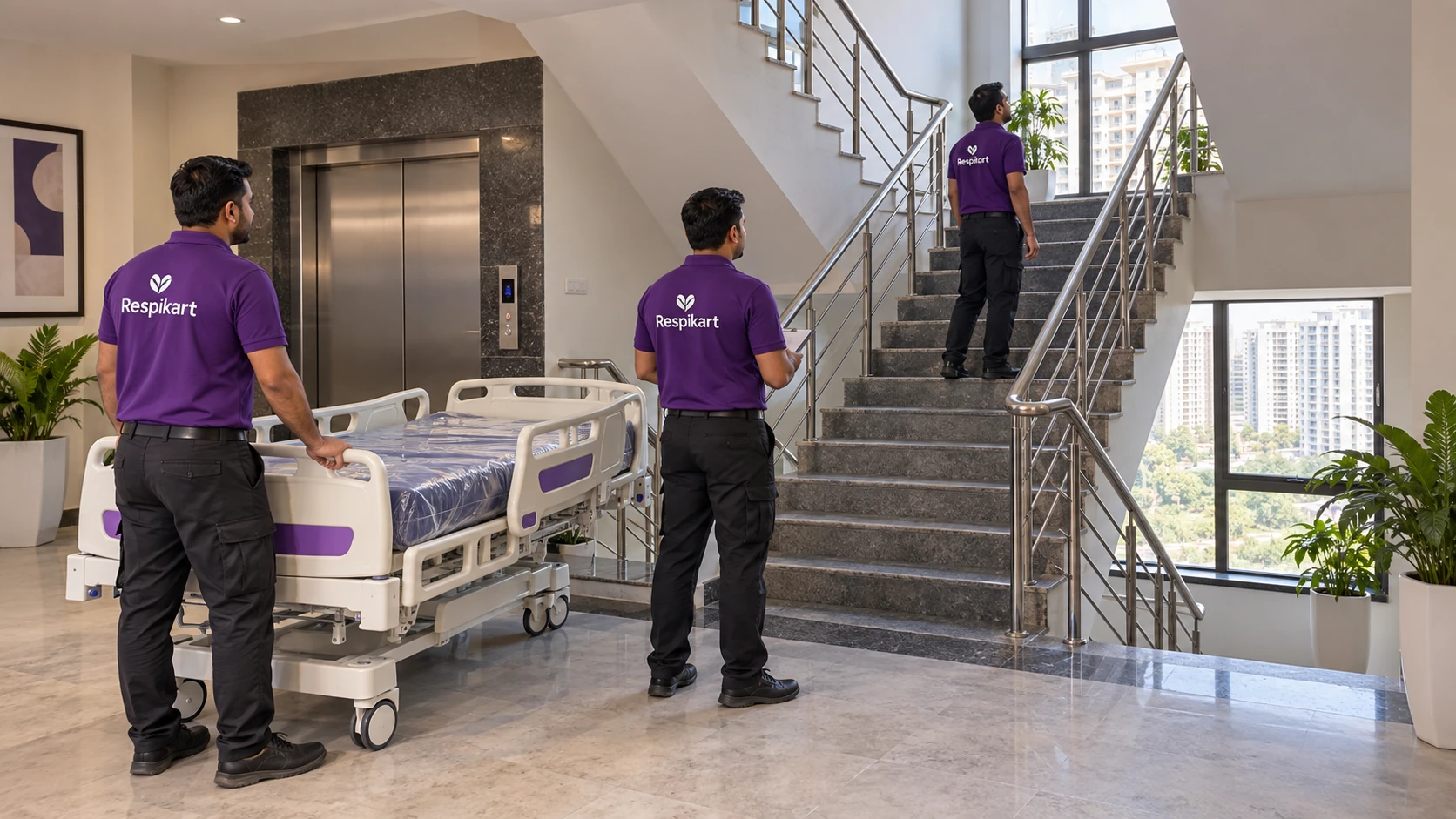
7. What If the Lift Is Not Available?
If the lift is temporarily unavailable, the next step depends on the equipment, its dimensions and weight, and the building’s staircase.
Possible arrangements may include:
- Using another operational lift
- Using a service lift
- Checking an alternative building entrance
- Evaluating staircase access for suitable equipment
- Coordinating with building management
- Rescheduling delivery if safe access is not available
8. Prepare the Patient’s Room Before Delivery
Access planning does not end when the equipment reaches the apartment. The final room should also be prepared before delivery.
For the patient’s room, consider:
- Available floor space
- Door accessibility
- Power access where required
- Safe equipment placement
- Caregiver movement space
- Safe arrangement of tubing and cables
If you are arranging a hospital bed, remove unnecessary furniture from the intended area before the delivery team arrives.
9. What Information Should You Give the Delivery Team?
Complete delivery information can make coordination easier, particularly for urgent home-care requirements.
| Information | What to Confirm |
|---|---|
| Building | Society / Tower / Block |
| Floor | Exact floor number |
| Lift | Available / Not Available |
| Service Lift | Available / Restricted timings |
| Parking | Vehicle entry and unloading area |
| Equipment | Exact equipment required |
| Patient Room | Room prepared and accessible |
| Restrictions | Any society/security instructions |
10. Medical Equipment Delivery in Delhi NCR
High-rise apartments and gated residential societies are common throughout Delhi NCR. Access planning can be especially useful in multi-tower societies, high-rise buildings, apartments with restricted vendor entry and buildings with limited parking.
Respikart’s rental section currently lists medical equipment categories including oxygen concentrators, CPAP machines, BiPAP machines, oxygen cylinders, hospital beds, patient monitors, suction machines, ventilators and other medical equipment for Delhi NCR. :contentReference[oaicite:4]{index=4}
You can explore the complete Respikart Medical Equipment Rental section to find the relevant equipment category.
11. Why Access Planning Matters for Urgent Delivery
When a patient needs equipment soon after hospital discharge, unnecessary access problems can make the delivery process more complicated.
For example, a hospital bed may be ready for delivery, but the society’s service lift may have restricted operating hours. If this information is known in advance, the delivery can be coordinated around the building’s access requirements.
This is why it is useful to provide the tower, floor, lift information, parking instructions and any society restrictions when requesting medical equipment.
12. Renting or Buying Medical Equipment: Does Access Planning Change?
The basic access considerations remain similar whether you are renting or purchasing equipment.
However, rental requirements can sometimes be time-sensitive, particularly when equipment is needed temporarily during recovery or after hospital discharge.
Respikart offers both medical equipment sales and rental options. Depending on your requirement, you can explore the Respikart medical equipment store or the Respikart rental section .
13. Which Equipment Needs More Access Planning?
| Equipment | Typical Access Planning |
|---|---|
| Portable Oxygen Concentrator | Low |
| CPAP Machine | Low |
| BiPAP Machine | Low |
| Suction Machine | Low–Moderate |
| Patient Monitor | Moderate |
| Oxygen Cylinder | Moderate |
| Stationary Oxygen Concentrator | Moderate |
| Recliner Medical Bed | Moderate–High |
| Hospital Bed | High |
| Large/Bulky Equipment | High |
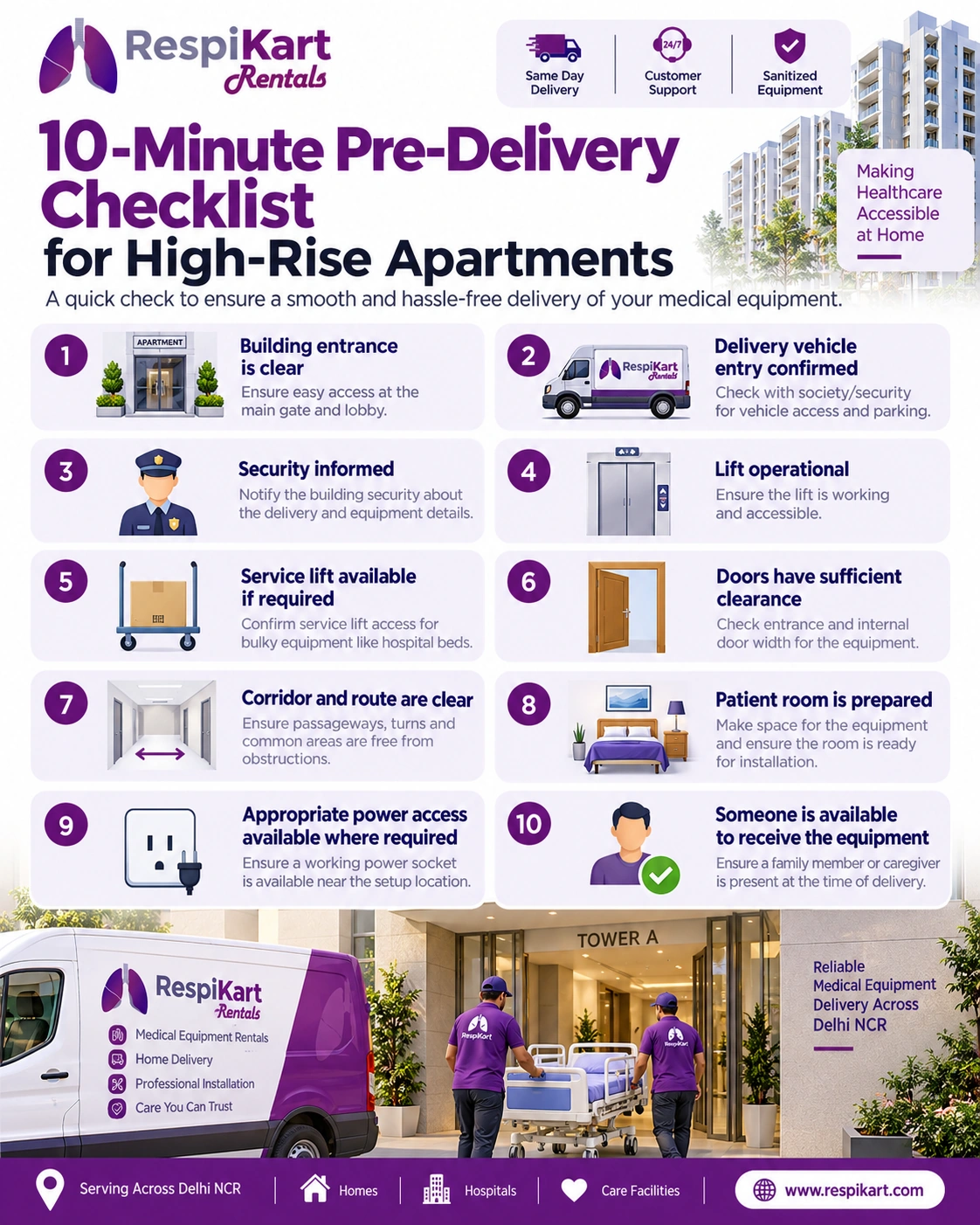
14. 10-Minute Pre-Delivery Checklist
Frequently Asked Questions
Can medical equipment be delivered to a high-rise apartment?
What if my building does not have a lift?
Does a hospital bed need a service lift?
What should I check before an oxygen concentrator arrives?
Can medical equipment be delivered on the same day?
Need Medical Equipment Delivered to Your Home?
Planning delivery in a high-rise apartment? Share your floor, lift availability, equipment requirement and access restrictions with the Respikart team before delivery.
Explore Medical Equipment Rentals Visit Respikart Contact RespikartConclusion
Home medical equipment delivery to a high-rise apartment becomes much easier when access is considered before delivery day. Instead of checking only the building address, think about the complete route: parking, entrance, lift, corridor, apartment door, bedroom door and final placement area.
For compact equipment such as CPAP, BiPAP and portable oxygen concentrators, access is generally simpler. Larger equipment such as hospital beds and recliner beds may require more detailed planning.
A few minutes spent checking lift access, door widths, society rules, parking and room preparation can help reduce avoidable delivery complications.
If you are arranging medical equipment for home use, provide the equipment type, floor number, lift availability and any building restrictions to the provider in advance.
Respikart provides medical equipment for rent and purchase for home-care requirements. Explore the Respikart website for equipment options and rental categories.
