

Oxygen Concentrator
How to Use an Oxygen Concentrator Safely at Home – Complete Safety Guide
Sep
How to Use an Oxygen Concentrator Safely at Home
Using an oxygen concentrator at home can make prescribed oxygen therapy more convenient, but correct operation and safety are extremely important. Learn how to set up, use, clean and maintain an oxygen concentrator safely at home.
📋 In This Guide
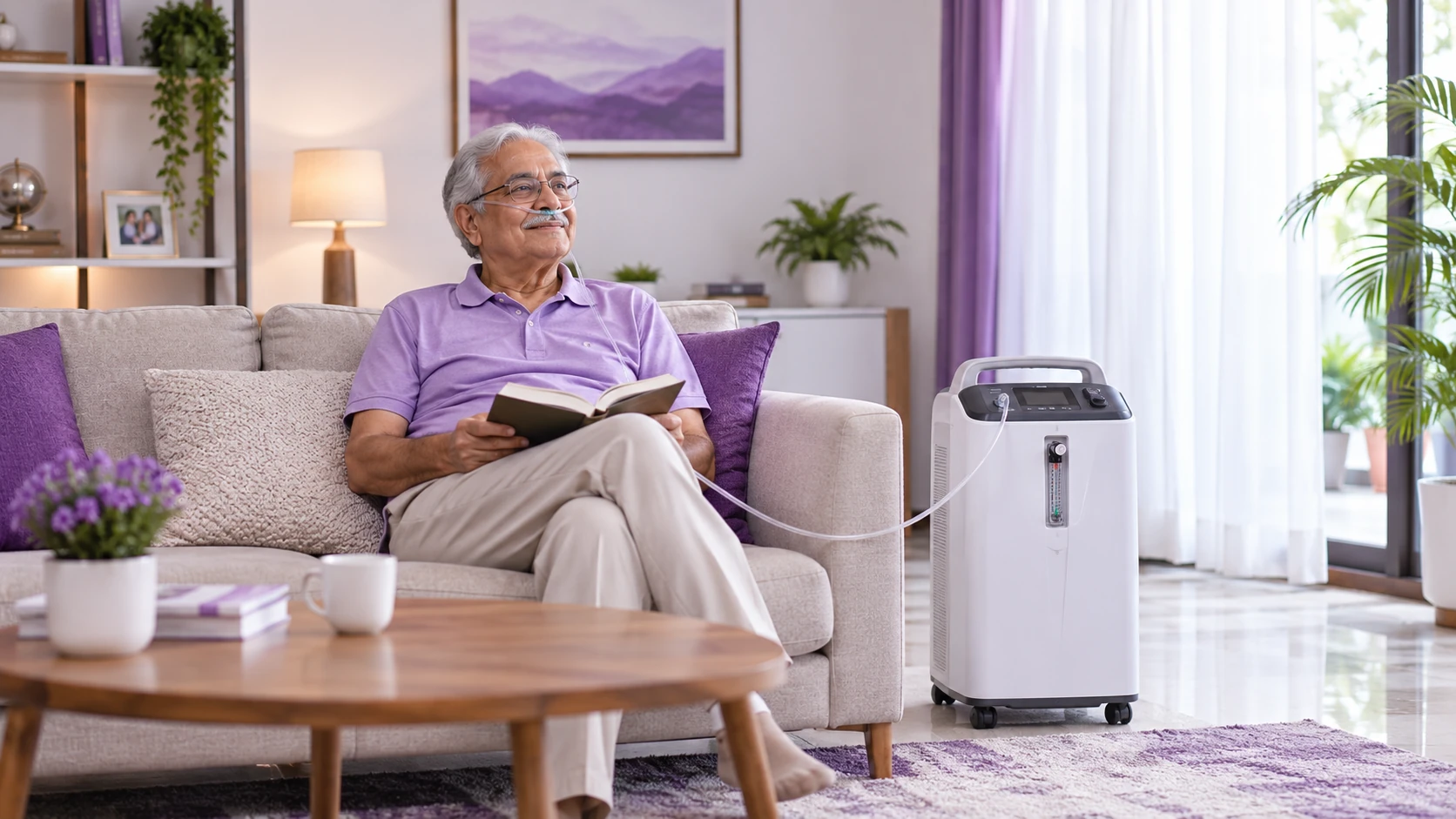
An oxygen concentrator is a medical device used to provide supplemental oxygen to patients who have been prescribed oxygen therapy. Unlike a traditional oxygen cylinder, an oxygen concentrator draws air from the surrounding environment, concentrates oxygen and delivers it through a nasal cannula or oxygen mask.
Oxygen concentrators are commonly used for homecare, post-hospital recovery and other situations where supplemental oxygen has been prescribed by a healthcare professional.
However, an oxygen concentrator should never be treated like an ordinary household appliance. Correct oxygen flow, ventilation, electrical safety, fire prevention and regular maintenance all matter.
What Is an Oxygen Concentrator?
An oxygen concentrator takes normal room air and separates oxygen from other gases. The concentrated oxygen is then delivered to the patient through oxygen tubing, a nasal cannula or an oxygen mask.
Air Intake
The machine draws surrounding room air into the unit.
Oxygen Concentration
The machine separates oxygen from other gases using its internal filtration and molecular sieve system.
Oxygen Delivery
Concentrated oxygen is delivered through tubing and a nasal cannula or oxygen mask.
Power Requirement
Most standard home oxygen concentrators require a continuous electrical connection.
How to Use an Oxygen Concentrator at Home
Using an oxygen concentrator is generally straightforward once you understand the basic setup. Follow the manufacturer’s instructions and your healthcare professional’s prescription.
1 Read the User Manual
Before using the machine, read the manufacturer’s instructions. Different oxygen concentrators can have different controls, alarms, filters, flow meters and maintenance requirements.
2 Place the Concentrator Correctly
Keep the concentrator in a clean, dry and well-ventilated area. The machine needs adequate airflow to operate properly.
- Keep it on a stable surface.
- Keep it away from walls and curtains.
- Keep it away from excessive dust.
- Keep it away from water and moisture.
- Keep it away from direct heat.
- Keep air intake and exhaust vents unobstructed.
3 Connect the Power Supply
Connect the concentrator to a suitable electrical outlet according to the manufacturer’s instructions.
Check the power cable and plug for visible damage before use. Never operate a medical device with damaged electrical wiring.
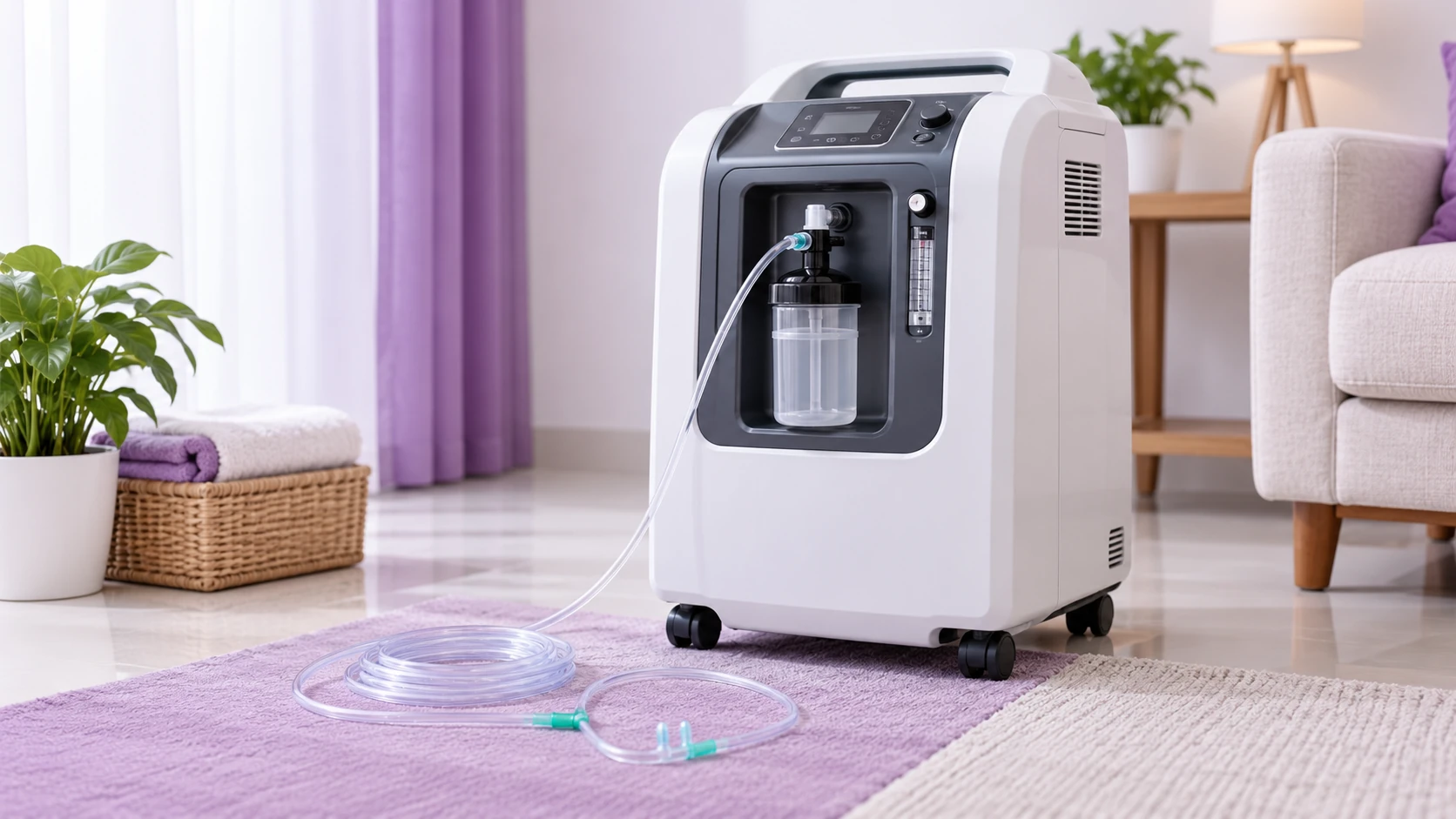
4 Connect the Oxygen Tubing
Attach the oxygen tubing securely to the oxygen outlet of the concentrator.
- Make sure the connection is secure.
- Check that the tubing is not twisted.
- Check for cracks or holes.
- Make sure the tubing is not blocked.
- Keep the tubing away from walking paths.
5 Position the Nasal Cannula
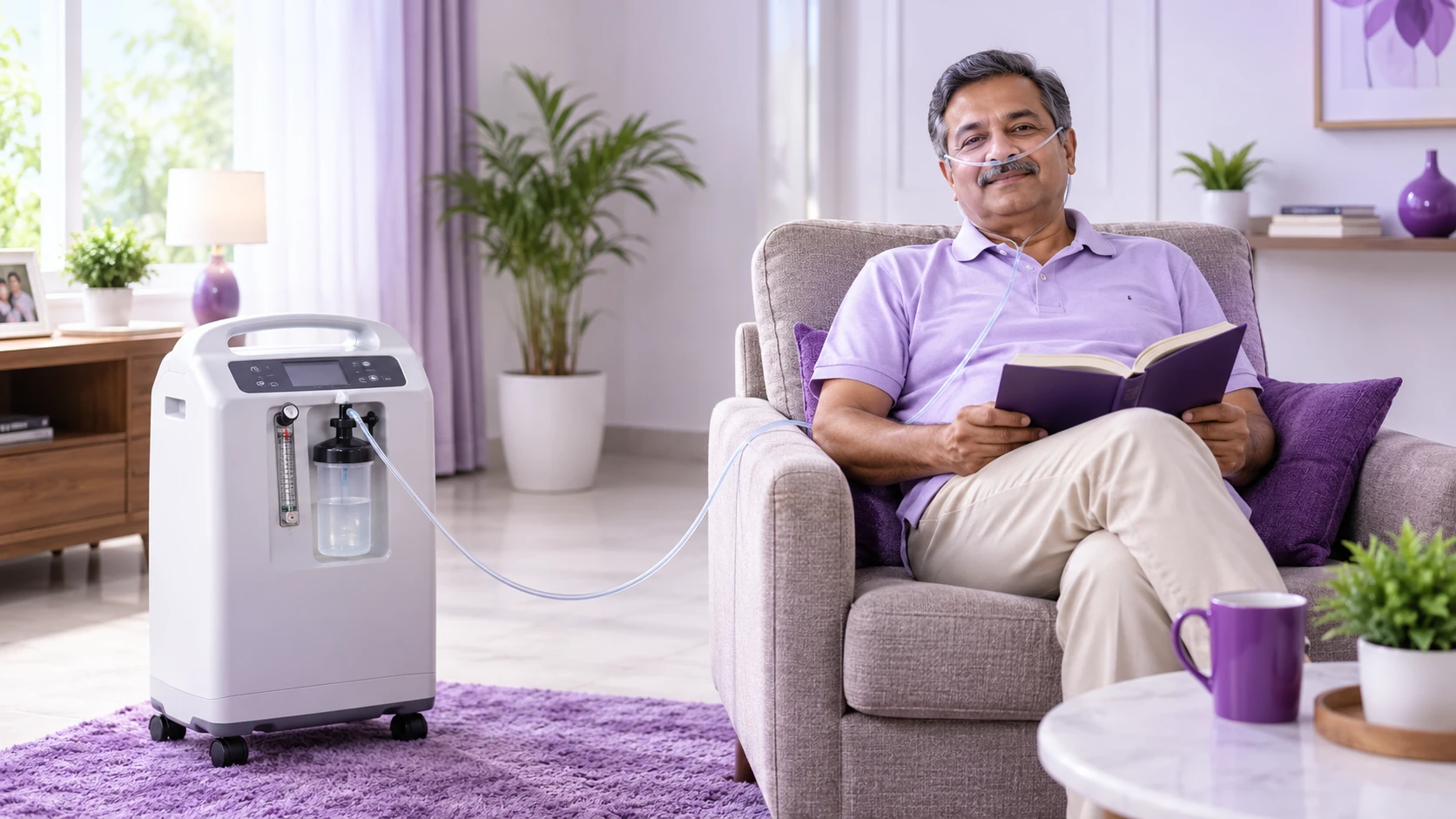
Place the nasal cannula gently into the nostrils and position the tubing comfortably around the ears.
Avoid pulling the tubing too tightly. If the cannula causes persistent discomfort or irritation, speak with your healthcare provider.
6 Turn On the Concentrator
Switch on the machine using the power button. Depending on the model, the machine may take some time to reach its specified oxygen concentration.
7 Set the Prescribed Oxygen Flow
Set the flow meter to the exact rate prescribed by the doctor. Oxygen flow is commonly expressed in litres per minute (LPM).
Do not increase or decrease the oxygen flow simply because you feel more or less breathless. Oxygen is a medical therapy and the appropriate flow depends on the patient’s medical requirement.
Oxygen Concentrator Safety Rules You Should Never Ignore
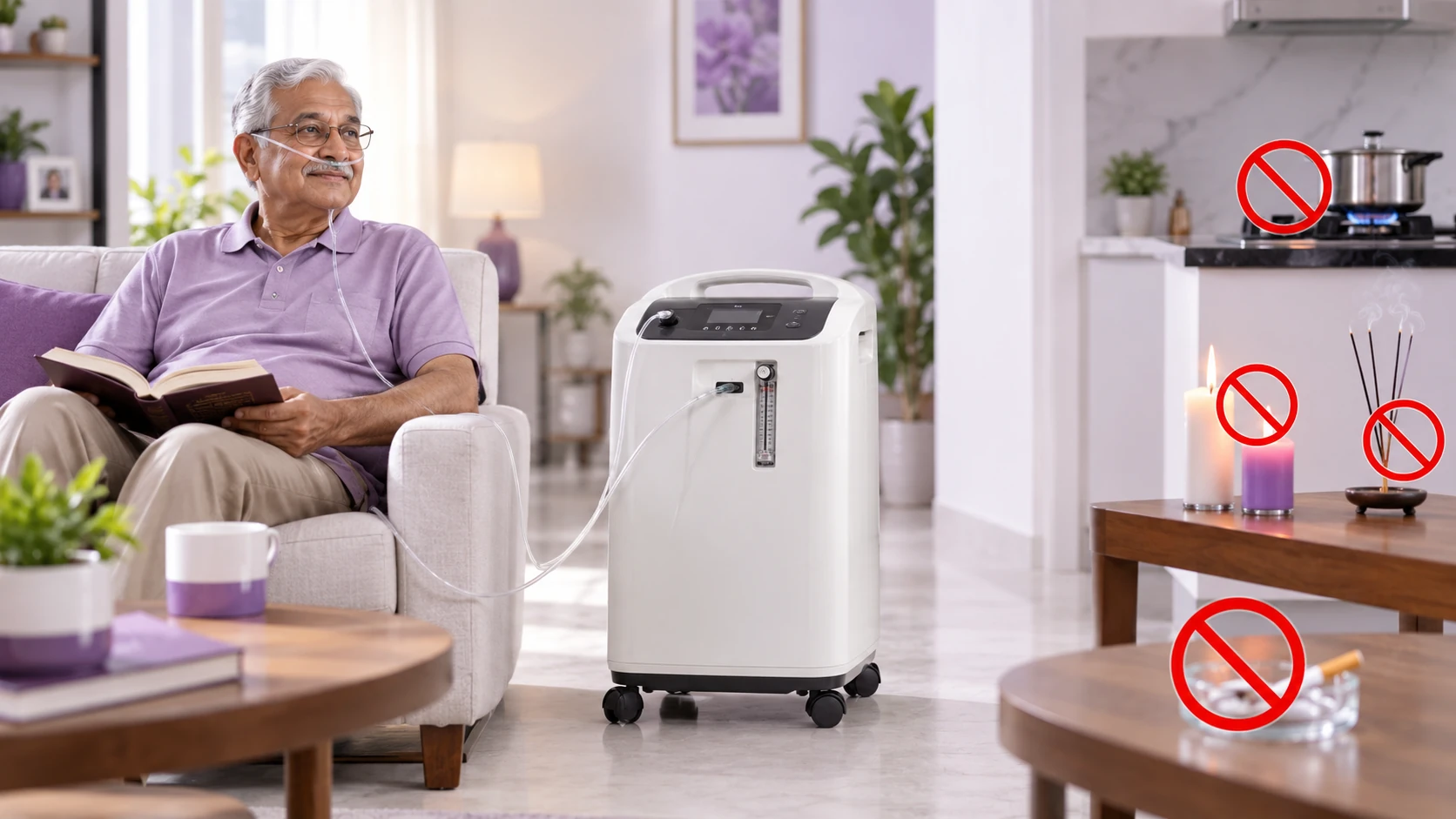
Oxygen supports combustion, so fire safety is one of the most important parts of using oxygen at home.
🚭 Never Smoke Near Oxygen
Never smoke while using oxygen and never allow anyone to smoke near the concentrator, oxygen tubing, nasal cannula or oxygen accessories.
Keep cigarettes, beedis, matches, lighters and other ignition sources away from oxygen equipment.
🔥 Keep Away From Flames
Keep the oxygen equipment away from gas burners, candles, incense sticks, diyas, room heaters, fireplaces and other sources of flame or sparks.
🧴 Avoid Flammable Products
Avoid potentially flammable aerosols, sprays and oil-based products around oxygen equipment.
🌬️ Keep Ventilation Open
Never cover the concentrator with a blanket, cloth or plastic while it is operating.
⚠️ Manage Tubing Carefully
Do not leave oxygen tubing across stairs, doorways or busy walking areas where someone could trip.
Can an Oxygen Concentrator Be Used While Sleeping?
Some patients are prescribed oxygen during sleep. If your doctor has prescribed nighttime oxygen, use the machine according to the prescription and the manufacturer’s instructions.
Before Sleeping, Check:
- The oxygen tubing is connected properly.
- The nasal cannula is positioned correctly.
- The tubing is not trapped under heavy bedding.
- The concentrator has adequate ventilation.
- The electrical connection is secure.
- There are no flames or smoking materials nearby.
Do not start nighttime oxygen therapy simply because someone snores or feels tired. Oxygen therapy should be based on appropriate medical advice.
Using a Humidifier Bottle With an Oxygen Concentrator
Some oxygen therapy setups use a humidifier bottle to help reduce dryness caused by oxygen therapy.
If a humidifier bottle is prescribed or recommended for your setup, follow the manufacturer’s instructions carefully.
- Use the recommended type of water.
- Do not overfill the bottle.
- Clean the bottle regularly.
- Replace water according to instructions.
- Check for contamination or unusual deposits.
- Ensure the bottle is correctly connected.
How to Clean and Maintain an Oxygen Concentrator
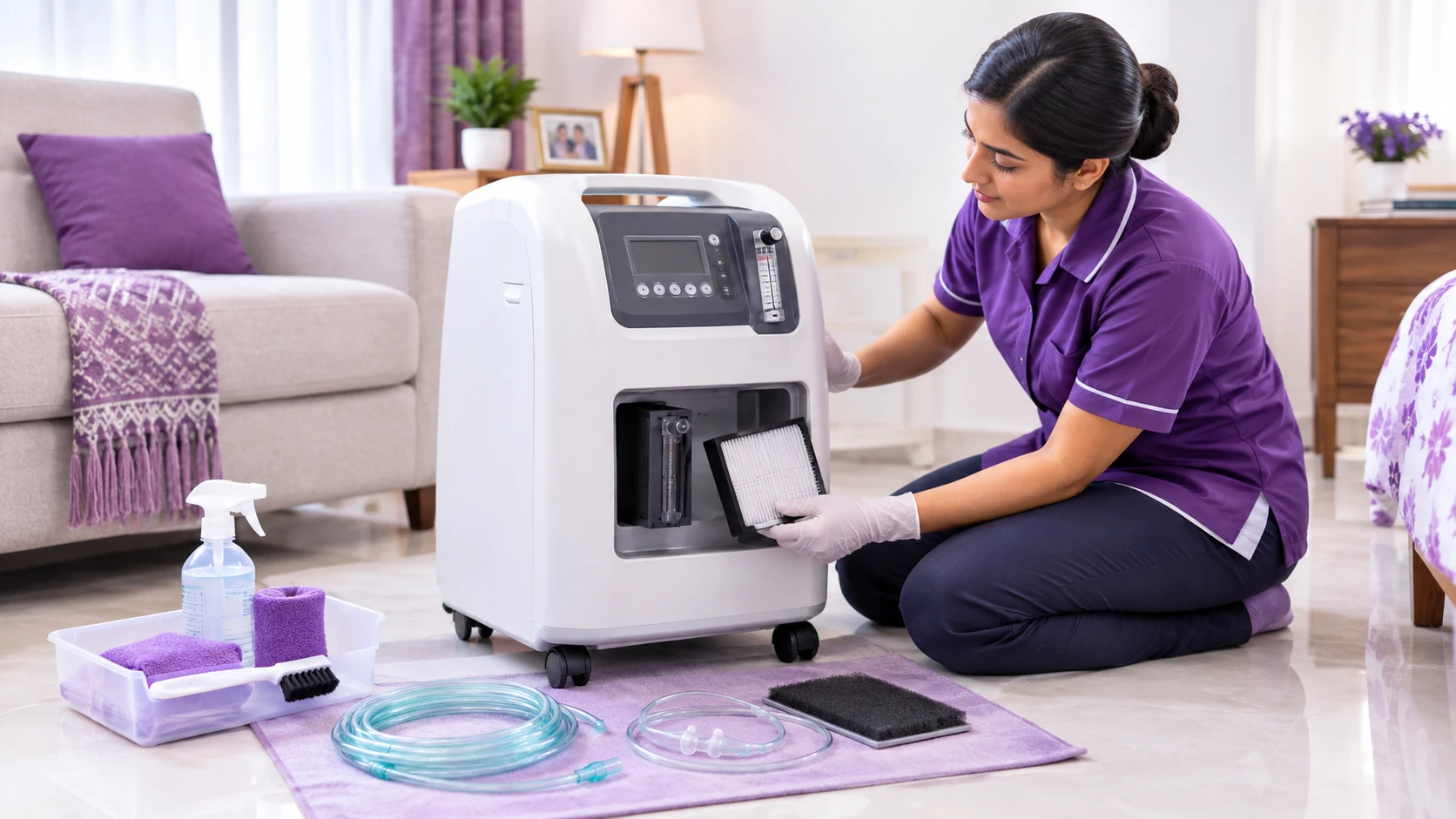
Regular cleaning and maintenance can help keep your oxygen equipment in good working condition.
🧽 Clean the Exterior
Clean the outer surface according to the manufacturer’s instructions and keep dust away from air intake areas.
🔧 Check Filters
Clean or replace filters according to the specific manufacturer’s maintenance schedule.
👃 Check the Cannula
Keep the nasal cannula clean and replace it when damaged, blocked or excessively worn.
🔍 Inspect Tubing
Check for cracks, holes, kinks, blockages and loose connections.
What to Do During a Power Cut?
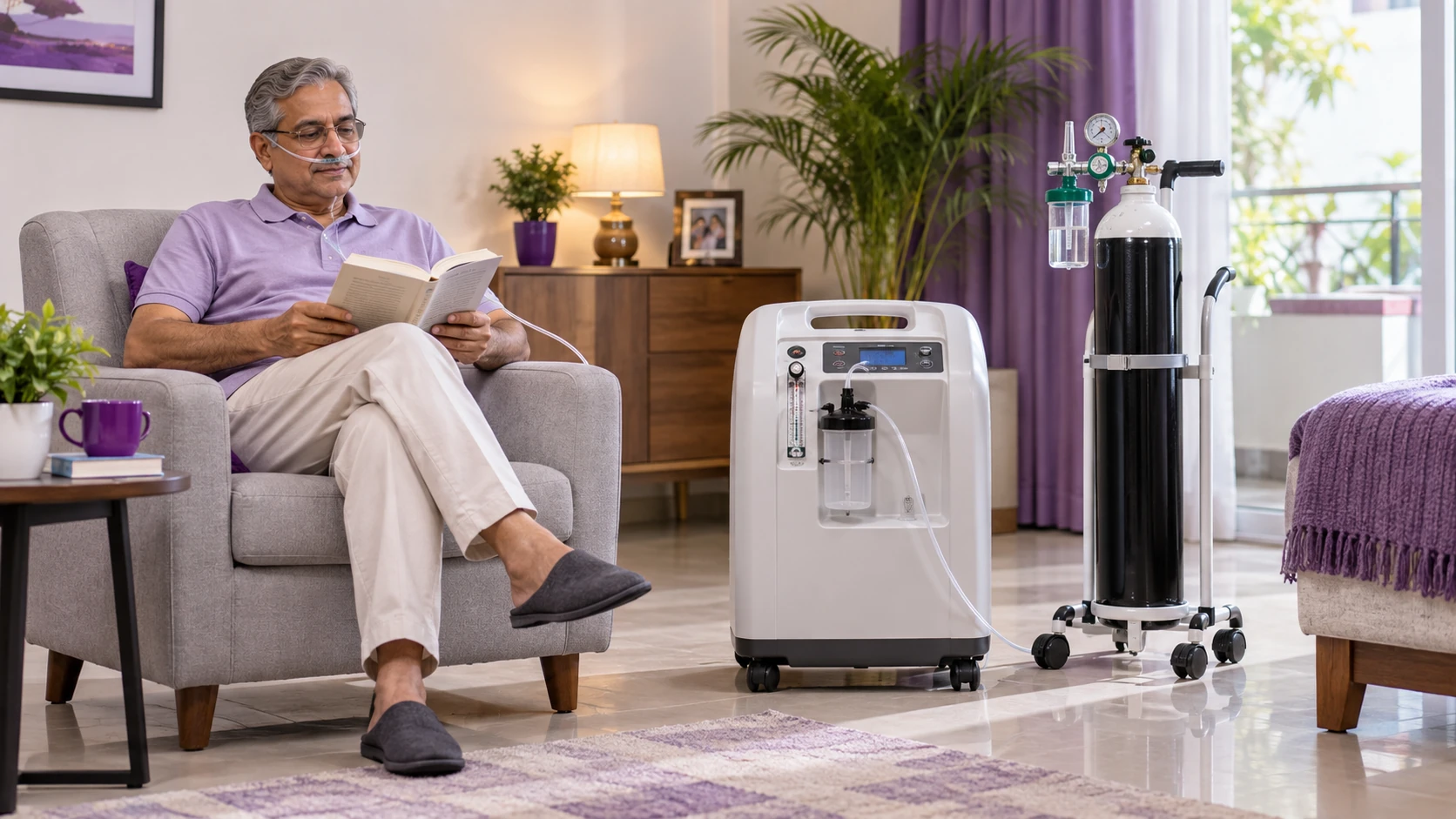
Most standard home oxygen concentrators require electricity. Therefore, patients who depend on continuous oxygen should discuss a backup plan before a power failure occurs.
Possible Backup Options
- Backup Oxygen Cylinder – Keep a medically approved oxygen cylinder ready if continuous oxygen therapy is prescribed.
- Portable Oxygen Concentrator – Some portable models have rechargeable battery backup for temporary use.
- Battery-Supported Equipment – Use manufacturer-approved batteries or power backup solutions where applicable.
- Emergency Medical Support – Contact your healthcare provider or oxygen equipment supplier immediately if backup oxygen is required.
The appropriate backup option depends on the patient’s medical requirement. Never attempt to modify the concentrator or create an unsafe electrical setup. Always follow your doctor’s prescription and the manufacturer’s safety instructions.
Common Oxygen Concentrator Mistakes to Avoid
- Changing the oxygen flow without medical advice
- Smoking while using oxygen
- Keeping the concentrator near a gas stove
- Covering the concentrator while it is operating
- Using damaged oxygen tubing
- Blocking the machine’s ventilation
- Ignoring repeated machine alarms
- Using dirty oxygen accessories
- Having no backup plan during power failures
When Should You Contact a Doctor?
An oxygen concentrator is a medical device and is not a substitute for medical evaluation.
Seek Medical Help if There Is:
- Severe or worsening difficulty breathing
- Blue or grey lips or fingertips
- Confusion or unusual drowsiness
- Chest pain
- Significant worsening of symptoms
- Severe weakness
- Any serious or sudden change in condition
Do not simply increase the oxygen flow to manage a serious deterioration without medical advice.
Oxygen Concentrator on Rent in Delhi NCR
If you need an oxygen concentrator temporarily for home recovery, post-hospitalization care or prescribed oxygen therapy, renting can be a practical alternative to purchasing a machine.
Respikart Rentals provides oxygen concentrators on rent across Delhi NCR, subject to equipment availability.
Respikart’s rental offering includes oxygen concentrators for different requirements, including standard home oxygen concentrators and portable oxygen concentrators.
🚚 Delhi NCR Delivery
Rental delivery is available across multiple Delhi NCR locations, subject to availability and delivery conditions.
🧼 Sanitized Equipment
Rental equipment is cleaned, checked and prepared before dispatch according to the service process.
🛠️ Setup Assistance
Customers can enquire about setup guidance and operational support for rental equipment.
📞 Technical Support
Support is available for rental equipment enquiries, setup and troubleshooting.
Need an Oxygen Concentrator on Rent?
Check available oxygen concentrators, rental options and delivery availability across Delhi NCR.
Oxygen Concentrator Rental Areas in Delhi NCR
Respikart Rentals serves customers across multiple Delhi NCR locations, subject to availability and delivery conditions.
Other Respiratory Equipment Available on Rent
Depending on your healthcare requirement, Respikart Rentals also offers other medical equipment categories for homecare and respiratory support.
Oxygen Cylinders
Explore oxygen cylinder rental options for homecare and backup oxygen requirements.
View Oxygen Cylinders →Portable Oxygen Concentrators
Portable oxygen concentrators may be suitable for patients who require greater mobility, subject to prescription.
View Portable Oxygen Concentrators →BiPAP Machines
Explore BiPAP rental options for prescribed respiratory support.
View BiPAP Machines →Frequently Asked Questions About Oxygen Concentrators
Can I use an oxygen concentrator without a prescription?
Oxygen is a medical therapy and should be used under appropriate medical guidance. A healthcare professional should determine whether supplemental oxygen is appropriate and what flow should be used.
Is an oxygen concentrator better than an oxygen cylinder?
Neither option is universally better. The right option depends on the patient’s oxygen requirement, duration of use, electricity availability, mobility and backup requirements.
Does an oxygen concentrator need electricity?
Most standard home oxygen concentrators require electricity. Portable models may have rechargeable batteries depending on the specific model.
Can I increase the oxygen flow if the patient feels breathless?
No. Do not change the prescribed oxygen flow without medical advice. If symptoms worsen, contact a healthcare professional.
Can I smoke while using an oxygen concentrator?
Absolutely not. Smoking around oxygen creates a serious fire hazard. Keep cigarettes, matches, lighters and flames away from oxygen equipment.
Can I keep an oxygen concentrator in a bedroom?
An oxygen concentrator may be used in a bedroom when appropriately installed and operated. Ensure adequate ventilation and keep the equipment away from flames, smoking and other hazards.
Can I use an oxygen concentrator during a power cut?
Standard oxygen concentrators require electricity. Patients who depend on continuous oxygen should discuss an appropriate backup plan with their doctor or oxygen equipment provider.
What does LPM mean in an oxygen concentrator?
LPM means litres per minute. It refers to the rate at which oxygen is delivered by the equipment.
How do I choose an oxygen concentrator for rent?
The oxygen concentrator should be selected according to the patient’s prescribed oxygen flow and medical requirement. Speak with your healthcare provider and rental supplier before choosing a machine.
Does Respikart provide oxygen concentrator rental in Noida and Gurgaon?
Respikart Rentals provides oxygen concentrator rental services across multiple Delhi NCR locations, including Delhi, Noida, Greater Noida, Gurgaon, Ghaziabad and Faridabad, subject to availability and delivery conditions.
Oxygen Concentrator Safety Checklist
- ☑ Doctor has prescribed oxygen therapy
- ☑ Correct oxygen flow rate is known
- ☑ Machine is appropriate for the prescribed requirement
- ☑ Power connection is safe
- ☑ Oxygen tubing is connected correctly
- ☑ Nasal cannula is positioned correctly
- ☑ Concentrator has adequate ventilation
- ☑ Smoking is prohibited near oxygen
- ☑ Flames and heat sources are kept away
- ☑ Tubing does not create a trip hazard
- ☑ Equipment and accessories are maintained
- ☑ Backup plan is available if oxygen is essential
Looking for an Oxygen Concentrator on Rent in Delhi NCR?
Respikart Rentals provides oxygen concentrator rental options across Delhi NCR. Check current equipment availability, rental options and delivery support for your location.
Delhi • Noida • Greater Noida • Gurgaon • Ghaziabad • Faridabad
