

Medical Equipment
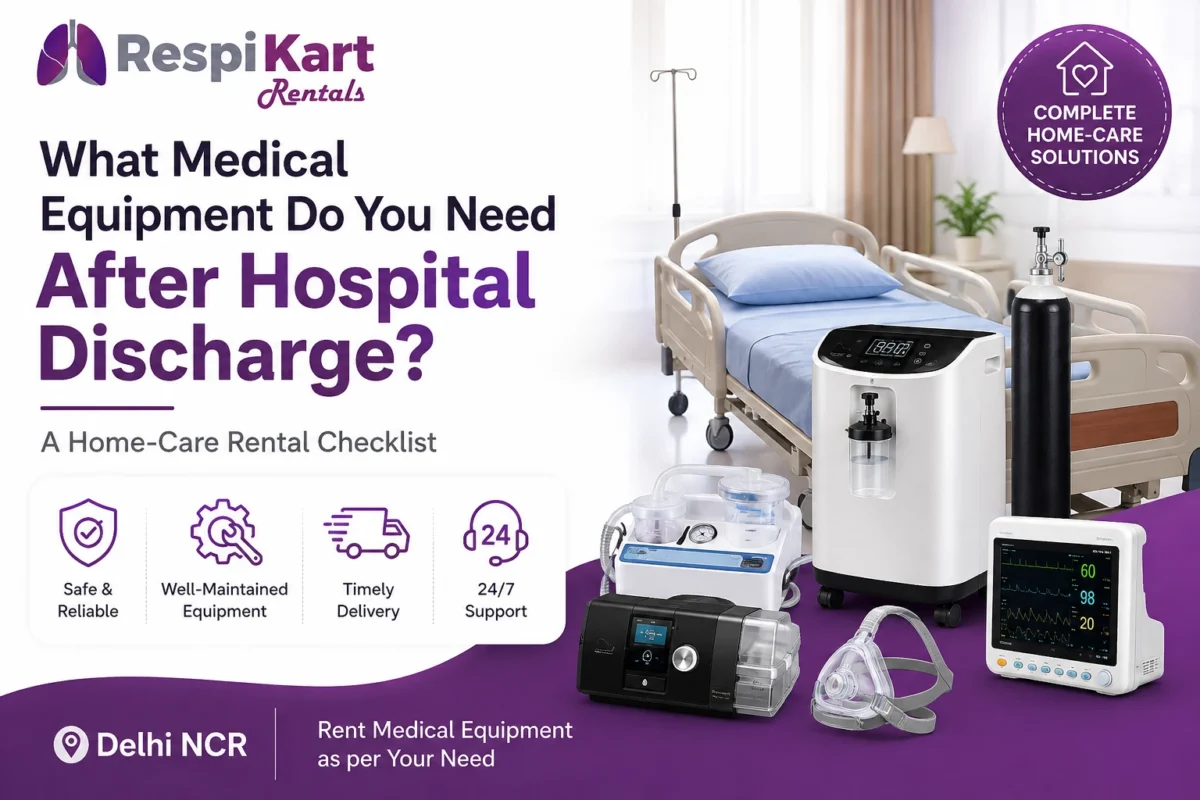
What Medical Equipment Do You Need After Hospital Discharge? A Home-Care Rental Checklist
Sep
What Medical Equipment Do You Need After Hospital Discharge?
A practical home-care rental checklist to help families prepare for the transition from hospital to home.
Being discharged from a hospital is often a relief for patients and their families. But for many people, recovery does not end at the hospital door.
Depending on the patient’s condition, recovery may require oxygen support, respiratory equipment, mobility assistance, a suitable sleeping surface, monitoring equipment or other medical devices at home.
The challenge for families is knowing what equipment is actually required, what can be rented, and what should be arranged before the patient reaches home.
This home-care checklist is designed to help families plan better after hospital discharge.
Not every patient needs medical equipment at home. Equipment should be selected according to the patient’s diagnosis, mobility, respiratory condition, treatment plan and instructions from the treating doctor or healthcare professional.
Why Medical Equipment May Be Needed After Hospital Discharge
Some patients can return home with only medicines and routine follow-up. Others may need additional support during their recovery.
For example, a patient recovering from a respiratory illness may require prescribed oxygen therapy, while a patient with limited mobility may benefit from a hospital bed.
Home-Care Medical Equipment Checklist
Here is a practical checklist to help you understand the common equipment categories that may be required after discharge.
Oxygen Concentrator
An oxygen concentrator may be required when a doctor has prescribed supplemental oxygen for a patient.
Unlike a conventional oxygen cylinder, an oxygen concentrator takes air from the surrounding environment and concentrates oxygen for delivery to the patient.
Before renting, check:
- Prescribed oxygen flow rate
- Required hours of use
- Continuous or specific-use requirement
- Suitable power supply
- Tubing and nasal cannula/mask requirements
- Backup oxygen arrangement if advised
Oxygen Cylinder
An oxygen cylinder may be used when supplemental oxygen has been prescribed and a cylinder-based oxygen supply is appropriate.
The appropriate oxygen source depends on the prescribed requirement and the patient’s situation.
Before bringing one home:
- Confirm prescribed oxygen requirement
- Check cylinder capacity
- Understand the regulator
- Keep cylinder securely positioned
- Keep oxygen away from flames and smoking
- Ask the supplier about safe handling
Hospital Bed
A normal household bed may not always be suitable for a patient who has difficulty sitting up, turning, transferring or maintaining a comfortable position.
Depending on the model:
- Adjustable backrest
- Adjustable leg section
- Height adjustment
- Side rails
- Improved caregiver access
- Mattress compatibility
A hospital bed may be useful for patients with limited mobility or those expected to spend significant time in bed.
CPAP Machine
Patients who have been prescribed CPAP therapy may need to continue their treatment after leaving the hospital.
CPAP delivers continuous positive airway pressure through a mask and is commonly used as part of treatment for obstructive sleep apnea.
Before renting:
- CPAP/APAP requirement
- Prescribed pressure/settings
- Mask type and size
- Humidifier requirement
- Tubing
- Filters
BiPAP Machine
Some patients require BiPAP/NIV therapy rather than standard CPAP.
BiPAP machines provide different pressure levels during inhalation and exhalation and may be prescribed for specific respiratory conditions.
BiPAP rental may be relevant when:
- BiPAP/NIV has been prescribed
- Non-invasive respiratory support is required
- Equipment is required temporarily
- Home respiratory support follows hospital care
Suction Machine
For certain patients who have difficulty clearing secretions, a suction machine may be part of the home-care setup.
Before taking one home:
- Understand machine operation
- Understand appropriate suction pressure
- Confirm required accessories
- Understand tubing and collection containers
- Follow cleaning procedures
- Know when professional help is needed
Patient Monitor
A patient monitor may be recommended for selected patients who require monitoring at home.
Depending on the equipment:
- SpO₂
- Pulse rate
- Blood pressure
- Temperature
- Other vital parameters
A monitor should not be considered a replacement for clinical assessment.
Infusion Pump or Syringe Pump
Some patients may require controlled administration of medication or fluids after discharge.
An infusion pump or syringe pump may be used in specific situations under professional supervision.
DVT Pump
Patients who spend extended periods in bed or have limited mobility may sometimes be prescribed mechanical methods to support venous circulation.
A DVT pump / intermittent pneumatic compression device may be recommended for selected patients.
Ventilator
For patients who require invasive or advanced respiratory support, a ventilator may be necessary as part of a carefully planned home-care arrangement.
Home ventilation requires:
- Appropriate medical prescription
- Correct machine configuration
- Trained caregiver/support
- Reliable power arrangements
- Emergency planning
- Regular medical follow-up
Home-Care Rental Checklist Before the Patient Arrives
Don’t wait until the patient reaches home to start arranging equipment. Prepare the required equipment and home environment in advance whenever possible.
Medical Requirement
Equipment
Accessories
Home Preparation
Should You Buy or Rent Medical Equipment?
The right choice depends on how long the equipment will be needed, the treatment plan and the overall cost of ownership.
| Situation | Renting | Buying |
|---|---|---|
| Short recovery period | ✓ | — |
| Temporary oxygen requirement | ✓ | — |
| Post-surgery recovery | ✓ | — |
| Equipment needed for a few weeks/months | ✓ | — |
| Long-term therapy | — | ✓ |
| Regular daily use for years | — | ✓ |
| Unsure about long-term requirement | ✓ | — |
| Want to avoid high upfront cost | ✓ | — |
There is no single answer for every patient. The best choice depends on duration of use, equipment cost, maintenance requirements and the patient’s long-term treatment plan.
How Respikart Can Help With Home-Care Equipment
At Respikart, the rental range is designed to cover different types of home-care requirements.
Respiratory Equipment
- Oxygen Concentrators
- Oxygen Cylinders
- CPAP Machines
- BiPAP Machines
- Ventilators
- Suction Machines
Patient-Care Equipment
- Hospital Beds
- Electric / Recliner Beds
- Other patient-support equipment
Monitoring & Critical-Care Equipment
- Patient Monitors
- Infusion Pumps
- Syringe Pumps
- DVT Pumps
- Other specialised equipment
Delhi NCR Home-Care Rental
Families can arrange individual equipment according to their actual home-care requirement instead of automatically renting a complete setup.
Selected Respikart rental listings also highlight same-day delivery options, depending on product and service availability.
Questions to Ask a Medical Equipment Rental Provider
What model will be provided?
Confirm the equipment model and whether it is suitable for the prescribed requirement.
What accessories are included?
Ask whether masks, tubing, filters and other required accessories are included.
Is installation available?
For equipment requiring setup, confirm whether installation or demonstration is available.
What is the rental period?
Confirm the rental duration and what happens if the equipment is needed for longer.
What happens if equipment develops a problem?
Ask about technical support, replacement and troubleshooting assistance.
Has the equipment been cleaned and tested?
Confirm cleaning, sanitisation, testing and basic operating instructions before use.
Preparing a Room for Medical Equipment
Before delivery, prepare the patient’s room so that equipment can be positioned safely and caregivers can move around easily.
Don’t Forget the Caregiver
Home care is not only about equipment. The caregiver also needs to understand the patient’s routine and the instructions provided by the medical team.
Before Discharge
Equipment
A properly arranged home environment can make caregiving more manageable, but medical equipment cannot replace professional medical care.
A Simple 24-Hour Home-Care Preparation Plan
Confirm Medical Plan
Ask the healthcare team what equipment is required.
Arrange Rental
Confirm equipment availability and delivery details.
Prepare Room
Clear space for the bed and medical equipment.
Check Equipment
Confirm equipment, accessories and instructions.
Follow Treatment Plan
Continue medicines, therapy and follow-up as advised.
Home-Care Rental Checklist — Save This
Patient
Respiratory
Patient Care
Home Preparation
Final Takeaway
The transition from hospital to home can be much easier when the family prepares in advance.
But the goal isn’t to rent every piece of medical equipment available. The right approach is to identify the equipment recommended for the patient’s condition and arrange it before discharge whenever possible.
Whether a patient needs an oxygen concentrator for respiratory support, a hospital bed for easier positioning, a CPAP/BiPAP machine for prescribed respiratory therapy or specialised equipment for more complex care, the requirement should always be based on the individual’s medical needs.
Need Medical Equipment After Hospital Discharge?
Going home from the hospital is easier when the right equipment is ready before the patient arrives.
Respikart Rentals offers a wide range of medical equipment for home-care requirements in Delhi NCR , including Oxygen Concentrators, Oxygen Cylinders, CPAP, BiPAP, Hospital Beds, Suction Machines, Patient Monitors and other specialised equipment.
Don’t know which equipment you need? Share your requirement with the Respikart team and get guidance on the available rental options.
Browse Medical Equipment Rentals →Medical equipment should be used according to the patient’s prescribed treatment plan and healthcare professional’s instructions. This article is intended for general educational purposes and does not replace advice from a qualified doctor or healthcare professional.
