

-
×
 VentMed DS8 BiPAP ST30 with Humidifier and Full Face Mask
2 × ₹24,000.00
VentMed DS8 BiPAP ST30 with Humidifier and Full Face Mask
2 × ₹24,000.00
CPAP MACHINE
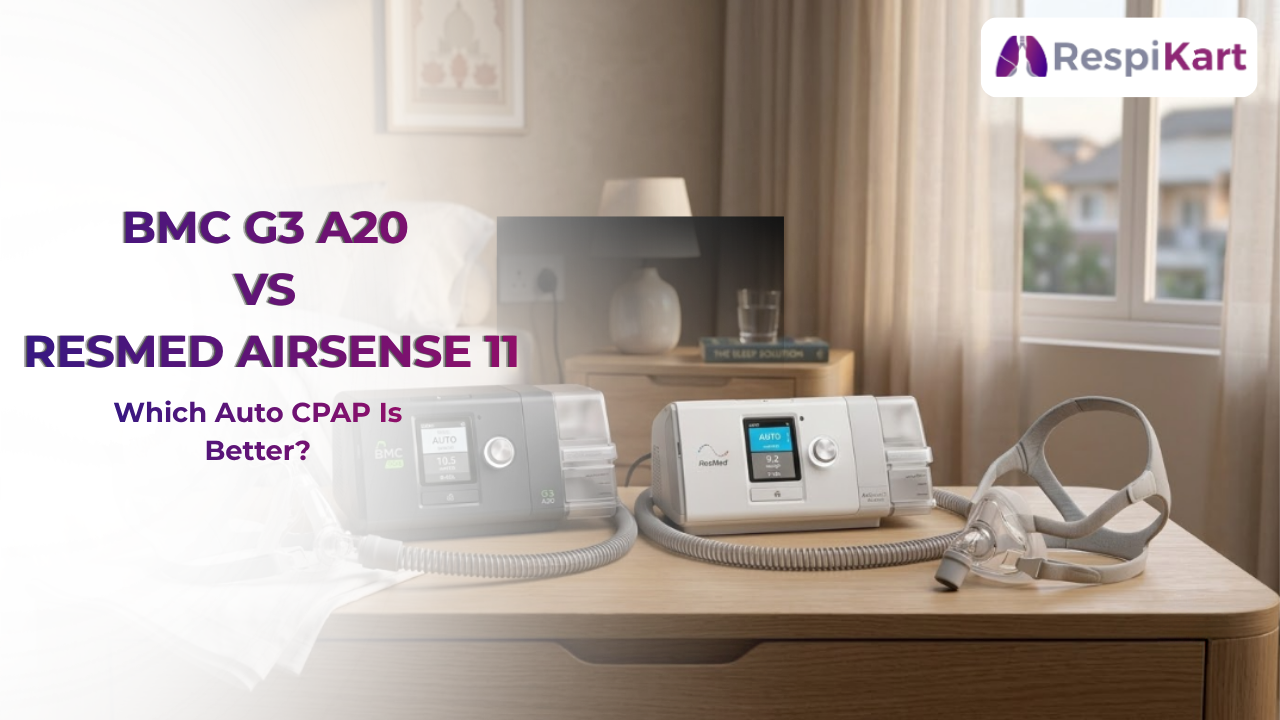
BMC G3 A20 vs ResMed AirSense 11: Which Auto CPAP Is Better?
Choosing an Auto CPAP machine is an important decision for anyone managing obstructive sleep apnea (OSA). With several models available today, it can be difficult to know which device offers the right combination of therapy, comfort, convenience and value.
Two popular options in the premium and mid-range Auto CPAP segment are the BMC G3 A20 Auto CPAP Machine and the ResMed AirSense 11 AutoSet Tripack 4G. Both are designed to provide automatic positive airway pressure therapy, but they differ in their overall design, technology, connectivity options, comfort features and pricing.
The BMC G3 A20 Auto CPAP Machine is priced at ₹31,000 based on the product information provided, while the ResMed AirSense 11 AutoSet Tripack 4G is listed at ₹75,000. This considerable price difference makes the comparison particularly relevant for users who want to understand what they are getting at each price point.
In this guide, we compare the BMC G3 A20 and ResMed AirSense 11 across the features that matter most when selecting an Auto CPAP machine.
Important:
CPAP pressure settings and treatment requirements should be determined by a qualified healthcare professional or sleep specialist. A comparison of devices should not replace medical advice.
What Is an Auto CPAP Machine?
Before comparing the two machines, it helps to understand what an Auto CPAP actually does.
CPAP stands for Continuous Positive Airway Pressure. During sleep, some people experience repeated narrowing or blockage of the upper airway. This can interrupt normal breathing and cause symptoms such as loud snoring, frequent awakenings, morning headaches and daytime sleepiness.
An Auto CPAP, also called an APAP, delivers positive airway pressure through a mask while a person sleeps. Unlike a conventional fixed-pressure CPAP machine, an Auto CPAP can automatically adjust the pressure within the prescribed range in response to breathing-related events and changes detected during therapy.
The goal is to maintain an open airway while avoiding unnecessarily high pressure when it is not required.
Both the BMC G3 A20 and ResMed AirSense 11 AutoSet are designed around this automatic pressure-adjustment concept.
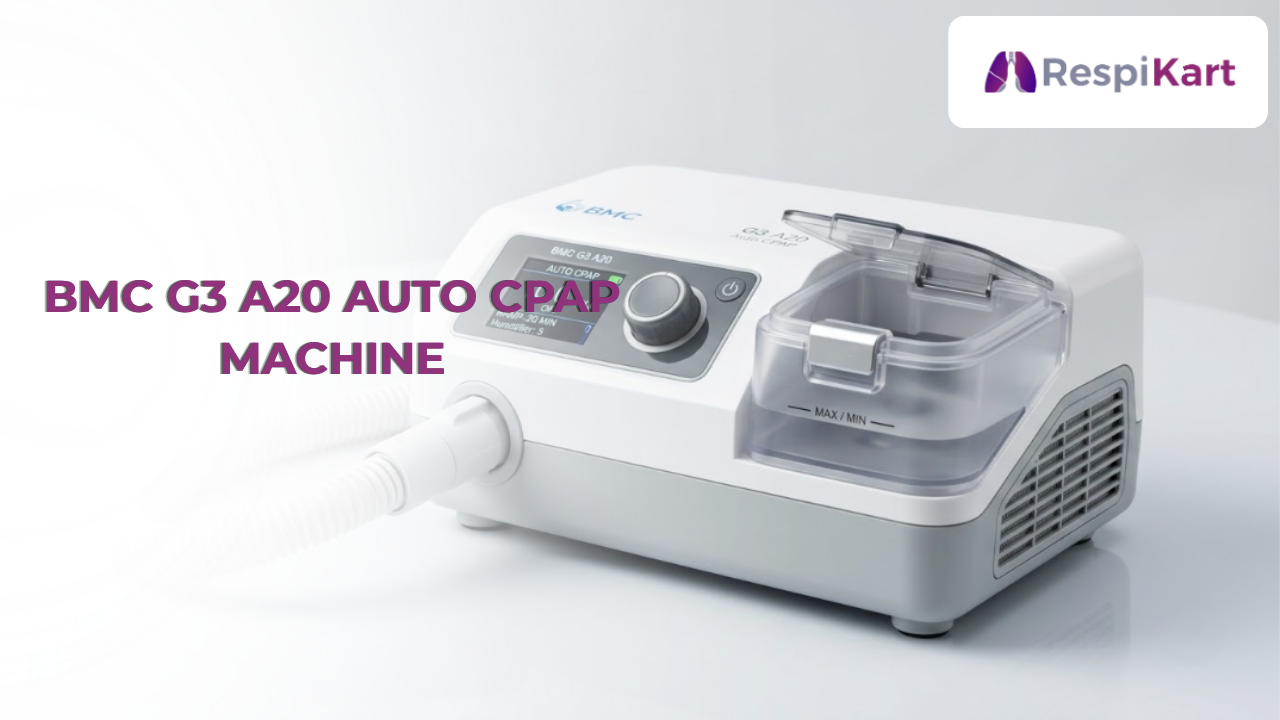
BMC G3 A20 Auto CPAP Machine: An Overview
The BMC G3 A20 Auto CPAP Machine is designed for people who require automatic positive airway pressure therapy for obstructive sleep apnea.
One of its main attractions is its combination of essential Auto CPAP functionality and a comparatively accessible price.
At the listed price of ₹31,000, the BMC G3 A20 can be an appealing option for users who are looking for an automatic CPAP machine without moving into the higher price range of premium models.
Intelligent Pressure Adjustment
Automatic pressure adjustment is one of the most important features of an Auto CPAP machine.
Instead of delivering the same pressure throughout the entire night, the device can adjust pressure according to the user’s breathing patterns and therapy requirements within the prescribed range.
This can be useful because pressure needs may change during different stages of sleep or depending on sleeping position.
Humidification Support
Dryness in the nose, mouth or throat can make CPAP therapy uncomfortable for some users. Humidification can help add moisture to the airflow and may improve comfort, particularly for people who experience dryness while using CPAP.
The BMC G3 A20 supports integrated humidification, making it a practical option for users who want a more comfortable home therapy setup.
Home Sleep Therapy
The BMC G3 A20 is designed for home use and can be incorporated into a regular bedtime routine.
A relatively straightforward setup can be especially helpful for new CPAP users who are learning how to use a machine, mask and tubing together.
However, proper mask fitting and correct pressure settings remain important regardless of which CPAP machine is selected.
ResMed AirSense 11 AutoSet Tripack 4G: An Overview
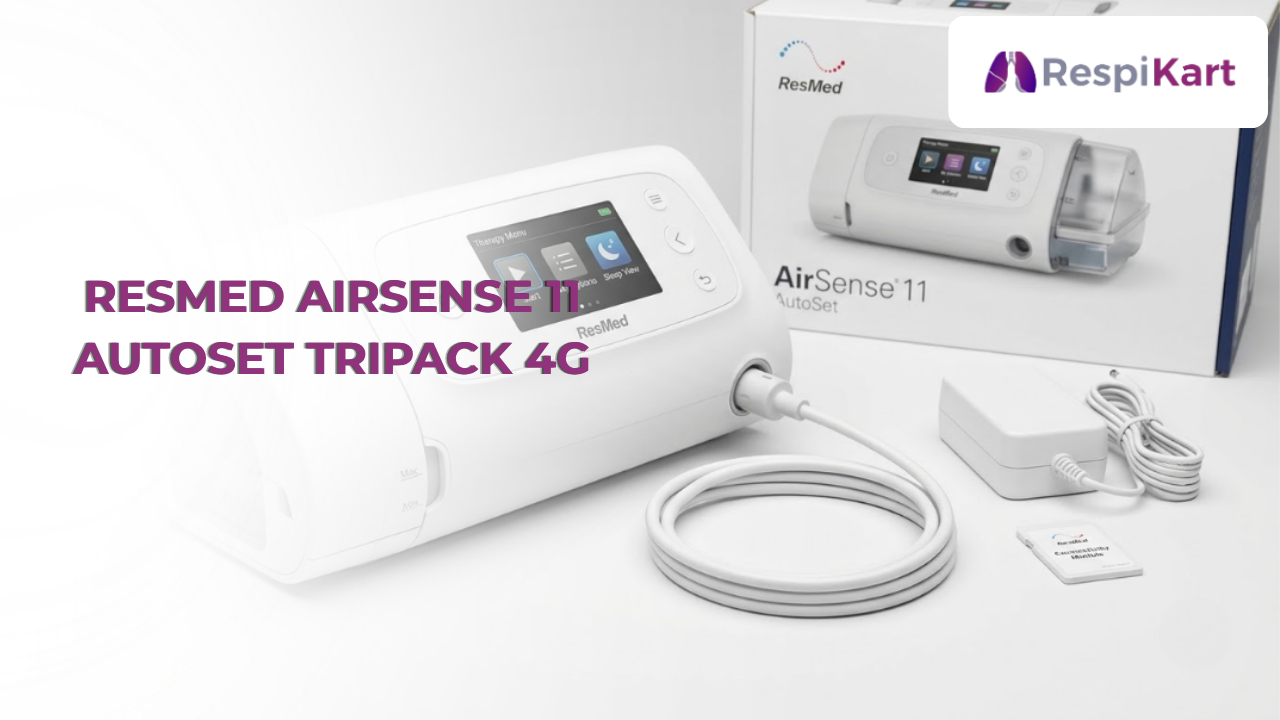
The ResMed AirSense 11 AutoSet Tripack 4G is positioned as a premium Auto CPAP system.
According to the product information provided, it includes AutoSet technology, an integrated heated humidifier and built-in 4G connectivity.
Its listed current price is ₹75,000, making it substantially more expensive than the BMC G3 A20.
The higher price reflects its positioning as a premium sleep therapy platform with a strong focus on technology, comfort and connected therapy management.
AutoSet Technology
One of the key features of the AirSense 11 AutoSet is ResMed’s AutoSet technology.
The machine automatically adjusts pressure based on detected breathing patterns during therapy. This allows the device to respond to changing pressure requirements rather than simply delivering one fixed pressure throughout the night.
For people who have been prescribed Auto CPAP therapy, this type of automatic adjustment can be an important part of their treatment experience.
Integrated Heated Humidification
The AirSense 11 is designed with an integrated humidification system.
Heated humidification can help reduce the discomfort associated with dry air during CPAP therapy. This can be particularly useful for users who experience nasal dryness, throat irritation or general discomfort from airflow.
Humidity settings should be adjusted according to individual comfort and clinical guidance.
4G Connectivity
One of the notable differences in the product specifications provided is 4G connectivity.
Connected CPAP devices can make therapy information easier to manage and monitor, depending on the model, region, network availability and associated services.
Connectivity can be particularly useful for users who want a more technology-focused therapy experience or for situations where therapy data needs to be reviewed remotely.
BMC G3 A20 vs ResMed AirSense 11: Feature Comparison
At a basic level, both machines provide automatic CPAP therapy, but their positioning is different.
| Feature | BMC G3 A20 | ResMed AirSense 11 AutoSet Tripack 4G |
|---|---|---|
| Type | Auto CPAP | Auto CPAP |
| Intended Therapy | Obstructive Sleep Apnea | Obstructive Sleep Apnea |
| Automatic Pressure Adjustment | Yes | Yes |
| Humidification Support | Yes | Yes |
| Heated Humidification | Product configuration dependent | Integrated heated humidification |
| Connectivity | Model-dependent | Built-in 4G as specified |
| Positioning | Value-focused Auto CPAP | Premium Auto CPAP |
| Listed Price | ₹31,000 | ₹75,000 |
Key Point
The more expensive machine is not automatically the right machine for every user. The best choice depends on the prescribed therapy, desired features, comfort preferences, connectivity requirements and budget.
Compare BMC G3 A20 and ResMed AirSense 11 Prices
| Auto CPAP Machine | Respikart Price |
|---|---|
| BMC G3 A20 Auto CPAP Machine CLICK HERE | ₹31,000 |
| ResMed AirSense 11 AutoSet Tripack 4G CLICK HERE | ₹75,000 |
Comfort: Which One Should You Choose?
Comfort is one of the biggest factors influencing long-term CPAP adherence.
Even a technologically advanced machine may not provide a good experience if the mask does not fit correctly or the airflow settings are uncomfortable.
Both BMC G3 A20 and ResMed AirSense 11 are designed to support comfortable sleep therapy, with humidification being an important part of their comfort features.
Why Humidification Matters
CPAP airflow can sometimes cause dryness, particularly when users are new to therapy.
A humidifier adds moisture to the air delivered through the CPAP system. The exact humidity requirement varies from person to person.
Too little humidity may contribute to dryness, while excessive humidity can sometimes result in condensation in the tubing or mask.
Finding a comfortable humidity setting can therefore make a noticeable difference to the overall CPAP experience.
Connectivity and Therapy Data
Another major difference between these two machines is their approach to connectivity.
The ResMed AirSense 11 AutoSet Tripack 4G is specified with built-in 4G connectivity.
This makes it particularly attractive to users who value connected therapy technology and data management.
The availability and functionality of connectivity can depend on local network conditions and device configuration, so users should confirm the exact connectivity features available in their region.
The BMC G3 A20 may appeal more to someone who places greater emphasis on essential Auto CPAP functionality and affordability rather than premium connected features.
Price Difference: Is the ResMed AirSense 11 Worth More?
Price is likely to be one of the first things users notice in this comparison.
Based on the prices provided:
- BMC G3 A20: ₹31,000
- ResMed AirSense 11 AutoSet Tripack 4G: ₹75,000
That means the AirSense 11 costs considerably more than the BMC G3 A20.
However, comparing CPAP machines solely by price can be misleading.
A better approach is to consider what features are actually important for your therapy.
If your priority is a reliable Auto CPAP with humidification support and you want to keep the initial investment lower, the BMC G3 A20 may be worth considering.
If you prefer a premium device with advanced connected features and integrated heated humidification, the AirSense 11 may justify its higher price for your particular needs.
Who Should Consider the BMC G3 A20?
The BMC G3 A20 may be a suitable option for users who:
- Have been prescribed Auto CPAP therapy for obstructive sleep apnea.
- Want automatic pressure adjustment.
- Prefer a more budget-conscious CPAP option.
- Want humidification support.
- Are primarily looking for a home-use Auto CPAP machine.
- Do not consider premium connectivity features essential.
Its lower price can make it especially attractive for first-time CPAP buyers who want automatic therapy without moving into the premium price segment.
Who Should Consider the ResMed AirSense 11?
The ResMed AirSense 11 AutoSet may be worth considering for users who:
- Want a premium Auto CPAP platform.
- Prefer integrated heated humidification.
- Value connected therapy technology.
- Want a modern device with advanced features.
- Are comfortable with a higher investment for additional technology and convenience.
For users who place a high value on connectivity and premium features, the AirSense 11 offers a different proposition from the more value-focused BMC G3 A20.
Don’t Choose a CPAP Machine Based on Price Alone
While ₹31,000 versus ₹75,000 is a significant difference, price should not be the only deciding factor.
Before purchasing an Auto CPAP machine, consider:
| Factor | What to Consider |
|---|---|
| 1. Your Prescription | The machine should be appropriate for the therapy prescribed by your doctor or sleep specialist. |
| 2. Mask Compatibility | A comfortable and properly fitted mask is essential for effective CPAP therapy. |
| 3. Humidification | If you frequently experience dryness or nasal discomfort, humidification may be an important feature. |
| 4. Data and Connectivity | If you want connected therapy information, check whether the specific device configuration supports the connectivity features you need. |
| 5. Long-Term Support | Consider warranty, servicing, accessories and availability of replacement components before making a purchase. |
| 6. Budget | A machine should fit comfortably within your budget while still meeting your prescribed therapy requirements. |
BMC G3 A20 vs ResMed AirSense 11: Initial Verdict
Both the BMC G3 A20 and ResMed AirSense 11 AutoSet are designed to provide automatic CPAP therapy for people with obstructive sleep apnea.
The BMC G3 A20 stands out primarily for its lower price and essential Auto CPAP functionality, while the AirSense 11 is positioned as a premium option with AutoSet technology, integrated heated humidification and 4G connectivity.
If budget is a major consideration, the BMC G3 A20 offers an attractive starting point.
If premium features, connectivity and an advanced therapy ecosystem are higher priorities, the ResMed AirSense 11 may be the more appealing choice.
Ultimately, the right device is the one that matches your prescribed therapy, comfort needs, lifestyle and budget.
If you are unsure which Auto CPAP machine is appropriate for you, speak with your doctor or sleep specialist before changing or starting therapy.
BMC G3 A20 vs ResMed AirSense 11: A Closer Look at Comfort, Features and Long-Term Use
Choosing an Auto CPAP machine is not only about comparing specifications on a product page. For many users, the real question is what the machine will be like to use every night.
A CPAP device needs to fit naturally into your bedtime routine. It should work with your prescribed therapy, provide comfortable airflow, be reasonably easy to maintain and offer features that are genuinely useful to you.
The BMC G3 A20 Auto CPAP Machine and ResMed AirSense 11 AutoSet Tripack 4G approach these requirements from slightly different positions. The BMC G3 A20 is a more value-oriented option, while the AirSense 11 is positioned as a premium connected Auto CPAP system.
Let’s look at the factors that can make a difference after the initial purchase.
Pressure Adjustment and Auto CPAP Therapy
One of the primary reasons people choose an Auto CPAP instead of a traditional fixed-pressure CPAP is automatic pressure adjustment.
During sleep, breathing patterns can change. Factors such as sleeping position, different stages of sleep and variations in airway resistance can affect pressure requirements.
An Auto CPAP is designed to respond to relevant breathing patterns within the prescribed pressure range.
Both the BMC G3 A20 and ResMed AirSense 11 AutoSet are automatic CPAP devices. However, users should not independently change their pressure settings simply because one machine appears to behave differently from another.
The prescribed pressure range should come from a healthcare professional familiar with the user’s sleep study, diagnosis and treatment requirements.
Why Correct Pressure Matters
Using a pressure setting that is not appropriate can affect the therapy experience.
Pressure that is too low may not provide the intended airway support, while unnecessarily high pressure can contribute to discomfort, air leaks or difficulty tolerating therapy.
This is why purchasing an Auto CPAP should be considered only one part of successful sleep apnea management. Correct setup, mask fitting, regular use and appropriate follow-up are equally important.
Mask Compatibility and Comfort
The machine is only one part of a CPAP system. The mask plays a major role in how comfortable the therapy feels.
CPAP masks are generally available in several designs, including nasal masks, nasal pillow masks and full-face masks.
The best option depends on factors such as breathing habits, facial fit, sleeping position and personal comfort.
A high-quality machine cannot compensate for a poorly fitting mask.
Air Leaks
Air leaks around the mask can be one of the most frustrating issues for CPAP users.
Leaks may cause:
- Dry or irritated eyes
- Noisy airflow
- Reduced comfort
- Frequent awakenings
- Difficulty maintaining consistent therapy
If you experience persistent leaks, adjusting the mask fit or discussing alternative mask options with a CPAP professional may help.
The mask should generally be secure without being unnecessarily tight.
Humidification: An Important Comfort Feature
Humidification deserves special attention when comparing these two machines.
The BMC G3 A20 supports humidification, while the ResMed AirSense 11 AutoSet configuration described here includes integrated heated humidification.
Humidification adds moisture to the airflow and can help make CPAP therapy more comfortable for users who experience dryness.
Who May Benefit From Humidification?
Humidification can be particularly useful for people who experience:
- Dry mouth
- Nasal dryness
- Throat irritation
- Nasal discomfort during therapy
- Increased discomfort when using CPAP in dry environments
However, not everyone needs the same humidity level.
If the humidity is too high, condensation can sometimes form inside the tubing or mask. This is sometimes referred to as rainout.
Finding the appropriate setting may require some adjustment based on the room environment and individual comfort.
Connectivity: BMC G3 A20 vs ResMed AirSense 11
Connectivity is one of the clearest differences between the two product descriptions provided.
The ResMed AirSense 11 AutoSet Tripack 4G includes built-in 4G connectivity.
For users who value connected therapy, this can be an important advantage.
Connected CPAP technology can make it easier to access or transmit certain therapy information, depending on the device, region, network availability and associated software or services.
Is Connectivity Essential?
Not necessarily.
A user who simply wants an Auto CPAP for nightly therapy may not consider connectivity a deciding factor.
For another user, however, connected features may be highly valuable.
For example, someone who wants easier access to therapy information or prefers a more technology-focused sleep therapy experience may place greater importance on connectivity.
Therefore, the question is not simply whether one machine has more technology. It is whether those features are useful for your particular needs.
Ease of Use
An Auto CPAP machine is used repeatedly, often every night. Ease of operation therefore matters.
Users should consider how easily they can:
- Start and stop therapy
- Adjust permitted comfort settings
- Fill and clean the humidifier
- Connect the tubing
- Fit and remove the mask
- Clean the equipment
- Review available therapy information
The exact user interface and available functions vary between models and configurations.
If you are new to CPAP therapy, ask the seller or healthcare provider for a proper demonstration before using the machine independently.
Portability and Bedroom Setup
For many CPAP users, the machine remains on a bedside table. But some people travel frequently or move between different rooms.
When evaluating portability, don’t look only at the machine itself.
Consider the complete setup:
- Machine
- Power supply
- Tubing
- Mask
- Humidifier components
- Accessories
- Carrying case, if supplied
A compact and organized setup can make travelling with CPAP therapy easier.
The best approach is to confirm the exact dimensions, weight and included accessories of the particular product configuration before purchasing.
Maintenance and Cleaning
Regular cleaning is an important part of CPAP ownership.
The mask, tubing, humidifier components and other detachable parts should be maintained according to the manufacturer’s recommendations.
Good equipment hygiene can help prevent unpleasant odors and buildup.
Basic CPAP Maintenance Habits
A typical maintenance routine may include:
- Cleaning the mask components regularly.
- Emptying and cleaning the humidifier chamber as recommended.
- Allowing washable components to dry completely.
- Checking tubing for damage or deterioration.
- Inspecting the mask cushion for wear.
- Replacing consumable components according to manufacturer guidance.
Always follow the instructions supplied with your specific machine and accessories.
Long-Term Ownership Cost
The initial machine price is only one part of the total cost of CPAP therapy.
Over time, users may also need replacement accessories and consumables.
Potential ongoing expenses can include:
- CPAP masks
- Mask cushions
- Tubing
- Filters
- Humidifier components
- Replacement accessories
This means that buyers should consider the availability and cost of replacement components before making a purchase.
A machine that fits your budget initially should also be practical to maintain over the long term.
Warranty and After-Sales Support
Warranty and after-sales support are particularly important when buying medical equipment.
Before purchasing either the BMC G3 A20 or ResMed AirSense 11, confirm:
- Warranty duration
- What the warranty covers
- Service availability
- Replacement-part availability
- Where to obtain technical assistance
- What accessories are included with the machine
These details can vary depending on the seller and product package.
If you are purchasing online, it is worth confirming these details before placing the order.
BMC G3 A20 vs ResMed AirSense 11: Which Offers Better Value?
The meaning of “value” depends on what you expect from your CPAP machine.
The BMC G3 A20 can offer strong value for someone whose primary requirements are automatic CPAP therapy, humidification support and a more accessible purchase price.
At the provided price of ₹31,000, it represents a substantially lower initial investment than the ResMed AirSense 11.
The ResMed AirSense 11 AutoSet Tripack 4G, listed at ₹75,000, is aimed more toward users who want a premium Auto CPAP experience with features such as integrated heated humidification and 4G connectivity.
Therefore, the more expensive machine is not necessarily “better” for every person.
Instead, the better value depends on whether its additional features are useful to you.
BMC G3 A20: Main Advantages
Based on the product information provided, the BMC G3 A20’s main advantages include:
- More affordable purchase price
- Automatic CPAP therapy
- Humidification support
- Suitable for home sleep therapy
- Practical option for budget-conscious users
- Focus on essential Auto CPAP functionality
It can be an attractive choice for someone who wants automatic therapy without paying for a premium connected platform.
ResMed AirSense 11: Main Advantages
The ResMed AirSense 11 AutoSet Tripack 4G offers several features that can appeal to users seeking a premium device:
- AutoSet automatic pressure adjustment
- Integrated heated humidification
- Built-in 4G connectivity in the specified configuration
- Premium device positioning
- Connected therapy capabilities
- Modern home sleep therapy design
These features may make the AirSense 11 attractive to users who prioritize technology, connectivity and comfort features.
Which One Is Better for First-Time CPAP Users?
There is no single answer.
A first-time CPAP user may prefer the BMC G3 A20 because it provides automatic CPAP functionality at a significantly lower price.
Another first-time user may prefer the ResMed AirSense 11 because they value its premium features and connected capabilities.
For a new user, however, the most important factors should be:
Correct therapy + comfortable mask + appropriate settings + regular use.
The brand name or price alone does not determine whether CPAP therapy will be successful.
Which One Is Better for Users on a Budget?
If budget is the primary concern, the BMC G3 A20 has a clear advantage based on the prices provided.
At ₹31,000, it costs less than half the ₹75,000 listed price of the ResMed AirSense 11 AutoSet Tripack 4G.
For someone who needs an Auto CPAP and does not require premium connectivity features, this price difference may be significant.
However, buyers should still consider warranty, service support, accessories and replacement-part availability.
Which One Is Better for Users Who Want Connected Features?
For users specifically interested in connected CPAP technology, the ResMed AirSense 11 AutoSet Tripack 4G has an advantage in this comparison because the specified configuration includes built-in 4G connectivity.
This can be useful for users who value therapy data and connected features.
The importance of connectivity should still be considered alongside the actual therapy requirements and local network availability.
Which One Should You Buy?
The decision can be simplified by thinking about your priorities.
Choose BMC G3 A20 if:
- You want a more affordable Auto CPAP.
- Automatic pressure adjustment is your main requirement.
- You want humidification support.
- You are primarily looking for a home-use CPAP machine.
- You prefer to keep the initial investment lower.
Consider ResMed AirSense 11 if:
- You want a premium Auto CPAP.
- Integrated heated humidification is important to you.
- You value connected therapy technology.
- You want built-in 4G connectivity in the specified configuration.
- You are comfortable with a higher purchase price.
Final Verdict: BMC G3 A20 vs ResMed AirSense 11
The comparison between the BMC G3 A20 and ResMed AirSense 11 AutoSet Tripack 4G ultimately comes down to priorities.
The BMC G3 A20 is the more budget-friendly option at the listed price of ₹31,000. It focuses on essential Auto CPAP therapy and humidification support, making it an appealing choice for users who want practical sleep apnea therapy without a premium price tag.
The ResMed AirSense 11 AutoSet Tripack 4G, listed at ₹75,000, offers a more premium package with AutoSet technology, integrated heated humidification and built-in 4G connectivity in the specified configuration.
If price and essential Auto CPAP functionality are your main priorities, the BMC G3 A20 may offer better value.
If premium features, heated humidification and connected therapy technology are more important to you, the ResMed AirSense 11 may be worth considering.
Important:
The most important point is that CPAP treatment should be selected according to your medical requirements. Always consult a qualified sleep specialist or healthcare professional regarding your diagnosis, pressure requirements and treatment plan.
Find the Right CPAP Machine at RespiKart
Whether you are purchasing your first Auto CPAP or upgrading an existing device, RespiKart can help you explore respiratory-care products based on your needs and budget.
Before purchasing, compare the machine’s features, included accessories, warranty, service support and replacement-part availability.
For users in Delhi NCR and other locations, choosing the right CPAP equipment can make the transition to regular sleep therapy easier and more comfortable.
Explore Auto CPAP machines at RespiKart and choose a device that fits your prescribed therapy, comfort preferences and budget.
Compare These Auto CPAP Machines on RespiKart
| Auto CPAP Machine | Respikart Price |
|---|---|
| BMC G3 A20 Auto CPAP Machine CLICK HERE | ₹31,000 |
| ResMed AirSense 11 AutoSet Tripack 4G CLICK HERE | ₹75,000 |
Frequently Asked Questions
Based on the prices provided, the BMC G3 A20 is cheaper. It is listed at ₹31,000, while the ResMed AirSense 11 AutoSet Tripack 4G is listed at ₹75,000.
Yes. The BMC G3 A20 is an Auto CPAP machine designed to automatically adjust pressure within the prescribed range.
Yes. The AirSense 11 AutoSet uses AutoSet technology for automatic pressure adjustment during therapy.
The ResMed AirSense 11 AutoSet Tripack 4G configuration described in this comparison includes built-in 4G connectivity.
Both machines support humidification in the configurations described. The AirSense 11 AutoSet includes integrated heated humidification, while the BMC G3 A20 product information specifies humidification support.
Yes. The BMC G3 A20 is designed for home sleep therapy and can be used as part of a prescribed CPAP treatment plan.
It can be worth the additional investment for users who specifically value premium features such as integrated heated humidification and connected 4G technology. However, the right choice depends on individual needs and budget.
You should not change prescribed pressure settings without guidance from a qualified healthcare professional. Incorrect settings may affect the effectiveness and comfort of therapy.
Both machines are designed for Auto CPAP therapy for obstructive sleep apnea. The appropriate choice depends on your prescribed therapy, comfort requirements, desired features and budget.
RespiKart offers CPAP and other respiratory-care equipment for customers looking for home sleep therapy products. Check the current product listing, price, warranty and availability before purchasing.
Final Takeaway
The choice between the BMC G3 A20 and ResMed AirSense 11 AutoSet Tripack 4G should not be based only on price.
The BMC G3 A20 offers a more budget-friendly approach to automatic CPAP therapy, while the ResMed AirSense 11 provides a premium option with features such as integrated heated humidification and built-in 4G connectivity in the specified configuration.
Most importantly, your prescribed therapy requirements, comfort and appropriate settings should come first.
If you are unsure which Auto CPAP machine is appropriate for you, speak with your doctor or sleep specialist before starting or changing therapy.
Looking for an Auto CPAP Machine in Delhi NCR?
Explore the BMC G3 A20 and ResMed AirSense 11 AutoSet Tripack 4G on Respikart and compare pricing, features and available options before making your purchase.
