

Portable Oxygen Concentrator
Portable Oxygen Concentrator vs Stationary Oxygen Concentrator: Which One Is Right for You?
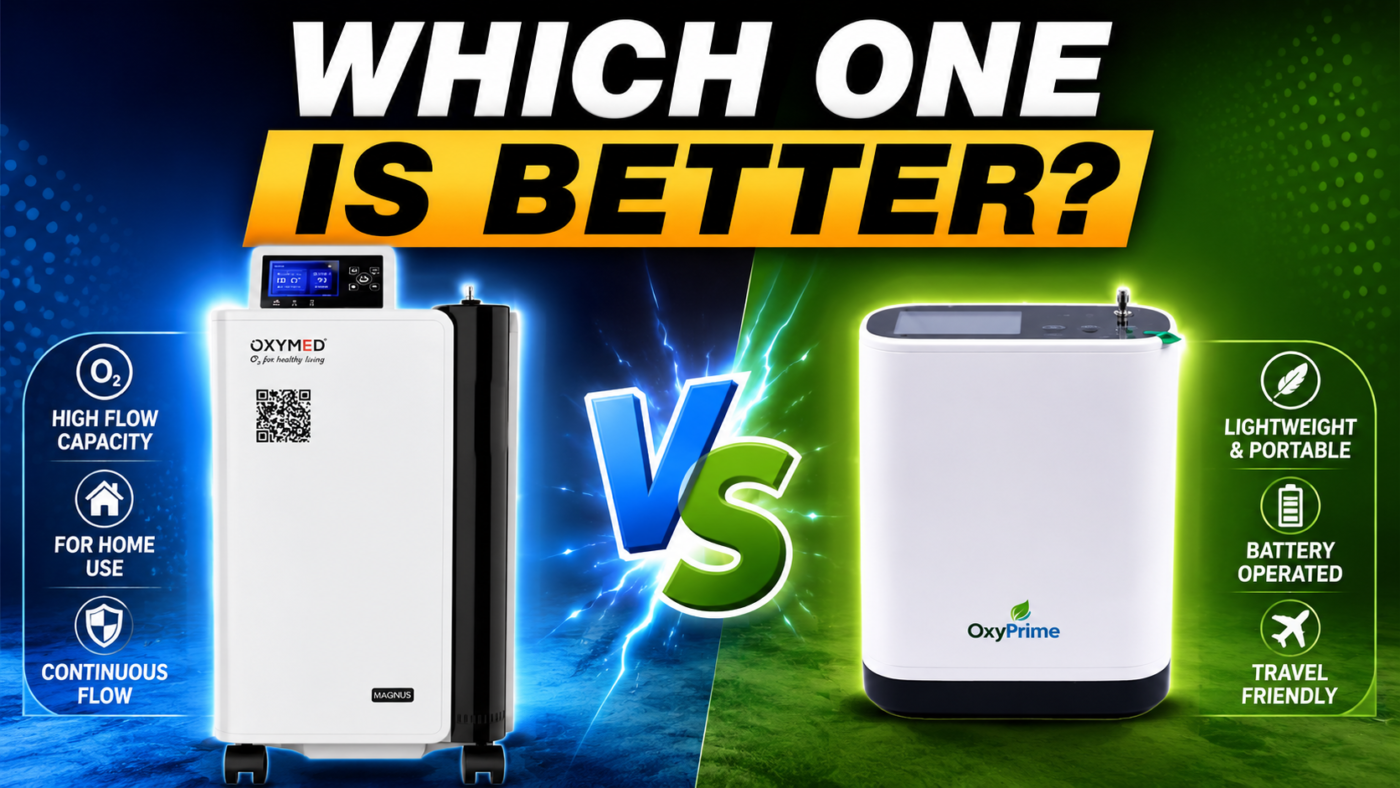
If you or a family member has been advised to use oxygen therapy, choosing the right oxygen concentrator can be confusing. Two commonly considered options are a portable oxygen concentrator and a stationary oxygen concentrator. While both devices concentrate oxygen from the surrounding air, they are designed for different situations. A portable oxygen concentrator (POC) is designed for mobility and can generally operate using rechargeable batteries, while a stationary oxygen concentrator is larger, designed primarily for home use, and typically requires a continuous electrical supply.
So, which one should you choose?
The answer depends on your prescribed oxygen requirement, lifestyle, mobility, flow requirement and how often you need oxygen outside your home.
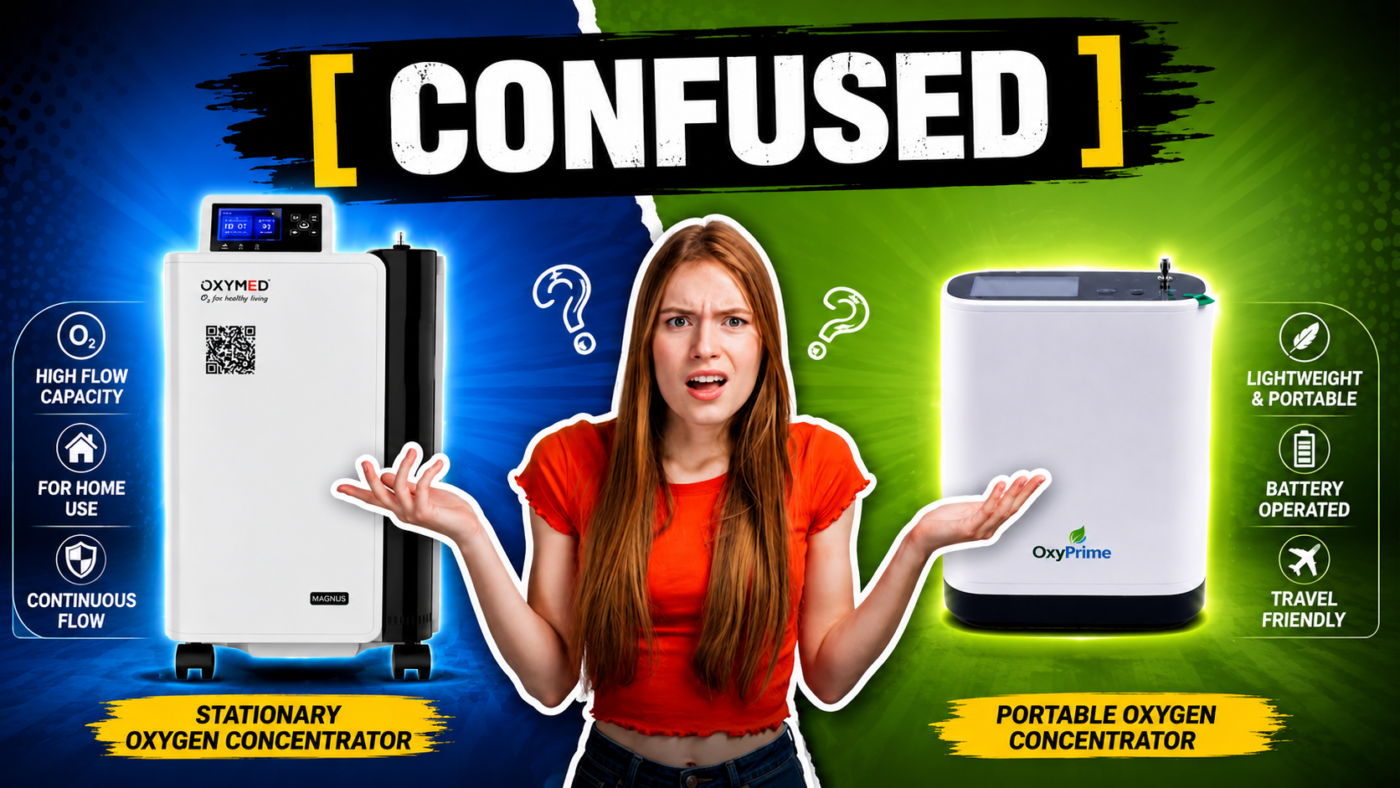
Portable Oxygen Concentrator vs Stationary Oxygen Concentrator
(Quick Comparison)
| Feature | Portable Oxygen Concentrator | Stationary Oxygen Concentrator |
|---|---|---|
| Primary Use | Travel, outdoor activities and mobility | Home oxygen therapy |
| Portability | Lightweight and designed to be carried | Larger and generally stays in one place |
| Power Source | Rechargeable battery + AC power | Mainly AC/mains electricity |
| Oxygen Delivery | Often pulse dose; some models provide continuous flow | Commonly continuous flow |
| Battery | Yes, depending on model | Usually no built-in battery for routine operation |
| Mobility | Excellent | Limited |
| Home Use | Suitable | Excellent |
| Travel | More convenient | Not designed for regular travel |
| Long-Duration Home Use | Depends on model and prescription | Commonly used |
| Flow Requirement | Model-specific | Model-specific |
| Best Suited For | People who need oxygen while mobile | People who primarily require oxygen at home |
What Is a Portable Oxygen Concentrator?
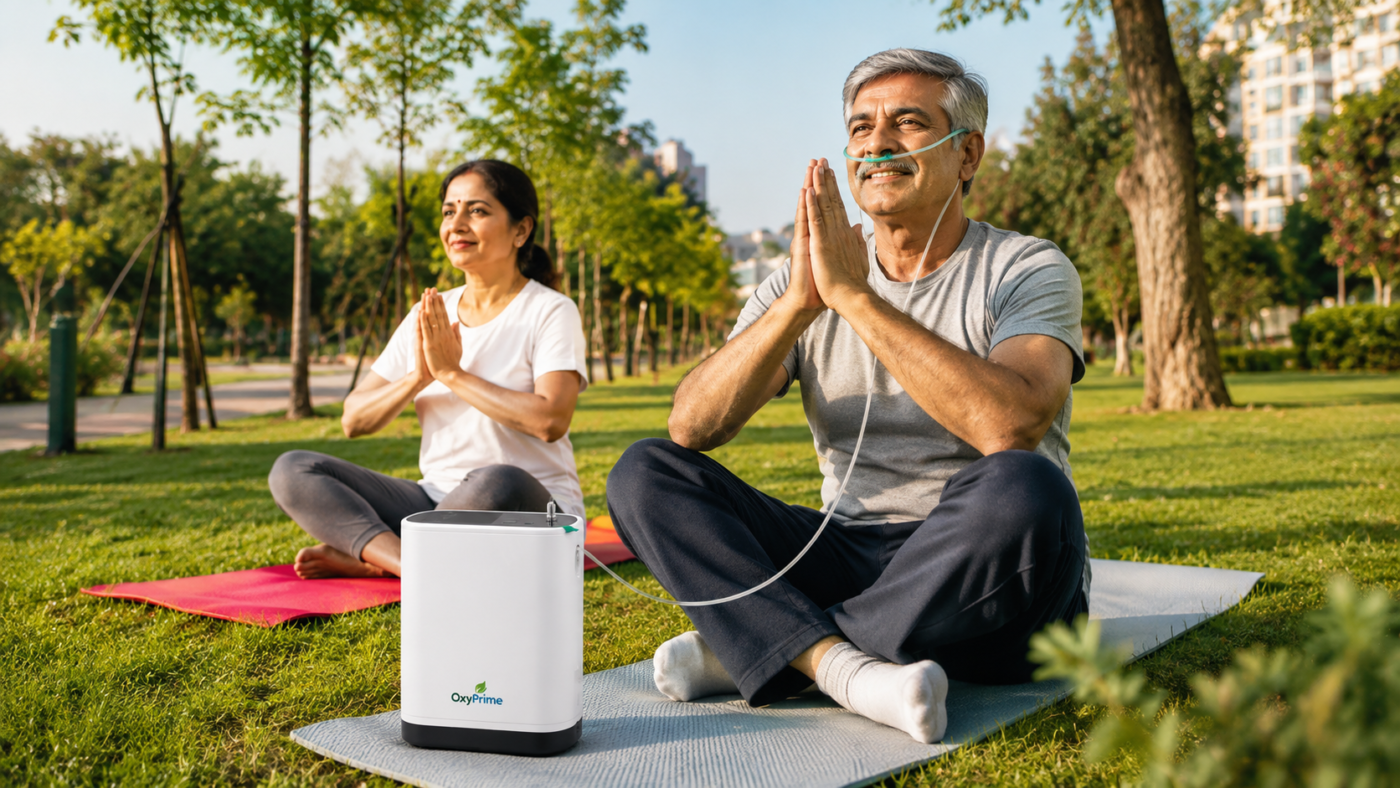
A portable oxygen concentrator, commonly called a POC, is a compact oxygen therapy device designed to make supplemental oxygen more convenient for people who need oxygen while moving around or spending time outside the home.
Like a home oxygen concentrator, a portable oxygen concentrator takes air from the surroundings and separates oxygen from other gases before delivering concentrated oxygen to the user. The major difference is its smaller size and ability to operate using rechargeable batteries.
Depending on the model, a portable oxygen concentrator may provide:
- Pulse-dose oxygen
- Continuous-flow oxygen
- Battery-powered operation
- AC power operation
- Portable carrying options
Who May Consider a Portable Oxygen Concentrator?
A portable oxygen concentrator may be considered for people who have been prescribed supplemental oxygen and need to remain mobile, travel, attend appointments or spend time outside their home.
However, not every portable oxygen concentrator is suitable for every oxygen requirement. The device’s flow mode and capacity should match the patient’s prescription.
What Is a Stationary Oxygen Concentrator?
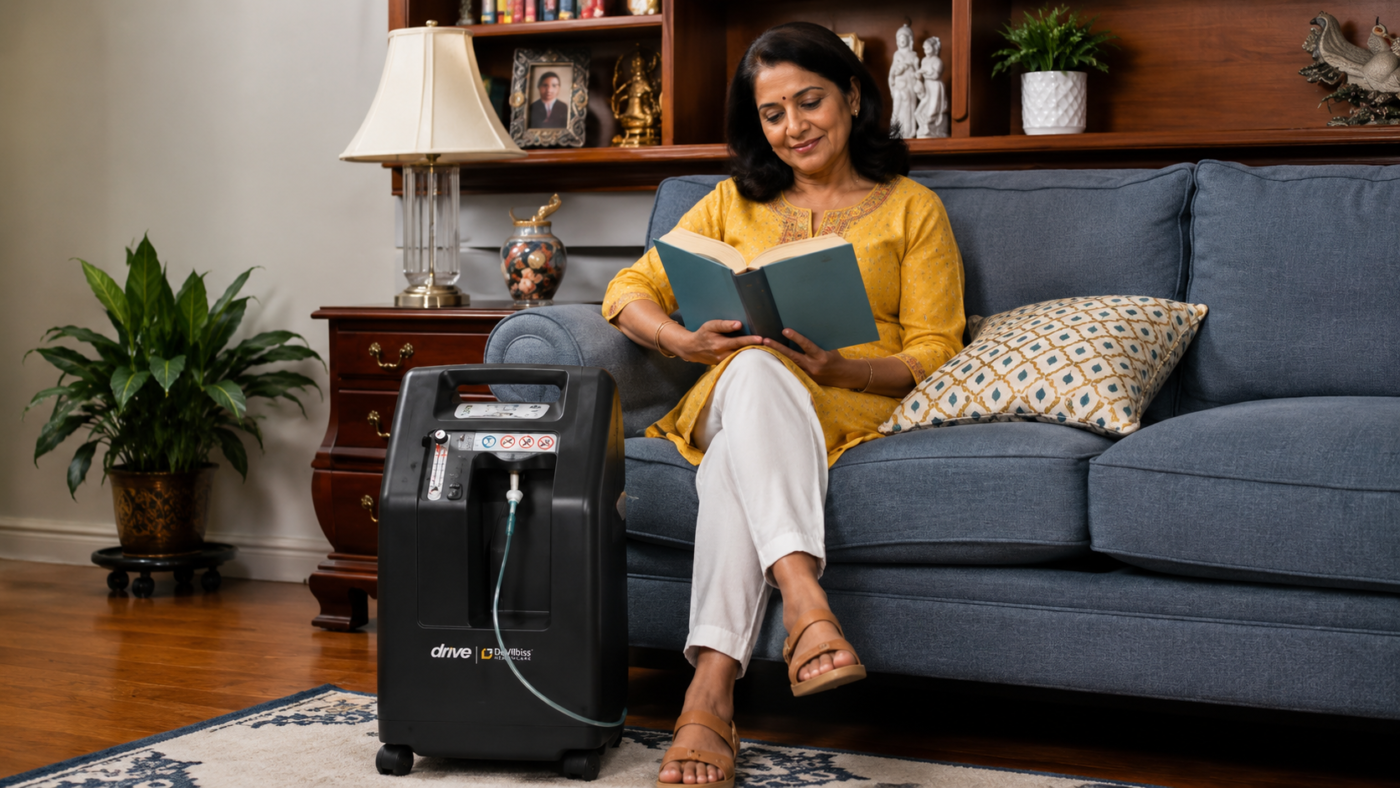
A stationary oxygen concentrator, also known as a home oxygen concentrator, is designed primarily for oxygen therapy at home.
It draws room air into the machine, removes nitrogen and other gases, and delivers concentrated oxygen through tubing connected to a nasal cannula or mask. Stationary oxygen concentrators generally operate from an electrical outlet and are commonly used when oxygen is required for extended periods at home.
Who May Need a Stationary Oxygen Concentrator?
A stationary oxygen concentrator may be appropriate for patients who have been prescribed oxygen therapy for:
- Extended periods during the day
- Night-time or sleep
- Long-term home oxygen therapy
- Regular oxygen use with limited mobility
The actual oxygen requirement should always be assessed and prescribed by a qualified healthcare professional.
5 Major Differences Between Portable and Stationary Oxygen Concentrators
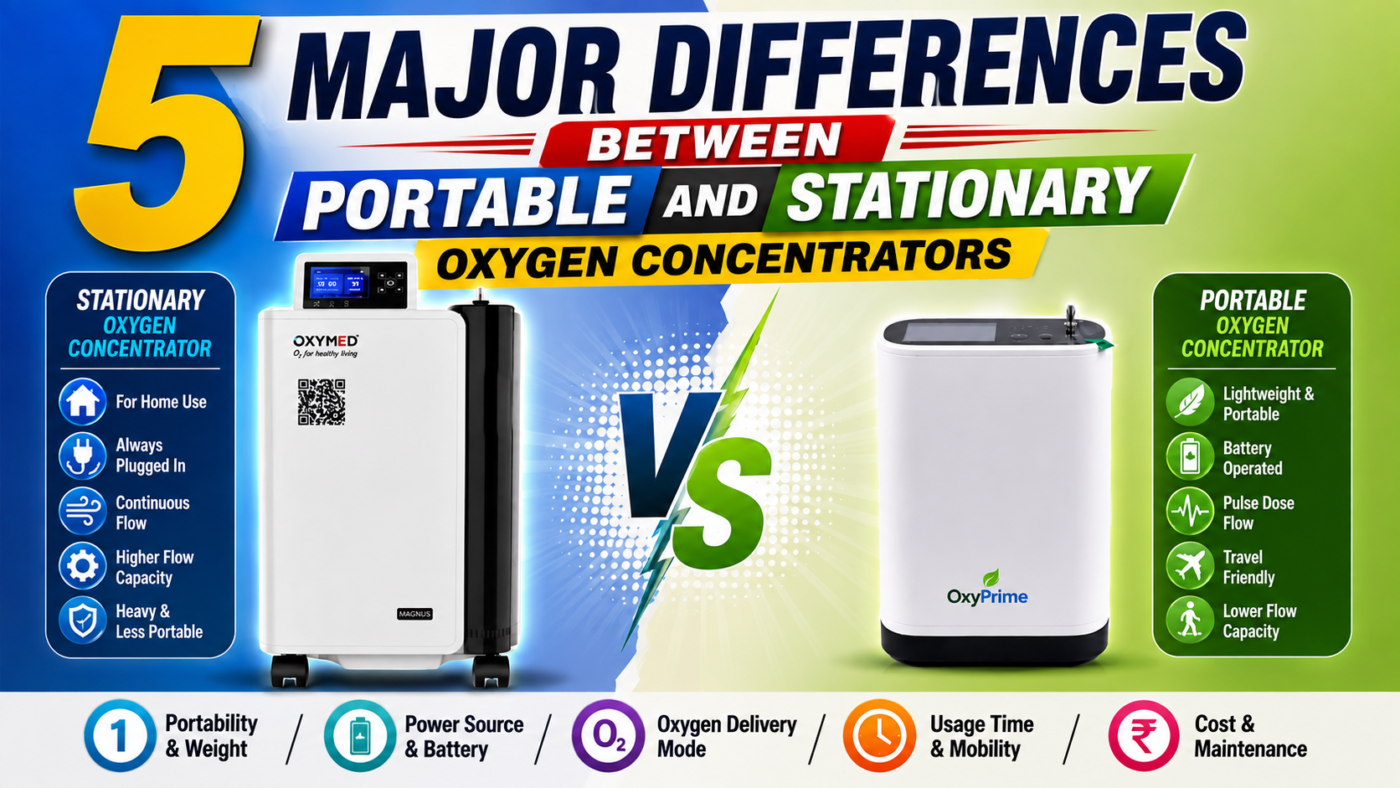
| 1. Portability | |
|---|---|
| Portable Oxygen Concentrator | Designed to be carried or transported, making it more convenient for patients who need oxygen outside the home. |
| Stationary Oxygen Concentrator | Larger in size and generally placed in a fixed location at home. |
|
If mobility is your priority:
A portable oxygen concentrator may be more convenient.
If you mainly need oxygen at home: A stationary oxygen concentrator may be more practical. |
|
| 2. Power Supply | |
|---|---|
| Portable Oxygen Concentrator | Generally uses a rechargeable battery and can also operate from an electrical outlet, depending on the model. |
| Stationary Oxygen Concentrator | Normally requires an electrical outlet to operate. |
|
Power availability is an important consideration when selecting an oxygen concentrator for home use.
If you are considering a portable oxygen concentrator for travel, always check the manufacturer’s battery specifications and transportation requirements before travelling. |
|
| 3. Oxygen Delivery Mode | |
|---|---|
| Portable Oxygen Concentrator | Many portable oxygen concentrators provide oxygen using a pulse-dose system. Some portable models also offer continuous-flow oxygen. |
| Stationary Oxygen Concentrator | Commonly provides continuous-flow oxygen, delivering oxygen at a steady prescribed rate. |
|
Why does this matter?
A patient who requires continuous-flow oxygen may not be suitable for a pulse-dose-only portable oxygen concentrator. Do not choose a device based only on size or portability. Your oxygen prescription should determine the appropriate device and delivery mode. |
|
| 4. Home Use vs Outdoor Use | |
|---|---|
| Stationary Oxygen Concentrator |
Best suited for:
|
| Portable Oxygen Concentrator |
Best suited for:
|
| A portable oxygen concentrator can provide greater freedom of movement, but its suitability depends on the patient’s prescribed oxygen requirements. | |
| 5. Size and Convenience | |
|---|---|
| Stationary Oxygen Concentrator | Designed to prioritize reliable home use rather than portability. |
| Portable Oxygen Concentrator | Designed to be smaller and easier to transport. |
|
For someone who rarely leaves home, portability may not be the most important factor.
For someone who needs to maintain an active lifestyle while using prescribed oxygen, portability can be a major advantage. |
|
How to Choose the Right Oxygen Concentrator?
Before renting or buying an oxygen concentrator, consider these important factors:
| Factor | What to Consider |
|---|---|
| 1. Check Your Oxygen Prescription | Know the prescribed oxygen flow and delivery mode before selecting an oxygen concentrator. |
| 2. Check Continuous vs Pulse Dose | Don’t assume that every portable oxygen concentrator provides continuous oxygen. Check the specific model’s oxygen delivery mode. |
| 3. Consider Your Lifestyle |
If you mostly stay at home, a stationary oxygen concentrator may be practical.
If you regularly travel or go outside, portability may be more important. |
| 4. Consider Power Availability | Stationary concentrators require electrical power, while portable units may provide battery operation depending on the model. |
| 5. Ask About Backup Oxygen | For home oxygen therapy, discuss backup oxygen arrangements with your healthcare provider or oxygen equipment supplier, particularly in case of power failure or equipment malfunction. |
Frequently Asked Questions
Final Takeaway
The choice between a portable oxygen concentrator and a stationary oxygen concentrator should not be based only on size, price or convenience.
A portable oxygen concentrator is generally more suitable when mobility is important, while a stationary oxygen concentrator is generally more practical for regular home oxygen therapy.
Most importantly, your prescribed oxygen flow and delivery requirement should come first.
If you are unsure which oxygen concentrator to buy, speak with your healthcare provider and confirm the required oxygen delivery mode before selecting a device.
Looking for an Oxygen Concentrator in Delhi NCR?
Contact Respikart to check available oxygen concentrator models, pricing and doorstep delivery options.
