
CPAP MACHINE
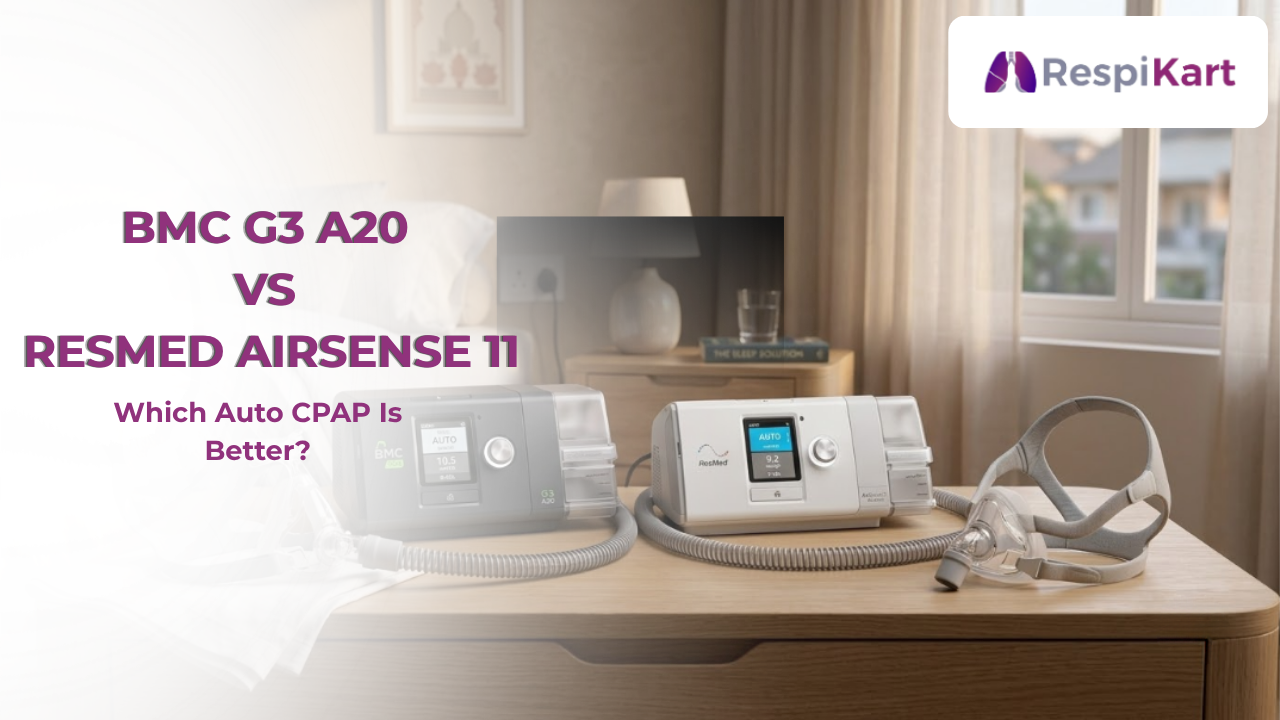
BMC G3 A20 vs ResMed AirSense 11: Which Auto CPAP Is Better?
ResMed AirSense 11 AutoSet Tripack 4G Premium CPAP
The ResMed AirSense 11 AutoSet Tripack 4G Premium CPAP is an advanced positive airway pressure device designed for people who require CPAP therapy for obstructive sleep apnea. It combines automatic pressure adjustment with comfort-focused features and connectivity options intended to support regular therapy use.
For someone starting or upgrading CPAP treatment, the machine itself is only part of the decision. Pressure delivery, humidification, mask compatibility, ease of use, monitoring and ongoing support all influence whether therapy becomes a sustainable part of nightly sleep.
The AirSense 11 belongs to ResMed’s newer generation of PAP devices, with a compact design and a more connected approach to therapy management.
What Is the ResMed AirSense 11 AutoSet?
The ResMed AirSense 11 AutoSet is an automatic positive airway pressure device, commonly referred to as an APAP. Unlike a fixed-pressure CPAP machine that delivers one prescribed pressure throughout the night, an AutoSet device is designed to adjust pressure within the prescribed range in response to changing breathing patterns.
That distinction matters because airway obstruction is not necessarily identical throughout the night. Pressure requirements can change with sleep position, sleep stage and other factors.
The machine is intended to deliver therapy based on settings prescribed for the individual user. It should not be treated as a device where pressure settings are changed casually without appropriate clinical guidance.
| Auto-Adjusting Pressure | |
|---|---|
| How AutoSet Works | The AutoSet function is designed to respond to breathing events and flow-related changes during sleep. Within the prescribed pressure range, the machine adjusts support rather than maintaining one constant pressure all night. |
| Why It Matters | This can be particularly useful for people whose pressure requirements vary during sleep. |
| The goal: Maintain effective airway support while avoiding unnecessarily high pressure when it is not required. | |
Understanding Obstructive Sleep Apnea
Obstructive sleep apnea occurs when the upper airway repeatedly becomes narrowed or blocked during sleep. These episodes can interrupt normal breathing and lead to repeated sleep disruption.
A person may not remember these brief awakenings in the morning. Yet repeated interruptions can affect sleep quality and daytime functioning.
Common symptoms include loud snoring, witnessed pauses in breathing, waking with a dry mouth, morning headaches, excessive daytime sleepiness and difficulty concentrating.
CPAP therapy works differently from medicines. Instead of treating the airway obstruction chemically, it uses positive air pressure to help keep the upper airway open while the person sleeps.
Key Features of the AirSense 11 AutoSet
The AirSense 11 combines several functions in one compact platform.
| 1. Automatic Pressure Adjustment | |
|---|---|
| AutoSet Technology | Its AutoSet technology adjusts delivered pressure according to the patient’s breathing patterns within the prescribed settings. |
| For patients who have variable pressure needs, this can provide a more responsive form of PAP therapy than a simple fixed-pressure approach. | |
| 2. Integrated Humidification | |
|---|---|
| Humidification | AirSense 11 systems can be used with a humidification system designed to add moisture to the therapy air. |
| Comfort | Dry air can contribute to symptoms such as a dry nose, dry throat or nasal irritation in some CPAP users. Humidification can make therapy more comfortable, particularly for people who experience dryness during treatment. |
| Humidity settings still need to be balanced. Excessive humidity can contribute to condensation in the tubing, sometimes called rainout. | |
| 3. Ramp Functionality | |
|---|---|
| Ramp Feature | The ramp feature is designed to make the beginning of therapy easier for some users. Rather than immediately starting at the full therapeutic pressure, the machine can begin at a lower pressure and gradually increase toward the prescribed level. |
| This can be helpful for people who find it uncomfortable to fall asleep while receiving higher pressure. However, ramp settings are not universally necessary. If a user already falls asleep comfortably with the prescribed pressure, an extended ramp period may not offer much benefit. | |
Why Connectivity Matters in Modern CPAP Therapy
The 4G reference in a connected CPAP package relates to cellular connectivity used for therapy data transmission in compatible configurations and markets.
Connected PAP devices can transmit selected therapy information, allowing clinicians or sleep-care teams to review adherence and other available treatment data without relying entirely on information collected during an occasional clinic visit.
That can be useful when therapy needs adjustment or when a clinician wants to identify potential problems with regular use.
Therapy Data and Patient Monitoring
One of the practical advantages of a connected PAP device is access to therapy information.
Depending on the configuration and available services, therapy data can provide insight into factors such as:
- Hours of device use
- Mask-related issues
- Residual breathing events
- Therapy patterns
- Pressure-related information
- Changes in nightly usage
This information can help identify whether a person is actually receiving consistent therapy.
A CPAP machine that remains switched off cannot provide treatment. That sounds obvious, but adherence is one of the biggest practical challenges in sleep apnea management.
For this reason, monitoring usage can be as important as purchasing an advanced machine.
The Role of the Mask
Even a sophisticated CPAP machine cannot compensate for a poorly fitting mask.
The mask creates the interface between the device and the patient’s airway. If it leaks excessively, therapy can become uncomfortable and treatment data may be affected.
Different mask styles suit different patients:
| Mask Type | General Description |
|---|---|
| Nasal Mask | Covers the nose and provides the therapy-air interface. |
| Nasal Pillow System | Uses a smaller interface positioned around the nostrils. |
| Full-Face Mask | Covers both the nose and mouth and may be useful for people who breathe through their mouth during sleep or have other reasons for requiring that interface. |
| The right choice depends on breathing habits, facial structure, comfort preferences and clinical requirements. | |
| Mask Fit Is a Practical Priority | |
|---|---|
| Common Mistake | A common mistake is to tighten a mask aggressively in an attempt to eliminate every leak. |
| Why It Can Backfire | Over-tightening may create pressure points and discomfort without necessarily producing a better seal. |
| Mask fitting should focus on achieving an effective seal while maintaining reasonable comfort. | |
Humidification and Night-Time Comfort
Comfort problems are one of the most common reasons people struggle with CPAP therapy.
A person may have an effective prescription but still dislike therapy because of nasal dryness, congestion, uncomfortable airflow or mask irritation.
Humidification can address some of these problems by adding moisture to the therapy air.
Room temperature, ambient humidity, mask type and tubing configuration can all influence comfort. If condensation develops inside the tubing or mask, humidity and temperature settings may need adjustment.
Who May Consider the AirSense 11 AutoSet?
The AirSense 11 AutoSet is intended for patients who have been assessed for sleep-disordered breathing and have a clinical indication for PAP therapy.
It may be considered when a patient requires automatic pressure adjustment and values features such as integrated humidification, therapy monitoring and connected functionality.
The important point is that a premium machine does not automatically mean better treatment for every patient. The device should match the prescribed therapy, the patient’s condition, mask requirements and ability to use the system consistently.
Choosing a Premium CPAP Machine: What Should You Check?
When evaluating a premium CPAP system, look beyond the appearance of the device.
| Factor | What to Consider |
|---|---|
| 1. Therapy Mode | Confirm that the machine supports the therapy mode prescribed by the treating clinician. |
| 2. Pressure Range | Automatic pressure devices operate within defined pressure settings. These should be established appropriately rather than selected randomly. |
| 3. Humidification | If dryness or nasal irritation is an issue, integrated humidification can be valuable. |
| 4. Mask Compatibility | The machine should work appropriately with the selected mask and tubing configuration. |
| 5. Data Monitoring | Therapy data can help clinicians assess adherence and identify problems. |
| 6. Connectivity | Cellular connectivity can simplify remote monitoring where the service is supported. |
| 7. Comfort | A technically advanced machine still needs to be comfortable enough for nightly use. |
ResMed AirSense 11 AutoSet Price and Alternative Auto CPAP Options
If you are comparing premium and more budget-friendly Auto CPAP machines, the following Respikart options can help you compare the listed prices. Always confirm that the selected machine matches the therapy prescribed by your healthcare provider.
| Auto CPAP Machine | Respikart Price |
|---|---|
| ResMed AirSense 11 AutoSet Tripack 4G CLICK HERE | ₹75,000 |
| BMC G3 A20 Auto CPAP Machine CLICK HERE | ₹31,000 |
Common Problems New CPAP Users Experience
Starting CPAP therapy can take some adjustment.
Some users initially report a sensation of excessive airflow, difficulty sleeping with the mask, nasal congestion, dry mouth or skin irritation around the mask.
These issues should not automatically lead to abandoning treatment.
Small changes in mask fitting, humidification, tubing arrangement or ramp settings can sometimes improve comfort. Persistent problems should be discussed with a qualified sleep clinician or respiratory-care professional rather than solved by making major pressure changes independently.
Key Takeaways
The ResMed AirSense 11 AutoSet Tripack 4G Premium CPAP is a connected automatic positive airway pressure system designed for sleep apnea therapy.
Its AutoSet functionality adjusts pressure within prescribed limits, while humidification and ramp features are designed to improve comfort. Connectivity can support remote review of available therapy information in compatible settings.
For a successful CPAP experience, however, the machine is only one piece of the treatment. Correct prescription, appropriate mask selection, good fitting, regular use and follow-up remain central to effective therapy.
Frequently Asked Questions
Final Takeaway
Choosing a ResMed AirSense 11 AutoSet Tripack 4G Premium CPAP should not be based only on its technology, price or connectivity features.
The AirSense 11 combines automatic pressure adjustment, humidification, ramp functionality and connected therapy monitoring to support regular CPAP use.
Most importantly, the prescribed therapy and pressure requirements should come first.
If you are unsure which CPAP machine, pressure mode or mask is appropriate, speak with your sleep specialist or respiratory-care provider before making changes to your therapy.
Looking for a CPAP Machine in Delhi NCR?
Contact Respikart to check available CPAP models, current pricing, product guidance and delivery options across Delhi NCR.