

Oxygen Concentrator
Oxygen Concentrator Making Noise? 10 Common Reasons & What to Check
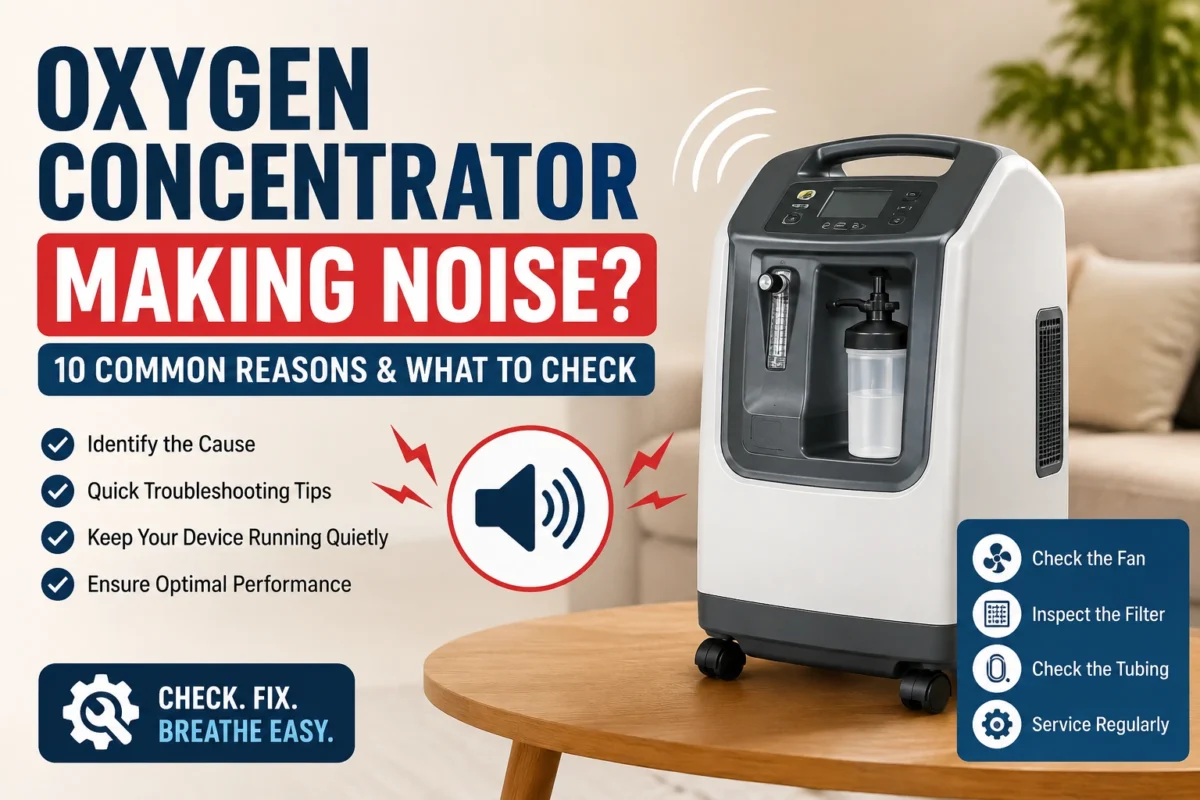
Oxygen Concentrator Making Noise? 10 Common Reasons & What to Check
Is your oxygen concentrator making more noise than usual? Learn what different sounds can mean, what you can safely check at home, when professional servicing may be required, and when it may be better to buy a new oxygen concentrator.
Why Is My Oxygen Concentrator Making Noise?
An oxygen concentrator normally produces some sound while operating. Inside the machine, the compressor continuously draws in room air, processes it through the molecular sieve system, and delivers concentrated oxygen to the user.
Because of this process, a low mechanical hum, airflow sound, compressor vibration, or periodic operating noise can be completely normal. The important thing is to understand whether the sound is consistent with the machine’s normal operation or whether it has suddenly changed.
A concentrator that has become noticeably louder may have an issue with airflow, filters, ventilation, vibration, tubing, the compressor, or another internal component. In some situations, the noise may be simple to resolve. In others, it may indicate that the equipment needs professional inspection.
“Is my oxygen concentrator noisy?”
Instead, ask:“Is the sound normal for this machine, or has something changed?”
Quick Answer: Should an Oxygen Concentrator Be Noisy?
Yes. Most oxygen concentrators make some operating noise. A continuous low hum or compressor sound can be expected.
However, a sudden increase in noise, rattling, grinding, buzzing, clicking, repeated alarms, unusual vibration, or irregular sounds should be investigated.
If the machine is also showing an oxygen alarm, overheating, stopping unexpectedly, or not functioning as it normally does, it should be checked promptly by a qualified technician.
What Does a Normal Oxygen Concentrator Sound Like?
Oxygen concentrators use a compressor and air-processing system, so completely silent operation is generally not expected. The exact sound level depends on the model, compressor design, airflow, age, placement, and operating condition.
A healthy machine may produce a steady mechanical hum along with periodic changes in compressor operation. Some models can sound slightly different during different stages of operation.
Normal sounds may include:
- A soft or moderate compressor hum
- Continuous airflow noise
- Periodic mechanical operating sounds
- A gentle fan sound
- Minor vibration from the compressor
What matters most is consistency. If the machine has always made a particular sound and continues operating normally, that sound may simply be part of its design.
If the sound is familiar, stable, and the concentrator is functioning normally, it may not indicate a problem. If the sound is new, significantly louder, irregular, or accompanied by an alarm or performance problem, investigate it.
Different Oxygen Concentrator Sounds and What They May Mean
Listening carefully to the sound can help you identify whether the issue is likely related to normal operation, airflow, vibration, or a mechanical component.
| Sound | Possible Cause | What to Check |
|---|---|---|
| Low steady hum | Normal compressor operation | Compare with the machine’s usual sound |
| Strong airflow noise | Airflow restriction or ventilation issue | Check filters, vents and placement |
| Rattling | Loose panel, object or vibration | Check external panels and placement |
| Buzzing | Electrical or mechanical issue | Stop using if unusual and seek inspection |
| Grinding | Possible mechanical wear | Professional inspection recommended |
| Clicking | Valve or mechanical operation | Determine whether it is normal for the model |
| Excessive vibration | Placement, compressor or internal component | Move to a stable surface and check |
10 Common Reasons Why Your Oxygen Concentrator Is Making Noise
There are several possible reasons for an oxygen concentrator becoming noisy. Some are related to simple environmental factors, while others can require servicing.
Dirty or Clogged Air Filter
One of the first things to check is the air filter. Oxygen concentrators continuously draw room air into the machine. Dust, hair and other particles can accumulate over time.
When airflow becomes restricted, the machine may work harder to pull in air. This can result in increased airflow noise or changes in the machine’s operating sound.
Poor Ventilation Around the Machine
Oxygen concentrators need adequate airflow around their ventilation openings. Placing the unit too close to a wall, curtain, furniture or another object can restrict air circulation.
Restricted ventilation may increase heat and can make the fan or compressor work harder.
Loose Panels or External Parts
Sometimes the source of a rattling sound is not the compressor itself. A loose external panel, cover, accessory or nearby object may vibrate while the machine is running.
Because the compressor creates mechanical vibration, even a small loose component can produce a surprisingly noticeable rattling noise.
Uneven or Unstable Surface
The surface underneath an oxygen concentrator can significantly affect perceived noise.
A hard floor, uneven table or unstable platform may amplify normal compressor vibration and make the machine appear much louder than it actually is.
Fan or Cooling System Noise
Many oxygen concentrators use a cooling fan to help control internal temperature. Dust accumulation, restricted airflow or component wear can affect fan operation.
A fan that becomes louder, irregular or starts making unusual mechanical sounds may need inspection.
Compressor Wear
The compressor is one of the most important mechanical components inside many oxygen concentrators.
With prolonged use, mechanical components can experience wear. A compressor-related problem may result in increased vibration, buzzing, rattling or grinding sounds.
Tubing or Cannula Problems
Sometimes the machine itself is not the source of the problem. A kinked tube, restricted tubing or poorly positioned accessories can affect airflow and may change the sound coming from the system.
Check that the oxygen tubing is not sharply bent, compressed or trapped under furniture.
Machine Running in a Poor Environment
Dusty, hot, humid or poorly ventilated environments can make an oxygen concentrator work under more demanding conditions.
A machine placed in a cramped corner or surrounded by household items may have difficulty maintaining adequate airflow.
Aging Internal Components
Older concentrators can gradually become noisier as mechanical components age. Changes may be subtle at first and become more noticeable over time.
If the equipment is old and noise is increasing together with reduced performance, frequent alarms or overheating, a professional evaluation may be appropriate.
Internal Mechanical or Electrical Fault
A sudden buzzing, grinding, burning smell, repeated clicking, severe vibration or unusual electrical sound may indicate an internal problem.
These issues should not be diagnosed by repeatedly opening or experimenting with the machine at home.
Why Does My Oxygen Concentrator Sound Louder at Night?
Many people notice their oxygen concentrator more at night than during the daytime. This does not necessarily mean that the machine has suddenly developed a fault.
During the day, conversations, fans, televisions, traffic and household activity can mask the sound of the concentrator. At night, the surrounding environment becomes much quieter, making the same machine sound significantly louder.
But what if the sound really has increased?
Compare the current sound with how the concentrator sounded previously. If there is a clear change in pitch, vibration, rattling or mechanical noise, investigate the machine rather than assuming it is simply nighttime perception.
Never cover an oxygen concentrator with blankets, cloth, cushions or other materials just to reduce the sound. The machine needs proper ventilation during operation.
Oxygen Concentrator Noise Troubleshooting: What You Can Check
If the machine is louder than usual but there are no immediate emergency symptoms, you can perform a basic external inspection. The purpose of this check is to identify simple issues without opening the equipment.
Step 1: Listen Carefully
Try to identify the type of sound. Is it a hum, rattle, vibration, buzz, click, airflow sound or grinding noise?
Step 2: Check the Machine’s Position
Make sure the concentrator is standing securely on a level surface. Check whether it is touching a wall, cabinet or another object that could amplify vibration.
Step 3: Check Airflow Clearance
Look around the machine and make sure vents are not blocked by curtains, furniture, bags, clothing or other objects.
Step 4: Inspect External Filters
If your model has an accessible external filter, inspect it and follow the manufacturer’s cleaning or replacement instructions.
Step 5: Inspect Oxygen Tubing
Make sure the tubing is not kinked, crushed or trapped beneath furniture. Check for visible damage.
Step 6: Check for Heat
If the machine feels unusually hot or appears to be overheating, stop treating the issue as a simple noise problem and seek appropriate technical assistance.
Step 7: Check for Alarms
Pay attention to warning lights, audible alarms or error messages. Always refer to the specific manufacturer’s instructions for interpreting alarms.
Internal components can include electrical and pneumatic systems that should be inspected and serviced by qualified personnel.
Quick Oxygen Concentrator Noise Checklist
When Should You Get an Oxygen Concentrator Serviced?
Not every unusual sound means that the concentrator needs to be replaced. In many cases, a qualified technician may be able to identify and resolve the underlying issue.
Professional inspection becomes particularly important when the noise continues after basic external checks or when it is combined with other changes in machine performance.
Consider professional inspection if:
- The machine suddenly becomes significantly louder.
- You hear grinding or unusual mechanical sounds.
- The machine vibrates excessively.
- The machine repeatedly triggers alarms.
- The concentrator overheats.
- Oxygen output appears different from normal.
- The machine stops unexpectedly.
- There is an unusual electrical or burning smell.
- The equipment has been heavily used for a long period.
Repair or Buy a New Oxygen Concentrator?
This is one of the most important questions when an older oxygen concentrator starts becoming noisy.
Repair may make sense when the issue is relatively minor and the machine is otherwise in good condition. However, if the concentrator is old, has recurring faults, requires frequent servicing or no longer provides reliable performance, replacing it may be a more practical long-term decision.
A replacement may be worth considering when:
- The machine has frequent breakdowns.
- Noise continues to increase.
- Maintenance costs are becoming high.
- The equipment is significantly aged.
- There are repeated performance problems.
- You need a different oxygen flow requirement.
- You need a more compact or portable solution.
- You want a newer model with better usability and support.
Looking for a replacement?
Explore oxygen concentrators available from Respikart and choose a model according to your required flow, usage, portability and application.
View Oxygen ConcentratorsWhich Oxygen Concentrator Should You Buy?
If you have decided to purchase a new oxygen concentrator, choosing the right type is important. Oxygen concentrators are available in different flow capacities and designs.
The correct choice depends on the prescribed oxygen requirement, intended duration of use, portability needs and clinical guidance.
5 LPM Oxygen Concentrator
A 5 LPM concentrator is commonly considered when the required oxygen flow falls within its operating range.
- Suitable for applications requiring up to 5 LPM
- Stationary home-use options available
- Designed for regular oxygen therapy use
- Generally practical for home environments
10 LPM Oxygen Concentrator
Higher-capacity concentrators are designed for applications where a higher flow capability is required.
- Higher flow capability
- Useful for higher-flow requirements
- Available in stationary configurations
- Selection should follow prescribed requirements
Portable Oxygen Concentrator
Portable oxygen concentrators are designed for people who need greater mobility and want a more travel-friendly form factor.
- Compact design
- Designed for mobility
- Battery-powered options
- Different models offer different settings
Oxygen flow requirements should not be selected only on the basis of price or machine size. Follow the oxygen prescription and professional medical advice when choosing the required flow capacity.
10 Things to Check Before Buying an Oxygen Concentrator
Buying an oxygen concentrator is different from buying an ordinary household appliance. It is a medical device, so specifications, reliability, after-sales support and suitability are important.
Why Consider Respikart When Buying an Oxygen Concentrator?
Choosing the right supplier is an important part of buying medical equipment. A good supplier should not only provide the product but should also help customers understand the machine and select an appropriate option.
Respikart offers oxygen concentrators for different requirements, including stationary and portable options.
Before placing your order, you can consider:
- Your prescribed oxygen flow requirement
- Expected daily operating duration
- Stationary versus portable use
- Available space at home
- Power availability
- Warranty and service requirements
- Budget and long-term operating needs
7 Things You Should Never Do When Your Oxygen Concentrator Gets Noisy
- Do not ignore a sudden major change in sound. A new abnormal sound can indicate a problem that deserves attention.
- Do not cover the machine to reduce noise. Proper ventilation is essential for operation.
- Do not place it inside a closed cabinet. Restricted airflow can create operational and heat-related problems.
- Do not dismantle internal components yourself. Internal servicing should be handled appropriately.
- Do not continue using a machine with serious warning signs. Alarms, overheating, burning smell or severe mechanical noise should not be ignored.
- Do not select a replacement based only on price. Flow capacity, specifications and support matter.
- Do not change prescribed oxygen settings without professional guidance. Oxygen therapy requirements should be followed as directed.
How to Maintain Your Oxygen Concentrator and Reduce Unnecessary Noise
Regular maintenance can help keep an oxygen concentrator operating properly and may help identify developing problems earlier.
Keep the machine clean
Dust and dirt can accumulate around the equipment over time. Follow the manufacturer’s instructions for cleaning the external surfaces and accessible filters.
Keep ventilation areas clear
Never place bags, clothing, curtains or furniture directly against the ventilation areas.
Inspect tubing regularly
Check tubing for visible damage, kinks or compression.
Monitor changes in operating sound
Knowing what your machine normally sounds like makes it easier to identify when something has changed.
Follow manufacturer maintenance instructions
Different oxygen concentrator models have different maintenance requirements. Always follow the instructions supplied with your particular device.
6 Signs It May Be Time to Buy a New Oxygen Concentrator
Sometimes repairing an old machine is not the most practical solution. Consider evaluating a replacement when several warning signs appear together.
Before replacing a medical device, compare the cost of repair, expected future reliability, warranty support and your current oxygen requirements.
Looking to Buy an Oxygen Concentrator?
Explore oxygen concentrators from Respikart for home oxygen therapy requirements. Choose from different capacities and configurations based on your needs and prescribed oxygen flow.
If you are unsure whether you need a 5 LPM, 10 LPM or portable oxygen concentrator, speak with the Respikart team before placing your order.
When Is Oxygen Concentrator Noise an Urgent Concern?
Noise alone does not always indicate an emergency. However, unusual noise combined with other warning signs deserves immediate attention.
- Burning or unusual electrical smell
- Smoke or visible signs of damage
- Severe overheating
- Repeated warning alarms
- Sudden major performance changes
- Severe grinding or mechanical noise
- Unexpected machine shutdown
If oxygen therapy is medically required, do not make treatment changes on your own. Follow your clinician’s instructions and have malfunctioning equipment assessed appropriately.
Frequently Asked Questions About Noisy Oxygen Concentrators
Is it normal for an oxygen concentrator to make noise?
Yes. Oxygen concentrators generally produce some operating noise because they use a compressor, fan and airflow system. A consistent low hum can be normal. A sudden or significantly different sound should be investigated.
Why is my oxygen concentrator suddenly louder?
Possible causes include restricted airflow, dirty filters, poor ventilation, vibration, loose external components, fan issues or internal mechanical wear. If the increase in noise is sudden or accompanied by alarms or performance problems, professional inspection may be appropriate.
Why does my oxygen concentrator rattle?
Rattling can sometimes result from vibration, an unstable surface, a loose external component or an internal mechanical issue. Check the machine’s position and external surroundings first. Do not open the internal housing yourself.
Can a dirty filter make an oxygen concentrator noisy?
Restricted airflow can affect how the machine operates and may contribute to changes in sound. Follow the manufacturer’s instructions for filter inspection, cleaning or replacement.
Why is my oxygen concentrator louder at night?
A quiet room makes machine noise much easier to notice. However, if the sound is genuinely different from the machine’s normal operation, it should be investigated.
Can I reduce oxygen concentrator noise by covering it?
No. Do not cover an operating oxygen concentrator with blankets, cloth or other materials. The machine needs adequate ventilation.
Should I repair or replace my oxygen concentrator?
It depends on the machine’s age, condition, repair history, performance and the cost of servicing. If the machine is repeatedly failing or becoming unreliable, comparing the cost and reliability of a replacement may be worthwhile.
Which oxygen concentrator should I buy?
The right model depends on your prescribed oxygen flow, usage pattern, portability requirements and other product specifications. Oxygen flow should be selected according to professional medical guidance rather than price alone.
Should I buy a 5 LPM or 10 LPM oxygen concentrator?
The answer depends on the required oxygen flow. A 5 LPM unit and a 10 LPM unit are designed for different flow capabilities. Follow the prescribed requirement when selecting the machine.
Where can I buy an oxygen concentrator from Respikart?
You can explore available oxygen concentrators through the Respikart oxygen concentrator category and contact the team for assistance in choosing a suitable option.
Final Takeaway
An oxygen concentrator is expected to make some sound during normal operation. The important thing is to recognize changes in the machine’s usual sound.
Simple factors such as placement, ventilation, filters and tubing can sometimes contribute to increased noise. However, unusual grinding, severe vibration, electrical buzzing, overheating, repeated alarms or changes in performance should not be ignored.
If your existing machine is becoming unreliable or no longer meets your requirements, buying a suitable replacement can be a practical option.
Before purchasing, compare oxygen flow capacity, oxygen concentration specifications, noise level, power consumption, portability, warranty and after-sales support.
Explore the Respikart oxygen concentrator range or contact the team for product guidance.
Buy the Right Oxygen Concentrator for Your Requirement
Compare oxygen concentrator options available from Respikart and choose a model based on your required flow, usage and portability needs.
