
Oxygen Therapy
Portable Oxygen Concentrator: Uses and Buying Tips
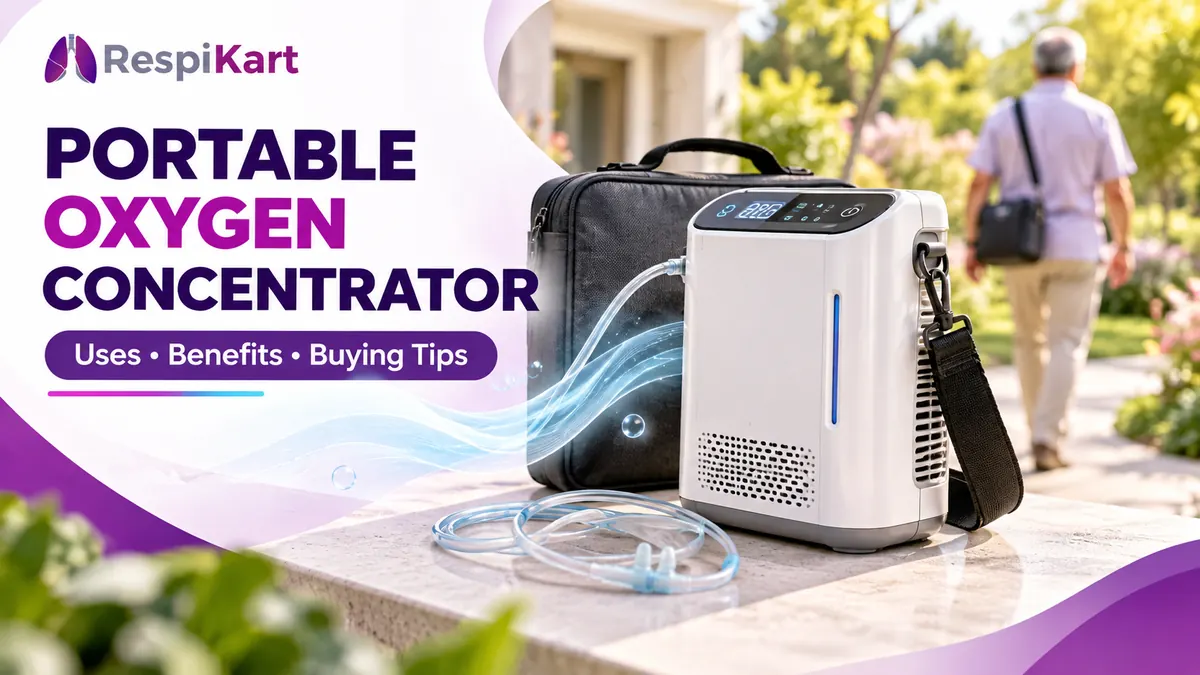
Portable Oxygen Concentrator: Uses, Benefits and Buying Tips
Your guide to portable oxygen technology, pulse-dose delivery, battery planning and choosing equipment that matches a prescribed oxygen requirement.
Explore the Guide ↓ Buying Checklist ↗MOBILITY · TECHNOLOGY · COMFORT · SAFETY
Oxygen Delivery
Understand the prescribed mode before comparing models.
Battery Planning
Check realistic runtime at the setting you will use.
Medical Suitability
Prescription and clinical needs come before price.
What Is a Portable Oxygen Concentrator?
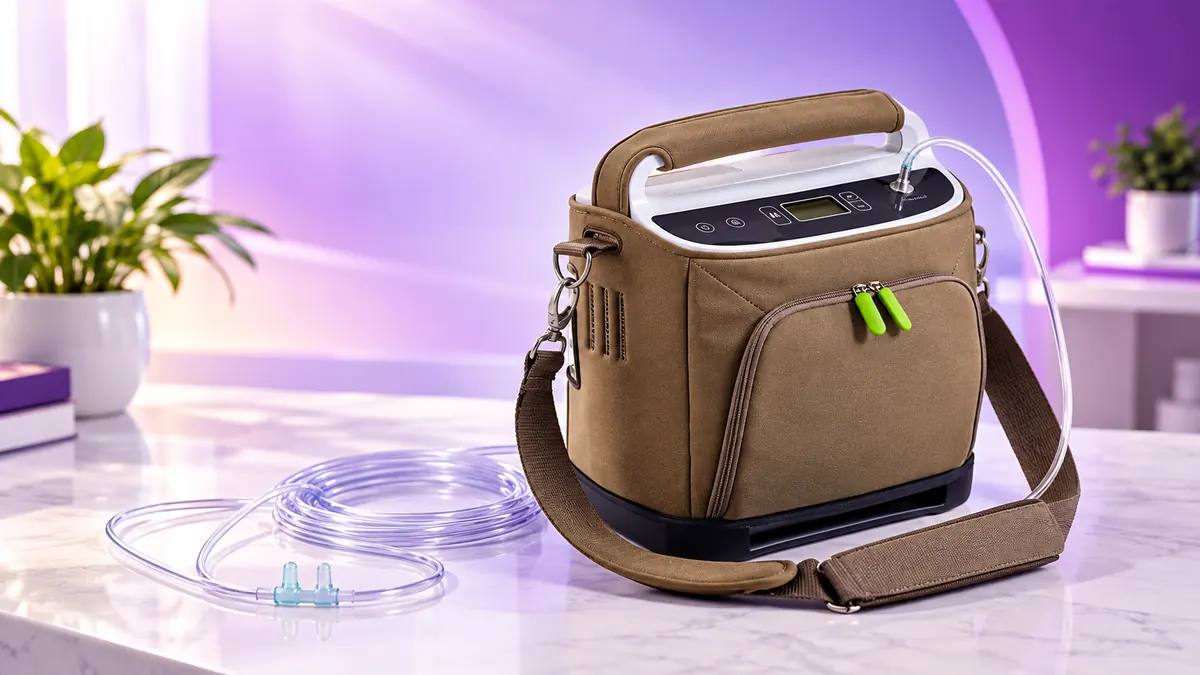
A portable oxygen concentrator (POC) is a compact medical device that draws in surrounding air, separates out much of the nitrogen and delivers oxygen-enriched gas through a nasal cannula. Many models offer battery operation, allowing suitable patients to use prescribed oxygen while away from a mains power outlet.
Unlike a stationary home concentrator, a portable model is designed around mobility. It may support hospital visits, family outings and everyday activities when its capabilities match the patient’s prescribed oxygen requirements.
How Does a Portable Oxygen Concentrator Work?
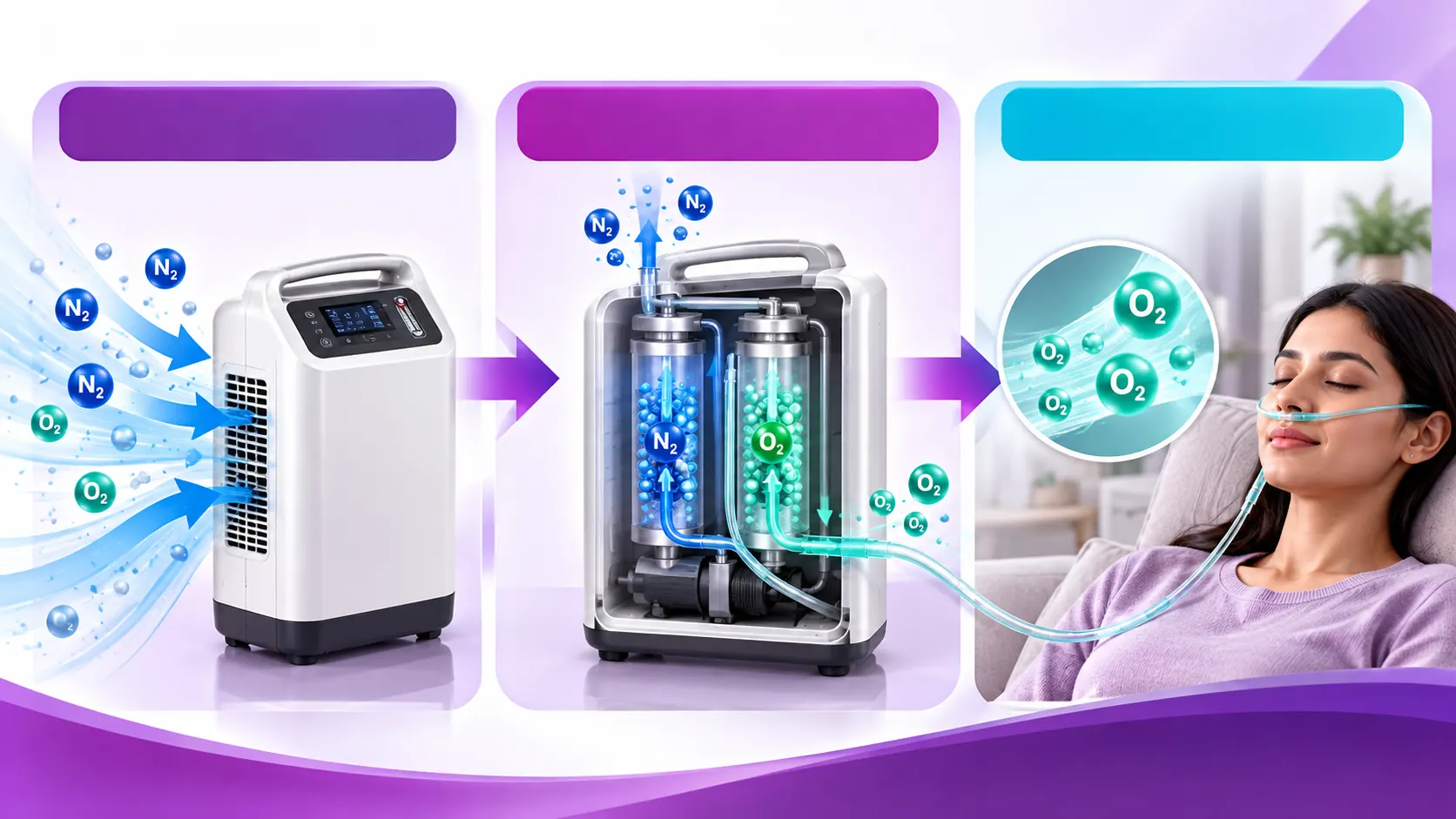
Most concentrators use pressure swing adsorption (PSA). A compressor moves incoming air through sieve material, commonly zeolite, which adsorbs much of the nitrogen. The device then delivers oxygen-enriched gas according to its design.
Air Intake
Nitrogen Separation
Oxygen Delivery
Compact Engineering
Portable designs balance device weight, noise, power consumption and oxygen delivery.
Power Requirements
Battery capacity and runtime depend on the model and its operating settings.
Read the Respikart Oxygen Concentrator Guide for a broader overview of oxygen equipment, home use and buying considerations.
Pulse Flow vs Continuous Flow
These terms describe different methods of delivering oxygen. Understanding the distinction is essential before selecting a portable device.
Pulse-Dose Delivery
Delivers a measured dose when the device detects inhalation.
- May conserve battery power.
- Often supports a compact design.
- Depends on reliable breath detection.
- Not appropriate for every prescription.
Continuous Flow
Supplies a steady stream of gas while operating in that mode.
- Provides a continuous gas stream.
- Can require greater power.
- May need a larger device design.
- Availability depends on the model.
Pulse Setting Is Not the Same as LPM
A pulse setting of 2 or 3 is not automatically equivalent to 2 or 3 litres per minute of continuous flow. Delivery characteristics vary by manufacturer and device.
Confirm the appropriate mode and setting with your healthcare professional.
Read the 5 LPM vs 10 LPM Comparison Guide →Who May Use a Portable Oxygen Concentrator?
Supplemental oxygen may be prescribed for certain patients with conditions such as COPD or interstitial lung disease when clinical assessment shows that oxygen support is needed.
A suitable portable device may help these patients use prescribed oxygen during activities outside the home. Oxygen needs may differ during rest, walking, sleep and air travel, so suitability should be assessed for the intended circumstances.
Everyday Mobility
Consider portability, comfort and battery planning for outings.
Clinical Assessment
Diagnosis alone does not determine whether oxygen therapy is required.
Benefits and Limitations
Mobility
Designed to be carried or transported according to the manufacturer’s instructions.
No Routine Refilling
Produces oxygen-enriched gas from surrounding air while operating.
Battery Operation
A compatible charged battery can support use away from mains power.

What Should You Keep in Mind?
- Battery runtime changes with the setting and operating conditions.
- Not every portable device meets every oxygen requirement.
- Weight includes batteries and carrying accessories.
- Filters, batteries and other components require maintenance.
- Backup arrangements may be needed for power interruptions.
Portable vs Stationary Concentrator
| Feature | Portable POC | Stationary Unit |
|---|---|---|
| Main purpose | Mobility and outings | Home use in one location |
| Power | Battery and/or mains by model | Usually mains electricity |
| Delivery | Often pulse-dose; check model | Many models offer continuous flow |
| Planning | Battery runtime and spare power | Power backup and airflow |
Learn about home oxygen equipment in our Oxygen Concentrator vs Oxygen Cylinder guide .
Your Portable Oxygen Concentrator Buying Checklist
Compare devices using these six practical checkpoints.
Confirm the Prescribed Mode
Ask your healthcare professional which delivery mode and setting are appropriate.
Check Battery Runtime
Request runtime information at the prescribed setting and ask about spare batteries.
Compare Total Carrying Weight
Include the battery, bag and accessories when assessing portability.
Review Noise and Maintenance
Check noise specifications, filters, service requirements and battery replacement costs.
Plan Air Travel
Confirm that the airline accepts the exact device and check documentation and battery rules.
Check Warranty and Support
Understand warranty coverage, servicing arrangements and technical assistance.
Should You Rent or Buy?
Consider Renting
May suit a temporary requirement or a defined period of use.
- Compare the complete rental cost.
- Confirm availability and rental terms.
- Ask about servicing and delivery.
Consider Buying
May suit longer-term use when the purchase fits the budget and requirements.
- Check warranty and servicing.
- Include battery and accessory costs.
- Verify medical suitability first.
Compare the total rental cost with the purchase price, accessories, maintenance and expected duration of use. The right option depends on the individual circumstances.
Oxygen Equipment Safety Basics
Fire Safety
Keep equipment away from smoking, open flames, sparks and heat sources.
Airflow
Keep air intakes unobstructed and follow the device manual.
Prescribed Settings
Do not change oxygen settings without medical advice.
Frequently Asked Questions
1. What is a portable oxygen concentrator used for?
It provides oxygen-enriched gas to people prescribed supplemental oxygen who need a portable option. Suitability depends on the prescription and device capabilities.
2. Is a portable concentrator the same as a home concentrator?
No. Portable models are designed for mobility and may use batteries. Stationary units are primarily designed for use in one location.
3. What is the difference between pulse flow and continuous flow?
Pulse-dose delivery gives a measured dose when inhalation is detected, while continuous flow supplies a steady stream. Settings cannot be compared directly.
4. How long does the battery last?
Battery runtime depends on the model, setting, battery condition, breathing pattern and operating conditions.
5. Can I take a POC on a flight?
Some models are accepted, but airline requirements differ. Confirm the exact model, documentation and battery requirements in advance.
6. Is a 10 LPM concentrator always better than a 5 LPM model?
No. The appropriate flow capacity depends on the prescribed requirement and the specifications of the device. See our 5 LPM vs 10 LPM comparison.
7. Should I rent or buy a portable concentrator?
Renting may suit a temporary requirement, while buying may suit longer-term use. Compare total costs and confirm suitability with your healthcare professional.
