

BMC Products, CPAP MACHINE, Elderly Care, Equipment, Home Healthcare, ResMed Products, Respiratory Equipment, Sleep Apnea Care
BMC G3 A20 vs ResMed AirSense 11 AutoSet Tripack 4G: Which Auto CPAP Machine Is Better?
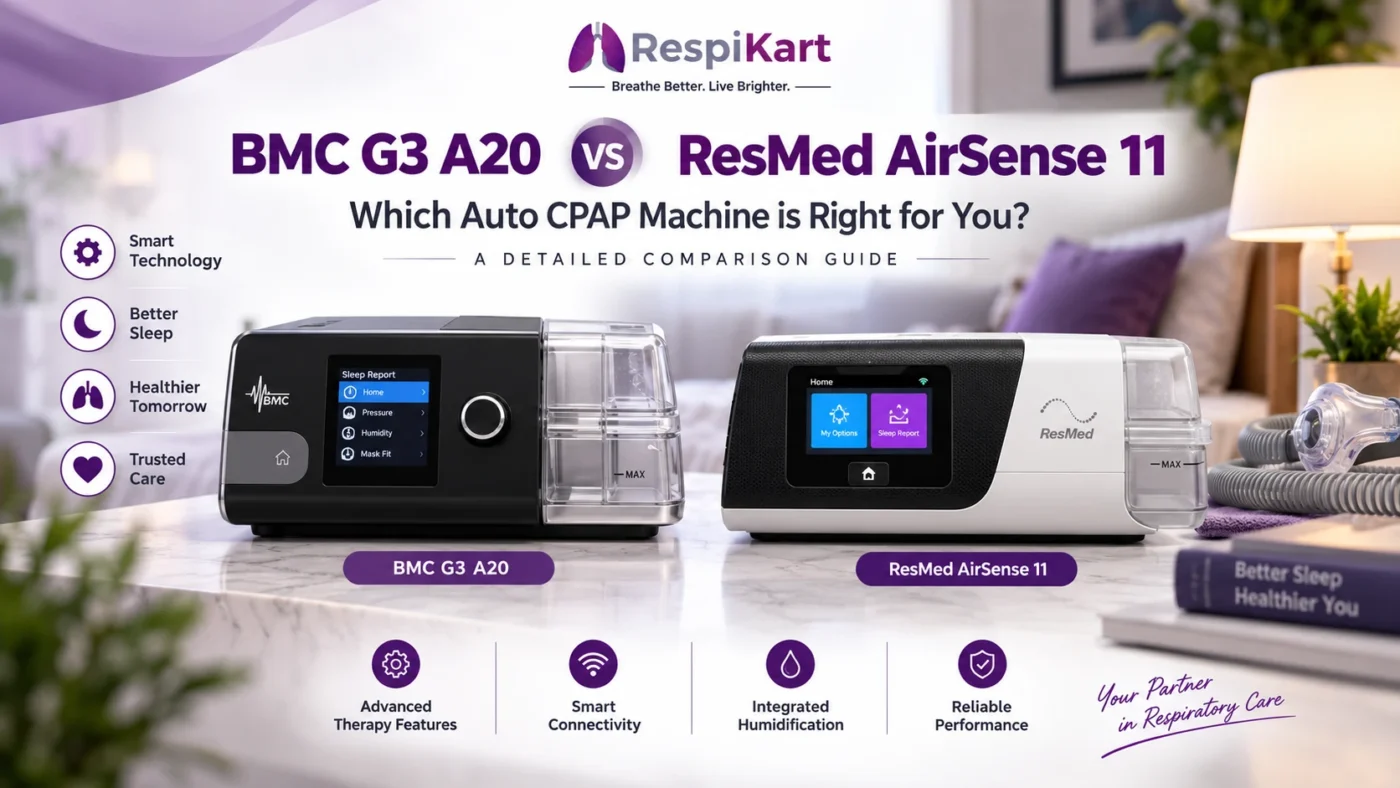
BMC G3 A20 vs ResMed AirSense 11 AutoSet Tripack 4G: Understanding the Real Difference Between These Two Auto CPAP Machines
Choosing an Auto CPAP machine can feel surprisingly complicated. Two machines may both offer automatic pressure adjustment, humidification and comfort features, yet their overall user experience, connectivity, data management and price can be very different.
In this detailed Respikart comparison, we look beyond a simple specification table and explain what those differences can mean during real-world CPAP use.
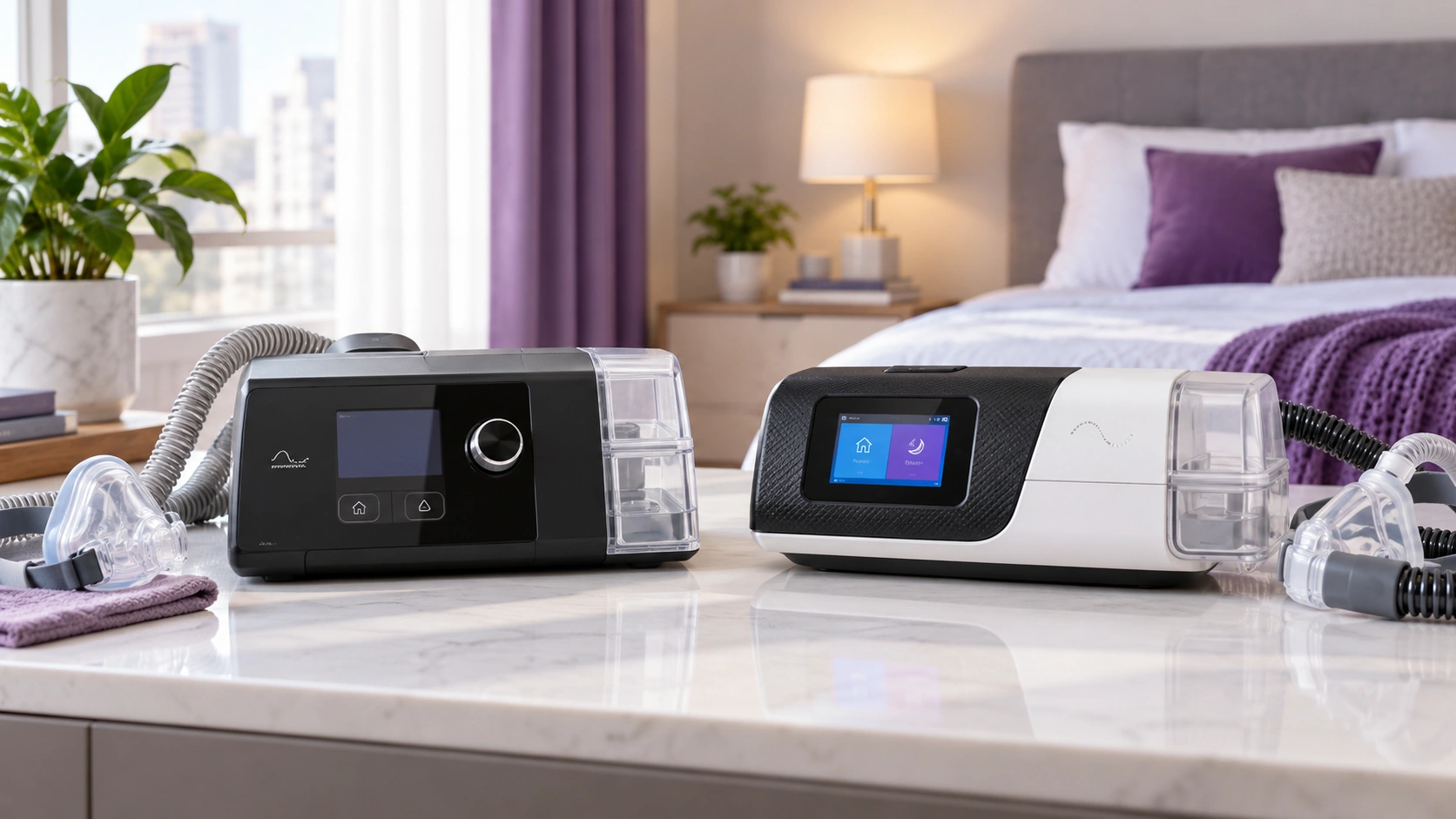
Why This Comparison Matters
Once a sleep study has confirmed obstructive sleep apnea and Auto CPAP therapy has been recommended, the next question is often: Which machine should I buy?
The answer is not necessarily the machine with the longest feature list. A CPAP machine becomes part of a person’s nightly routine, so factors such as comfort, humidification, pressure relief, data access, connectivity and long-term equipment requirements all deserve attention.
The BMC G3 A20 and ResMed AirSense 11 AutoSet Tripack 4G represent two different approaches to Auto CPAP ownership. Both provide automatic pressure adjustment, but the ecosystem surrounding that therapy is quite different.
*Specifications are based on the comparison information used for this article. Always verify the current product listing before purchase.
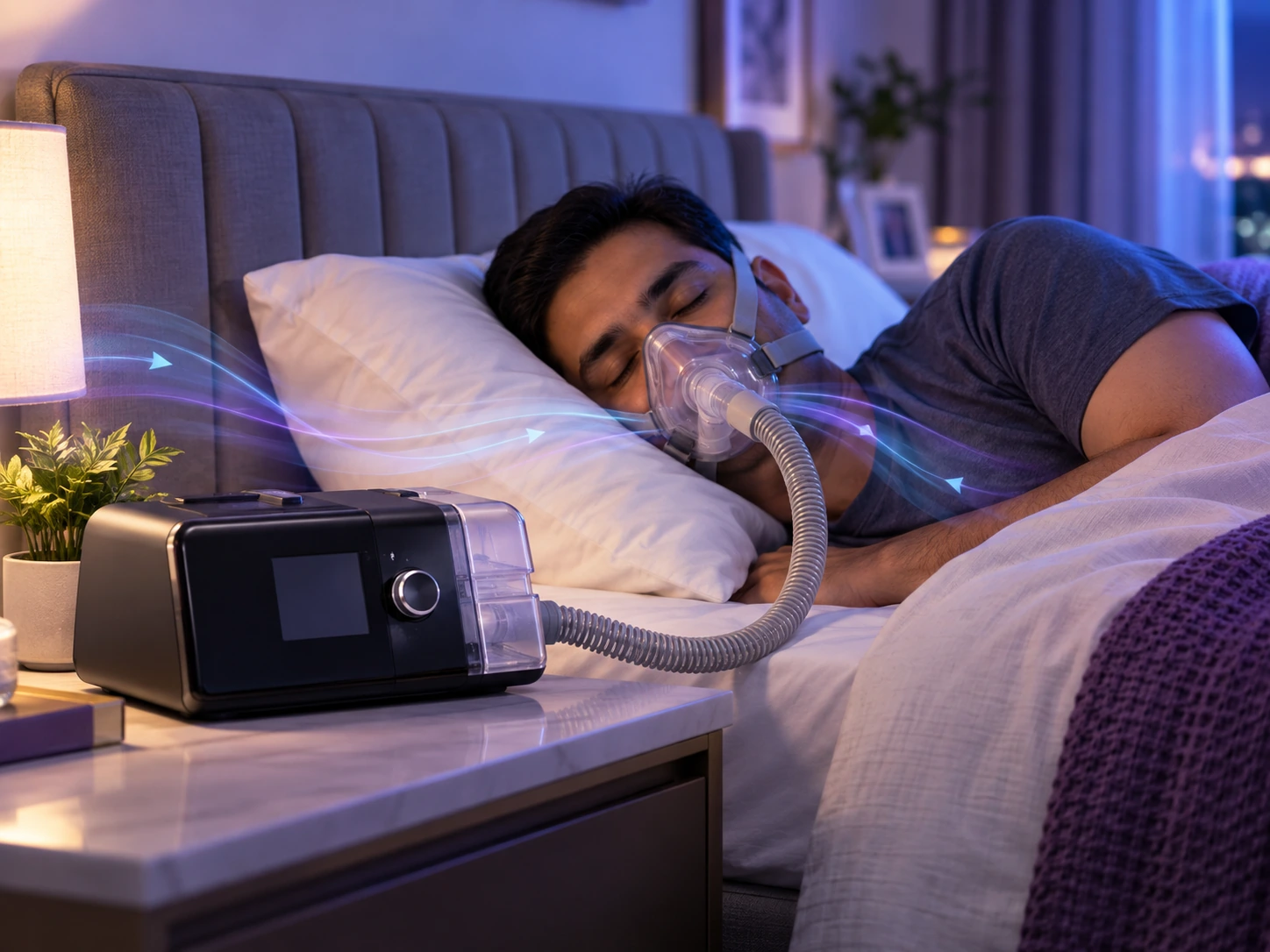
What Does an Auto CPAP Actually Do?
Auto CPAP, commonly called APAP, is designed to adjust air pressure automatically within the prescribed range. Instead of delivering one unchanging pressure throughout the night, the machine responds to breathing patterns detected during therapy.
This matters because breathing does not necessarily remain identical from bedtime until morning. Sleep position, sleep stage, nasal congestion and other factors can influence breathing patterns.
An Auto CPAP therefore attempts to provide the pressure required at that moment while staying within the boundaries set for the patient.
Meet the Two Machines
Before comparing individual specifications, it helps to understand what each machine is trying to deliver as a complete user experience.
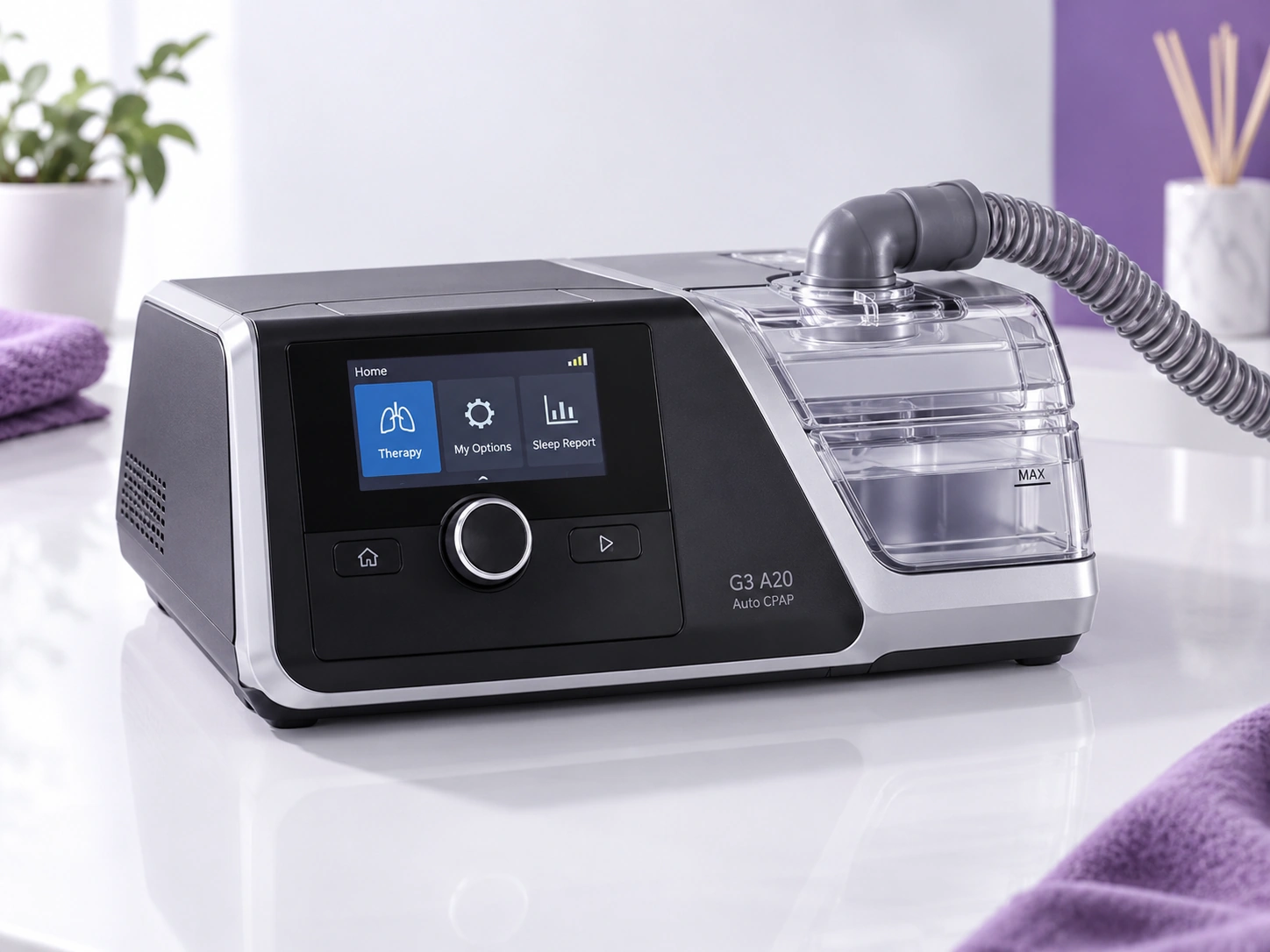
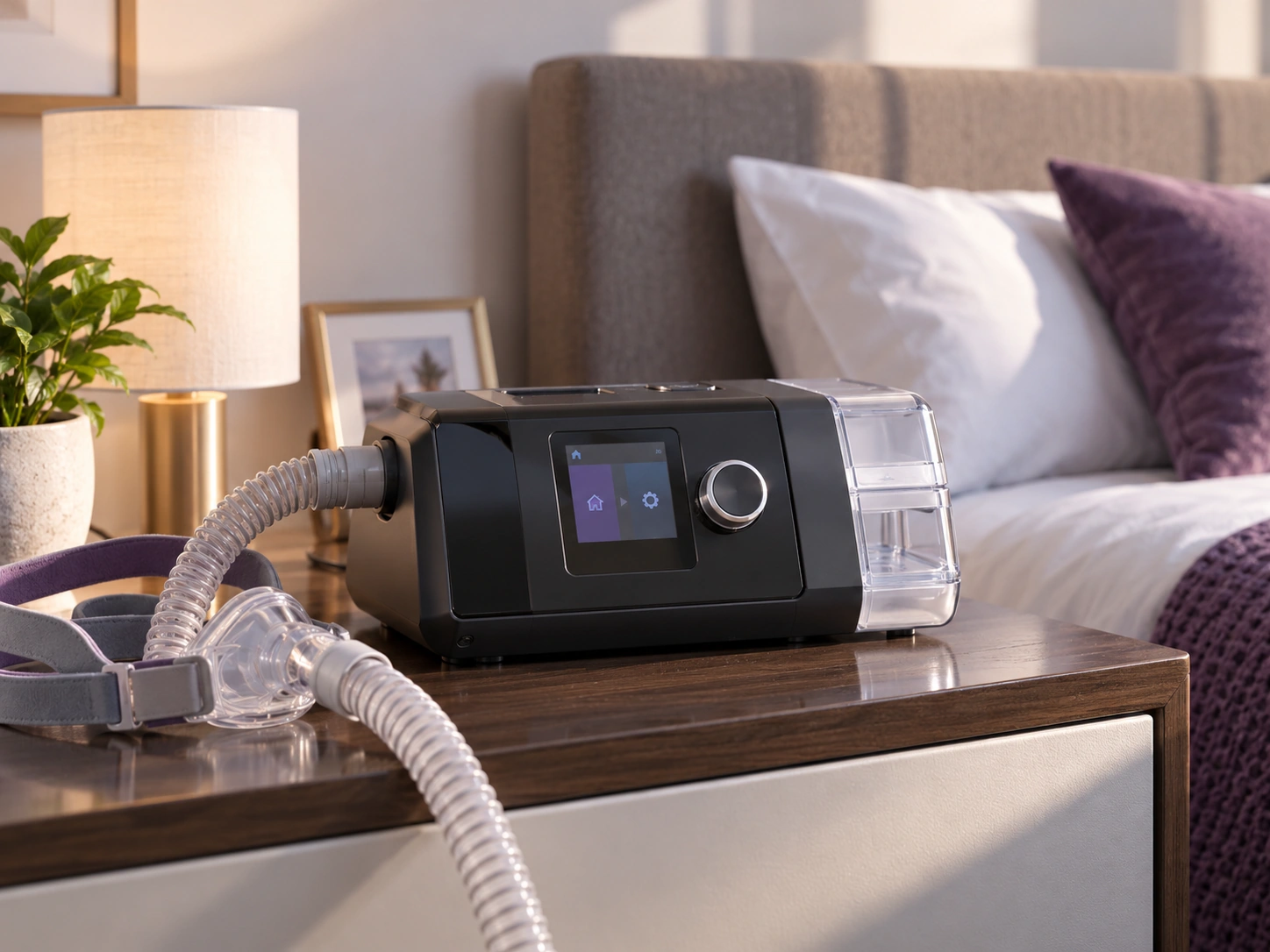
BMC G3 A20
The G3 A20 focuses on the core Auto CPAP experience, combining automatic pressure adjustment with comfort-oriented features such as RESlex pressure relief, Auto Ramp and heated humidification.
- Auto CPAP / APAP
- 4–20 cmH₂O range in the source comparison
- RESlex exhalation relief
- Auto Ramp
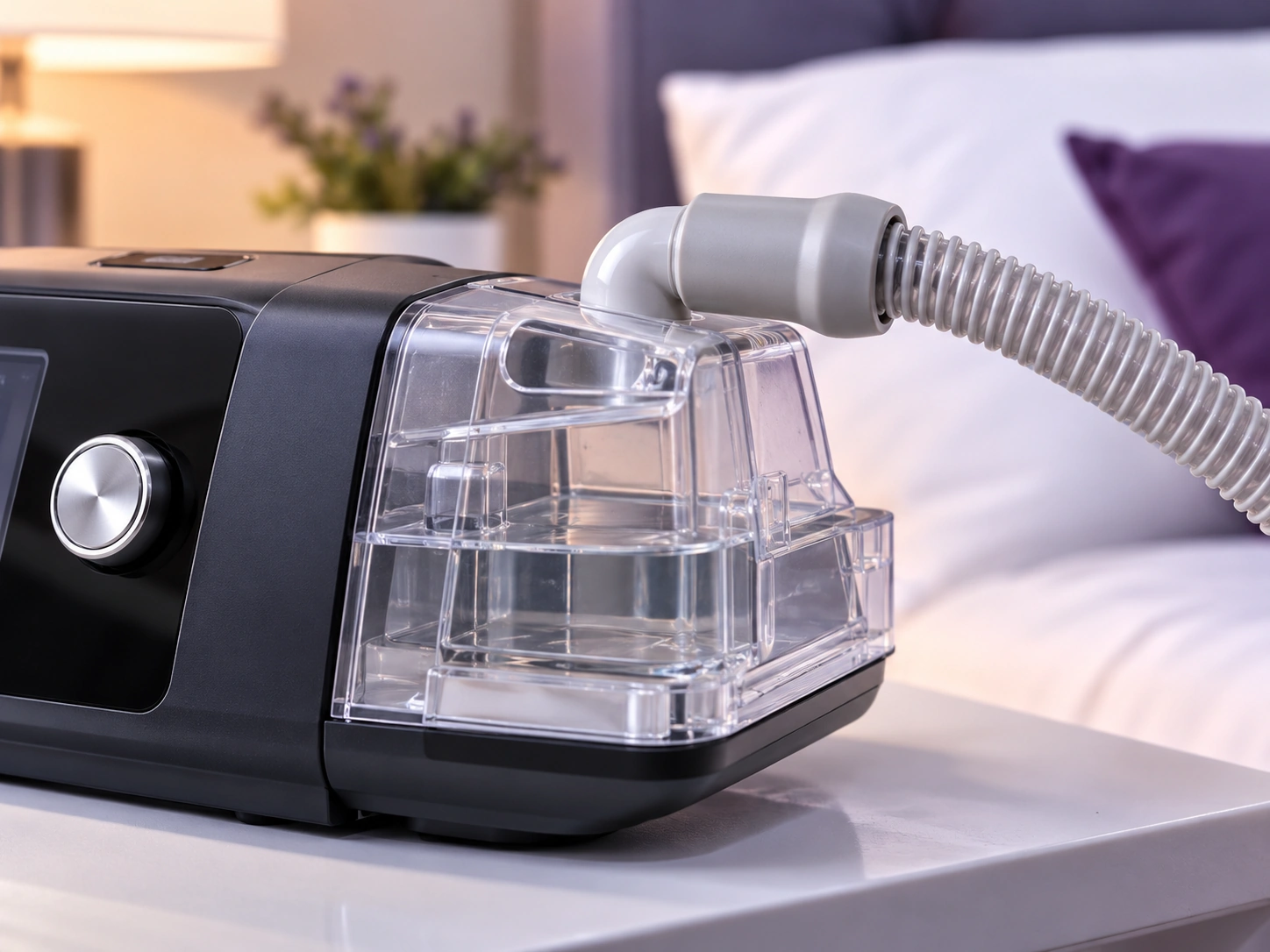
- Integrated heated humidification
- SD-card based data storage
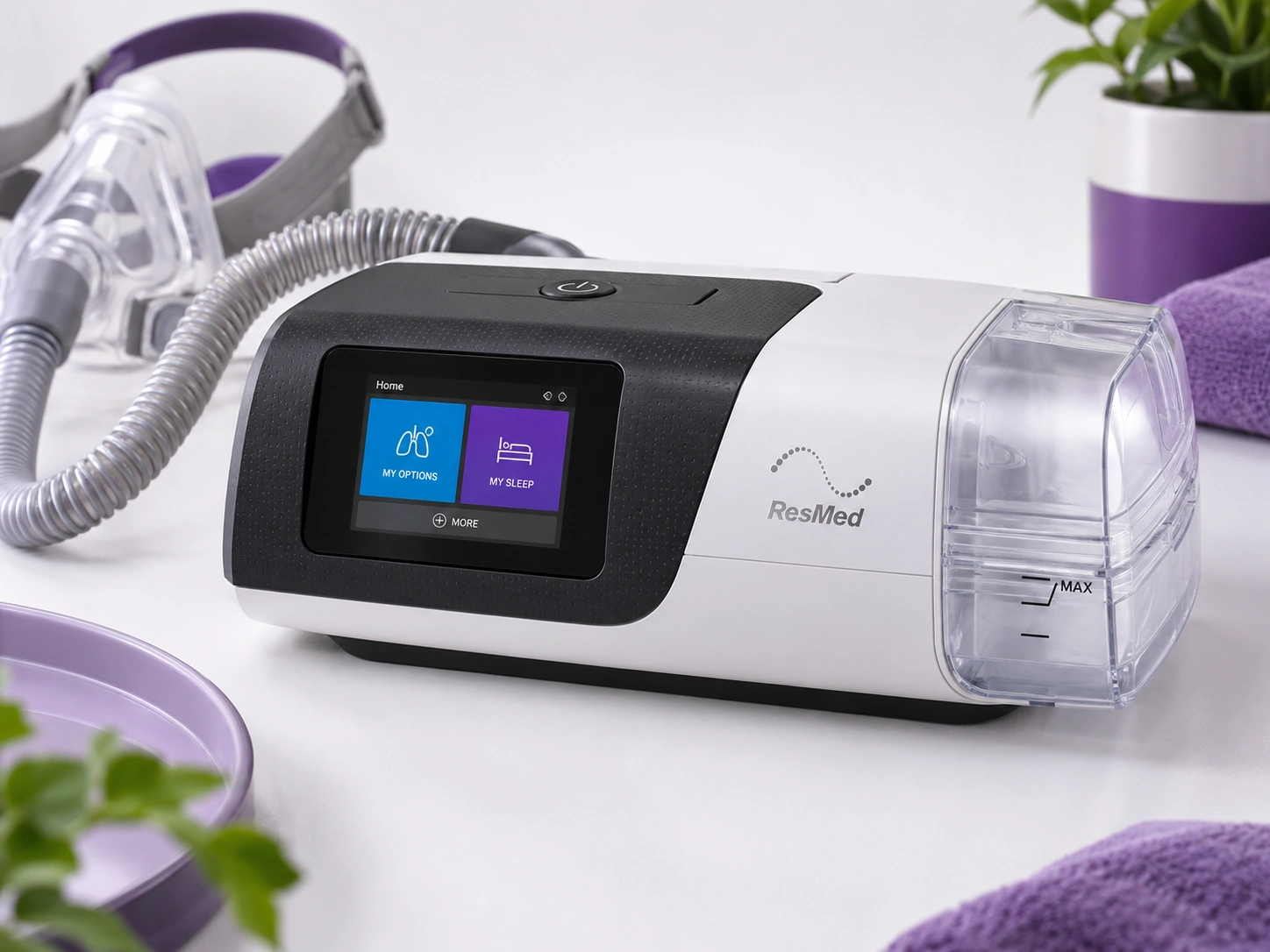
ResMed AirSense 11 AutoSet
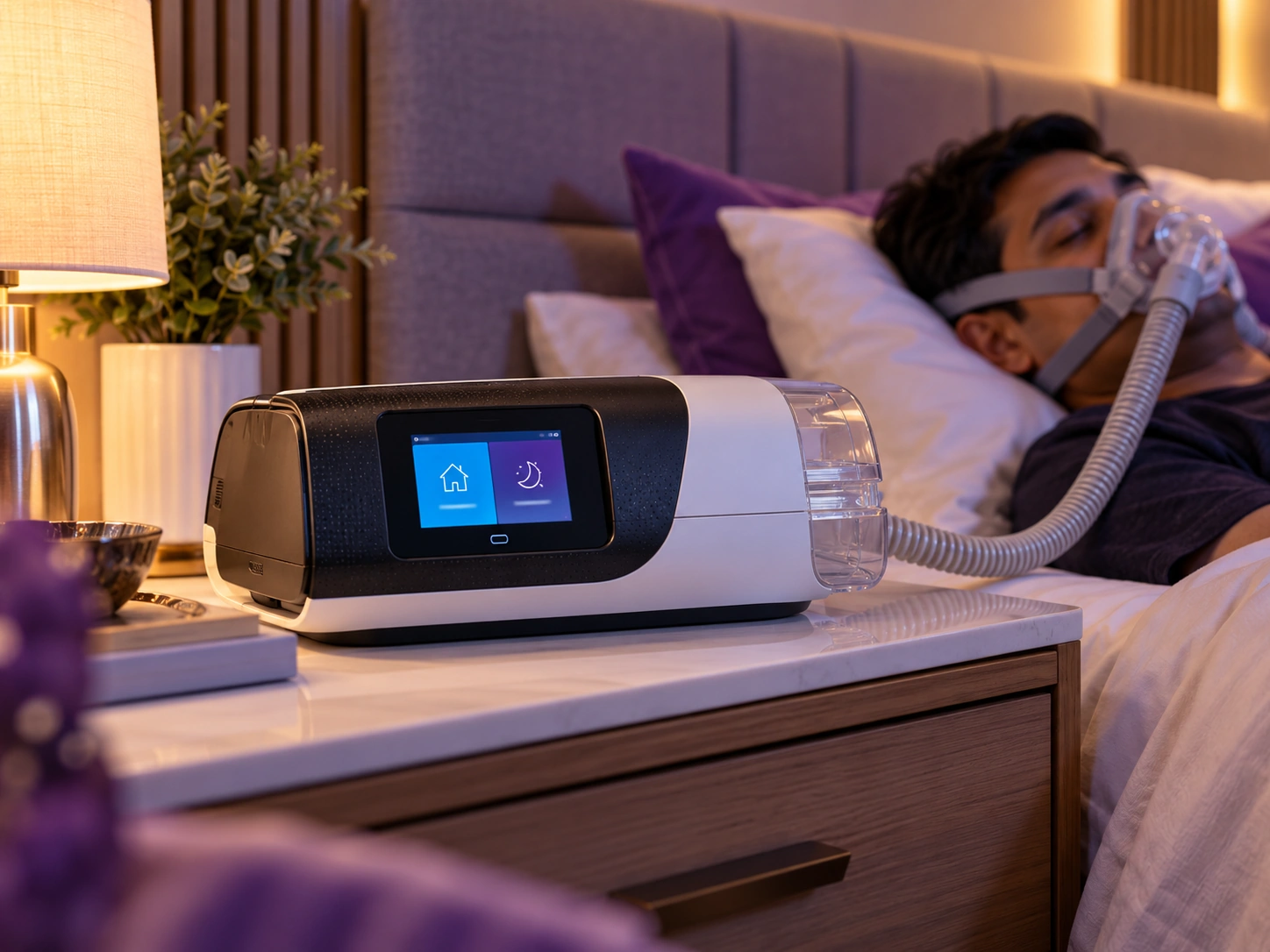
The AirSense 11 builds an additional digital ecosystem around Auto CPAP therapy, including cellular connectivity, touchscreen operation and myAir compatibility in supported configurations.
- AutoSet automatic CPAP therapy
- 4–20 cmH₂O range in the source comparison
- EPR exhalation relief
- AutoRamp with sleep-onset detection
- Heated humidification
- Built-in cellular connectivity
BMC G3 A20 vs AirSense 11: Detailed Comparison
| Feature | BMC G3 A20 | ResMed AirSense 11 AutoSet Tripack 4G |
|---|---|---|
| Device Type | Auto CPAP / APAP | Auto CPAP / APAP |
| Pressure Range | 4–20 cmH₂O | 4–20 cmH₂O |
| Exhalation Relief | RESlex Level 1–3 | EPR |
| Ramp | Auto Ramp, 0–60 min | AutoRamp with sleep-onset detection |
| Humidifier | Integrated heated humidifier | Integrated heated humidifier |
| Data | SD card | Built-in cellular connectivity |
| Display | 3.5-inch colour LCD | Colour touchscreen |
| Noise | Below 28 dB | Approximately 27 dBA |
| Weight | Approx. 1.7 kg | Approx. 1.13 kg |
| Warranty | 1 year | 2 years |
What Makes the BMC G3 A20 Interesting?
The G3 A20 is designed around the idea that a user can get the major comfort and automation features of an Auto CPAP without necessarily making connectivity the centre of the experience.
Its RESlex exhalation relief is intended to make breathing out against therapy pressure more comfortable. Auto Ramp provides a gradual transition toward therapeutic pressure as the user settles into sleep.
The integrated heated humidifier is another practical feature. For users who experience dryness during CPAP therapy, humidification can become an important part of the nightly setup.
Therapy data is handled through SD-card based storage according to the source comparison. That means data can be reviewed and transferred rather than being dependent on a continuously connected cellular ecosystem.
Check Current BMC G3 A20 Listing →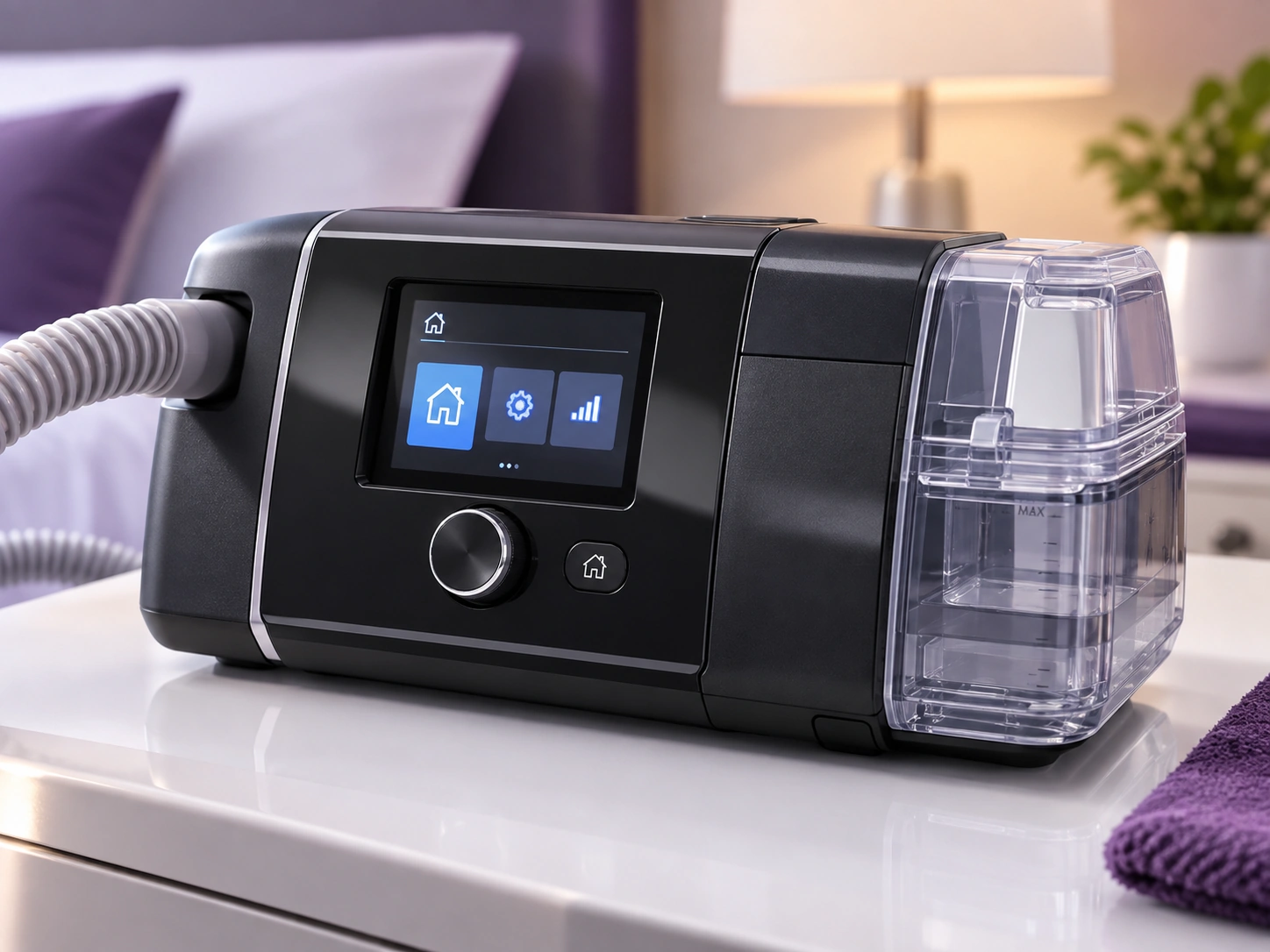
What Does the ResMed AirSense 11 Add?
The AirSense 11 takes the Auto CPAP concept and adds a stronger connected-therapy component around it.
The built-in cellular connectivity means compatible therapy information can be transmitted without requiring the user to manually move an SD card every time data needs to be reviewed.
The machine is also designed around a touchscreen interface and compatibility with the myAir ecosystem. For users who appreciate digital feedback, this can make therapy information easier to access as part of their routine.
AutoRamp with sleep-onset detection is another notable part of the experience. Rather than relying only on a basic timer, the feature is designed to recognise sleep onset before increasing toward therapeutic pressure.
Check Current AirSense 11 Listing →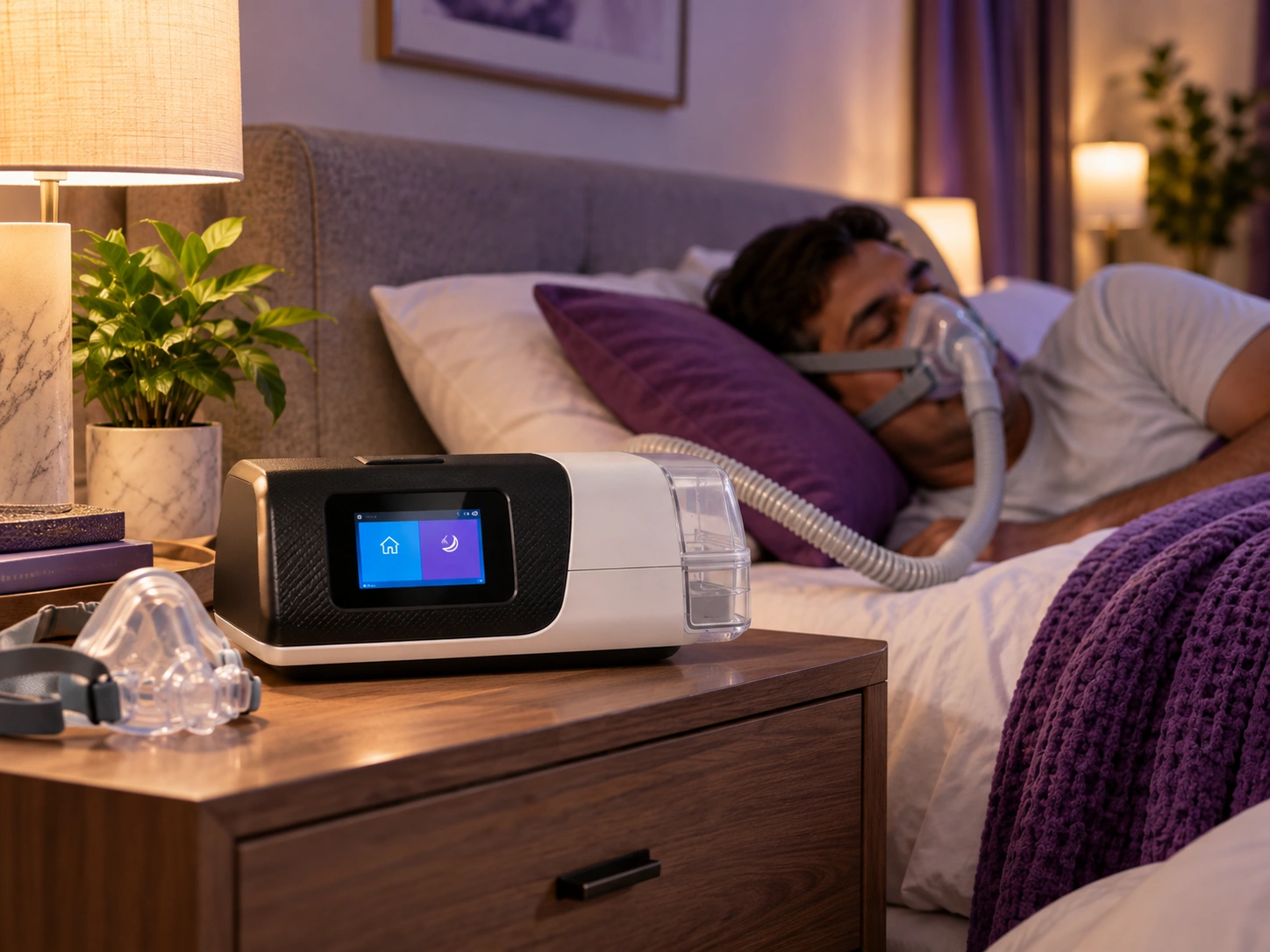
What Are You Actually Paying For?
When two Auto CPAP machines operate within similar pressure parameters, it is easy to assume that the more expensive machine must automatically provide dramatically better treatment.
That is not the right way to understand this comparison. The difference can instead come from the features surrounding the basic therapy mechanism.
Connectivity
The AirSense 11 adds built-in cellular connectivity and a connected therapy ecosystem.
Data Access
The G3 A20 uses SD-card based data management, while the AirSense 11 supports connected data transmission.
Interface
The AirSense 11 uses a touchscreen interface, while the G3 A20 uses a colour LCD interface.
Comfort
Both machines include features designed around pressure comfort and humidification.
Warranty
The comparison source lists one year for the G3 A20 and two years for the AirSense 11.
Overall Ecosystem
The AirSense 11 places more emphasis on connected therapy and digital user support.
Noise, Mask Fit, Humidification & Everyday Comfort
Buying a technically advanced CPAP machine is only one part of building a comfortable therapy routine. The mask, tubing, humidification and equipment maintenance also influence how the setup feels night after night.
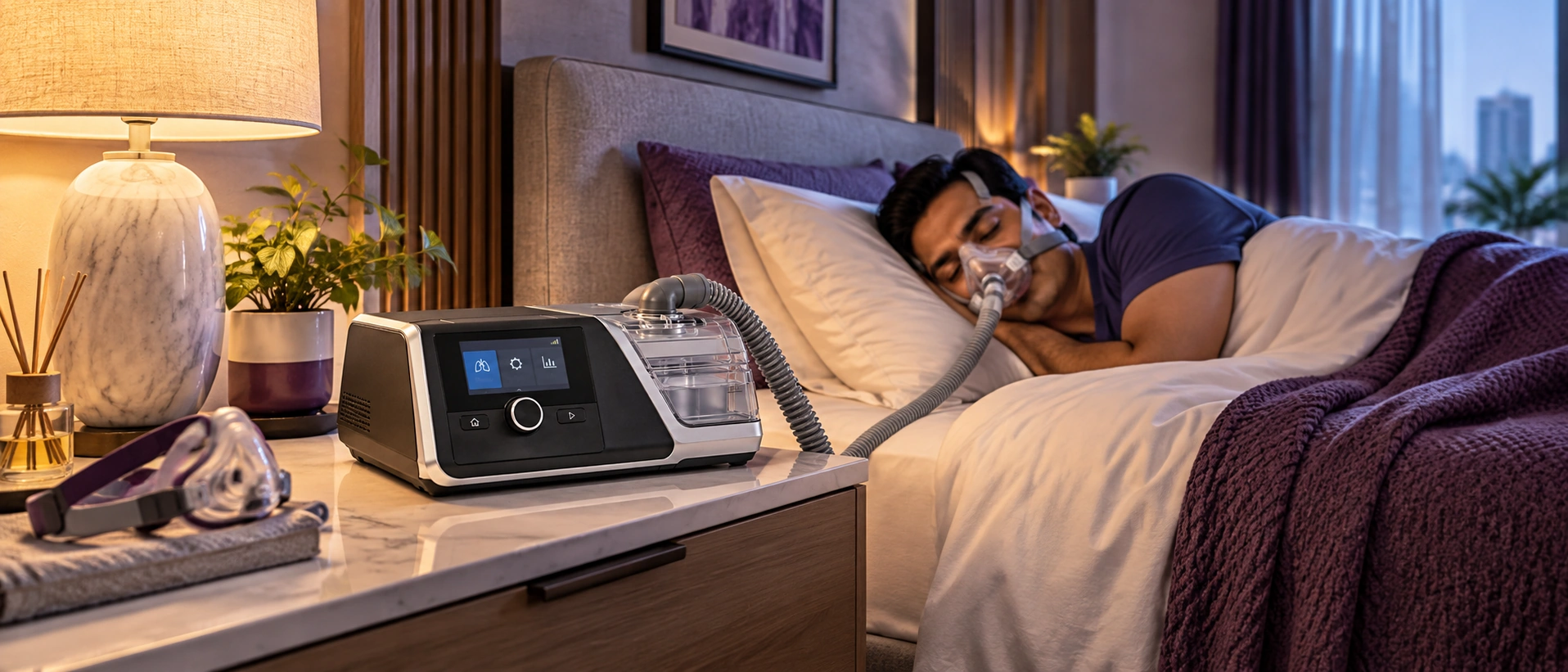
The two machines have very similar published noise figures in the comparison source. That means the difference is unlikely to be the most meaningful factor for many users.
Mask leakage can be more noticeable than the machine’s motor noise. A poorly fitted mask may create unwanted air leakage and sound, which is why mask selection and fitting deserve as much attention as the machine itself.
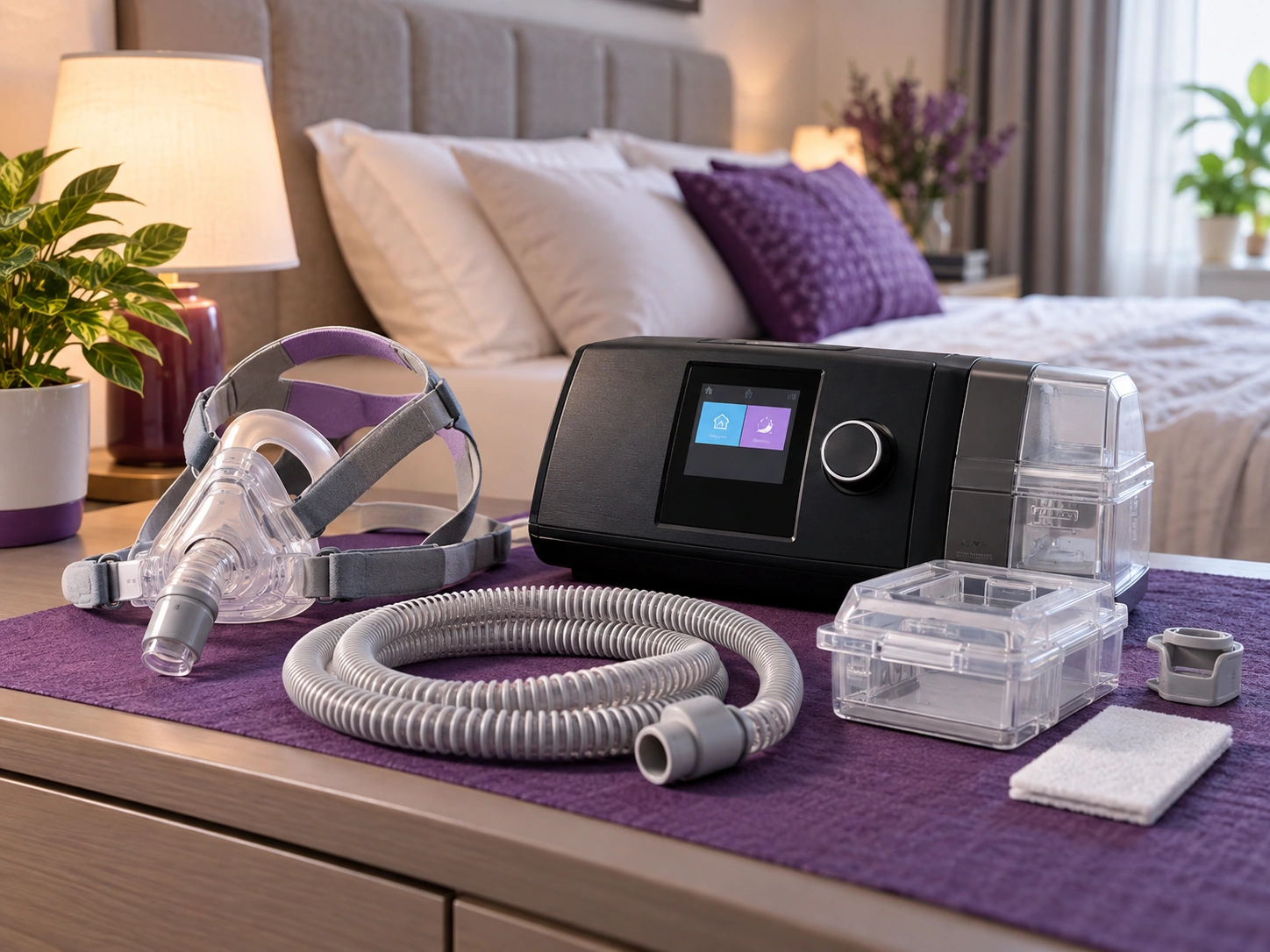
Your CPAP Mask Matters Too
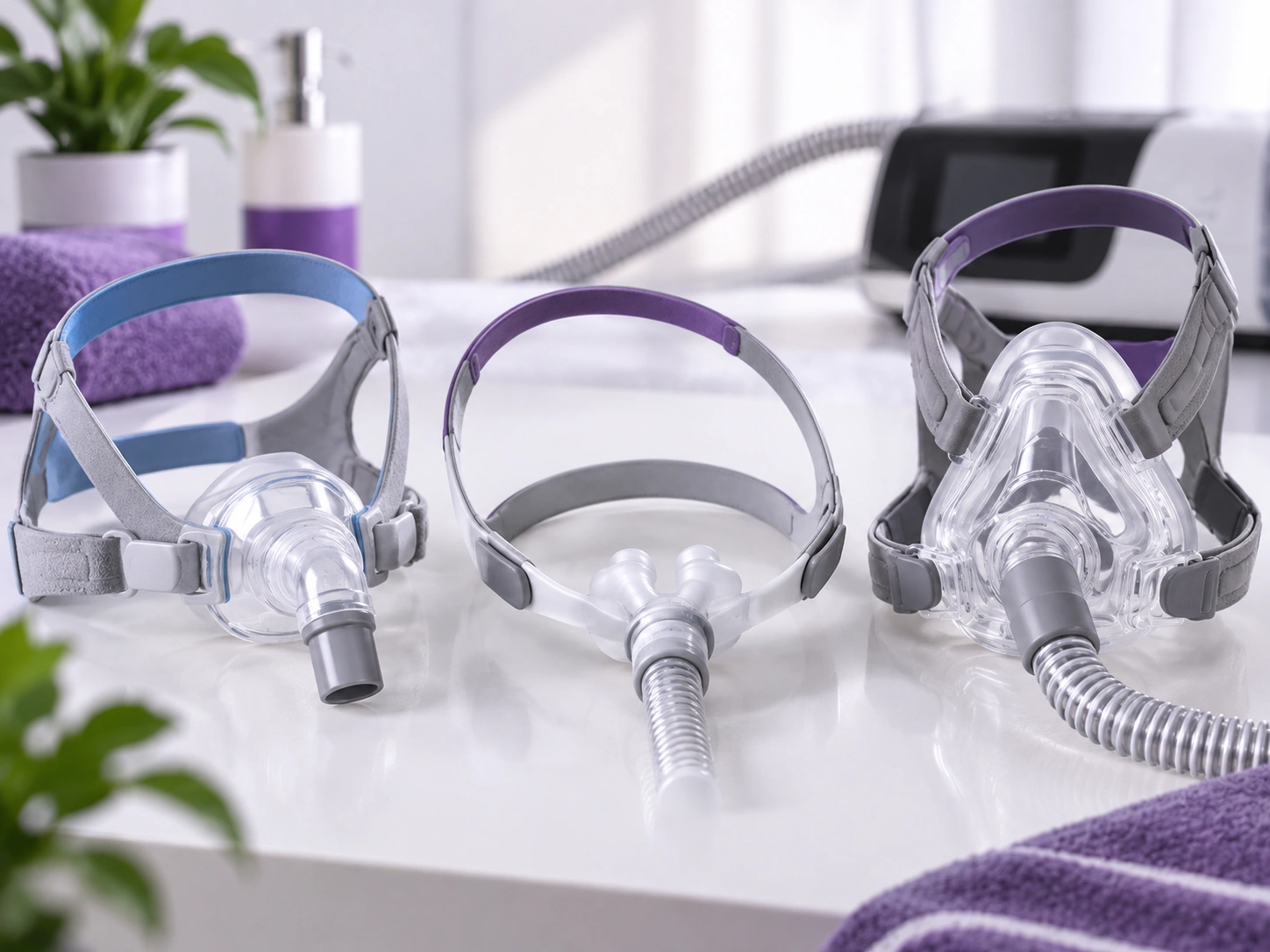
Even a sophisticated Auto CPAP machine can feel uncomfortable if the mask does not fit properly.
Depending on the individual situation, users may be prescribed or recommended different mask styles, including nasal masks, nasal pillow masks or full-face masks.
The correct choice depends on the person’s breathing pattern, comfort, leakage and clinical requirements.
Explore CPAP & BiPAP Masks →Which Type of User May Prefer Each Machine?
For Users Who Prefer Simplicity
The G3 A20 may appeal to someone who wants automatic pressure adjustment, humidification and exhalation relief without making smartphone connectivity an essential part of the therapy routine.
It can also suit users who are comfortable reviewing therapy information through SD-card based data management.
View BMC G3 A20 →For Users Who Value Connected Therapy
The AirSense 11 may appeal to users who want a touchscreen interface, built-in cellular connectivity and access to the myAir ecosystem in supported configurations.
It can be particularly relevant for users who prefer digital access to compatible therapy information rather than relying primarily on manual SD-card transfers.
View AirSense 11 →7 Things to Check Before Ordering an Auto CPAP
Explore Respiratory Care at Respikart
If you are still comparing respiratory-care equipment, explore Respikart’s product categories to find CPAP, BiPAP, masks and oxygen-related equipment.
Why Medical Guidance Still Matters
An Auto CPAP machine automatically adjusts pressure within its configured range, but that does not mean the machine replaces clinical evaluation. The diagnosis, therapy mode, pressure range and mask selection should be considered in the context of the patient’s sleep study and medical requirements.
If someone is changing from one CPAP machine to another, it is also worth confirming that the settings and therapy requirements have been properly transferred to the new device.
Frequently Asked Questions
Are the BMC G3 A20 and AirSense 11 both Auto CPAP machines?
Do both machines have a 4–20 cmH₂O pressure range?
Which machine has built-in connectivity?
Does the BMC G3 A20 have humidification?
Does the AirSense 11 have a touchscreen?
Which machine is quieter?
Which machine has the longer warranty?
Can I change my CPAP pressure myself?
Where can I buy these machines from Respikart?
Still Comparing BMC G3 A20 vs AirSense 11?
Take a closer look at the current product specifications, availability and pricing on Respikart before making your decision.
