

CPAP MACHINE, Sleep Apnea
When Does a Doctor Prescribe BiPAP Instead of CPAP?
When Does a Doctor Prescribe BiPAP Instead of CPAP?
Understand the medical reasons behind a switch from CPAP to BiPAP, the tests doctors use, and how different pressure levels support breathing in selected patients.
A doctor may prescribe BiPAP instead of CPAP when a patient needs additional breathing support, cannot comfortably tolerate the required CPAP pressure despite appropriate adjustments, or has a condition that requires assistance with ventilation.
CPAP (continuous positive airway pressure) delivers continuous pressure to help keep the upper airway open. BiPAP (bilevel positive airway pressure) uses a higher pressure during inhalation and a lower pressure during exhalation.
CPAP works well for many people with obstructive sleep apnea. BiPAP is not automatically a better choice for everyone. Diagnosis, symptoms, sleep-study findings and other medical tests help determine which therapy is appropriate.
Quick Answer
Doctors may consider BiPAP for pressure intolerance, inadequate ventilation with carbon dioxide retention, respiratory muscle weakness, or selected breathing disorders that require a different therapy mode. The decision is based on clinical assessment, not the apnea score alone.
Why Do Doctors Usually Start With CPAP?
In obstructive sleep apnea (OSA), the muscles around the throat relax during sleep. The upper airway can narrow or collapse, interrupting normal breathing. CPAP supplies continuous positive pressure that helps keep the airway open.
Maintains Airway Patency
One continuous pressure helps prevent the upper airway from collapsing during sleep.
Provides Two Pressure Levels
Separate inspiratory and expiratory pressures can provide pressure support when a patient’s clinical condition calls for it.
CPAP is a common first-line treatment for obstructive sleep apnea. Before changing devices, doctors may review mask fit, leaks, humidification and prescribed pressure settings.
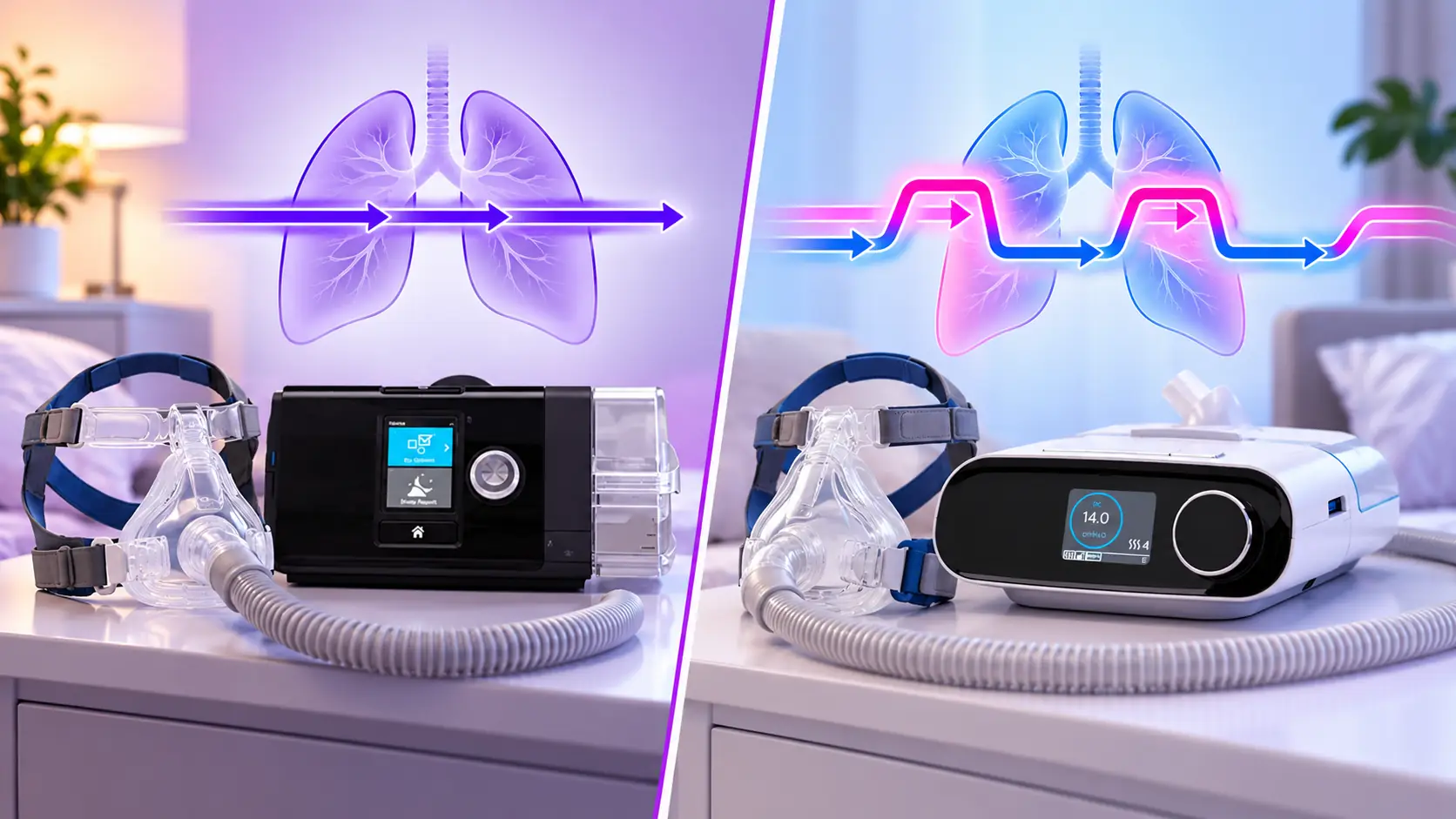
CPAP vs BiPAP: See How the Pressure Differs
These simplified graphics explain the general pressure patterns. They are educational illustrations, not actual patient measurements or instructions for setting a machine.
CPAP Pressure
Continuous pressure helps keep the upper airway open.
BiPAP Pressure
Higher inspiratory pressure and lower expiratory pressure.
Pressure levels and timing vary by device, prescribed mode and individual treatment plan. Real breathing pressure is not a perfectly square waveform.
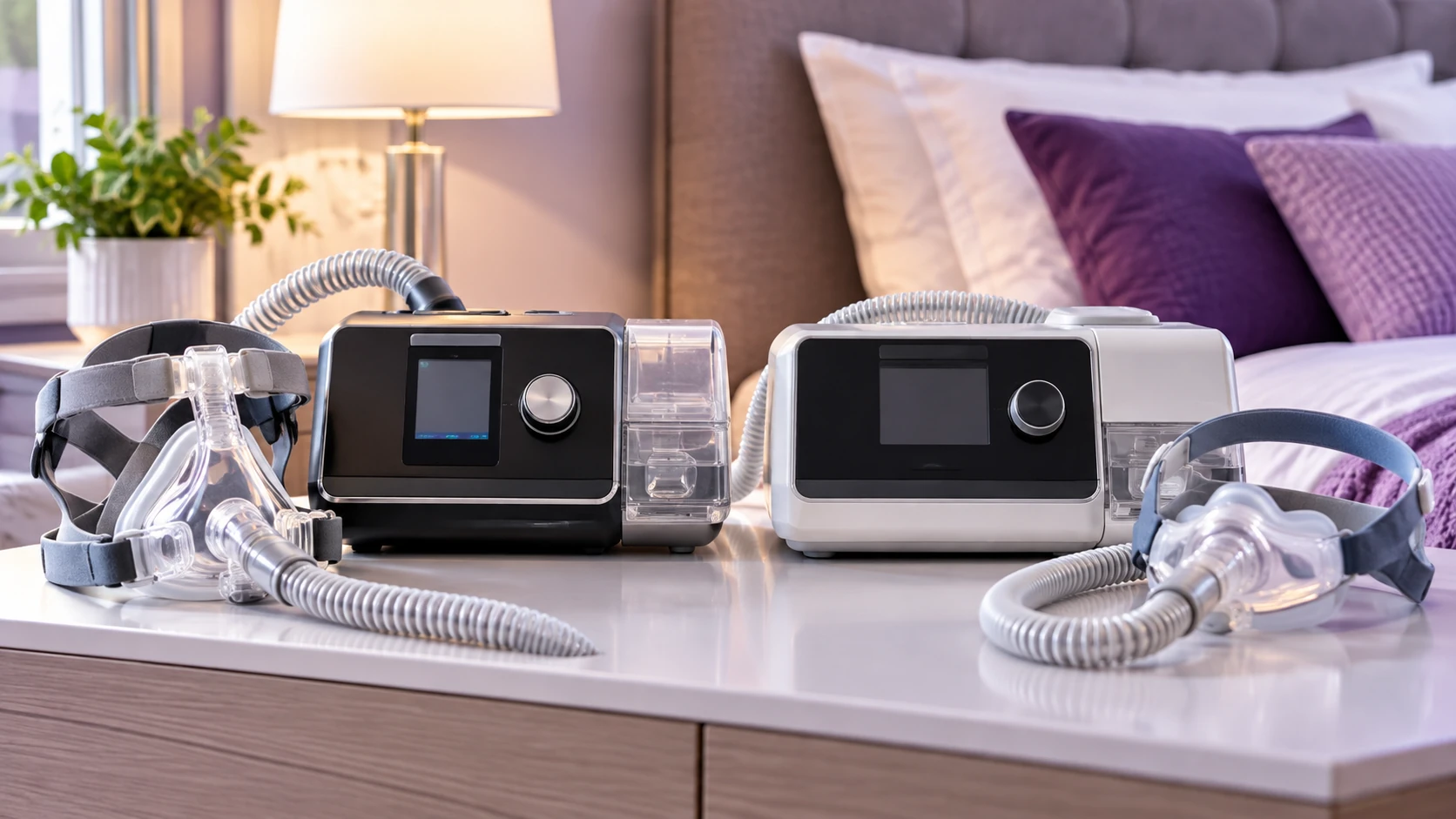
4 Reasons a Doctor May Prescribe BiPAP
A switch from CPAP to BiPAP is based on a specific clinical need. These are four situations in which a healthcare professional may evaluate bilevel therapy.
Difficulty Exhaling Against CPAP
Some patients find it uncomfortable to breathe out against the pressure needed to control obstructive sleep apnea. A clinician may first review mask fit, humidification, ramp settings or other appropriate adjustments. BiPAP may be considered if difficulties continue.
Carbon Dioxide Retention
Hypoventilation means insufficient ventilation to clear carbon dioxide effectively. Selected patients with COPD, obesity hypoventilation syndrome or other conditions may need pressure support to assist ventilation.
Symptoms alone cannot confirm CO2 retention. Appropriate assessment and tests are needed.
Weak Respiratory Muscles
Conditions such as ALS or certain forms of muscular dystrophy can weaken the muscles used for breathing. A specialist may prescribe non-invasive ventilation with an appropriate mode, sometimes including a backup rate.
Central or Complex Breathing Disorders
Central sleep apnea involves interruptions in the brain’s normal breathing signals. Some patients need a different form of respiratory support. The appropriate mode depends on the diagnosis and other medical conditions.
Important Medical Consideration
BiPAP is not a universal treatment for central sleep apnea, COPD or every form of breathing difficulty. Some ventilation modes require particular caution in certain heart conditions. A qualified specialist should select the device and settings.
Which Tests Help Doctors Decide?
No single test determines the correct device for every patient. Doctors combine symptoms, medical history, test results and, when applicable, information from the patient’s existing machine.
Sleep Study
Helps identify sleep-related breathing disorders and assess whether obstructive events persist during treatment.
Blood Gas or Bicarbonate
May help evaluate suspected carbon dioxide retention and acid-base disturbances, depending on the clinical situation.
Respiratory Function Tests
Assess lung function and, where indicated, respiratory muscle strength.
Machine Data Review
Usage hours, leaks, residual respiratory events and pressure information may help the clinician assess current treatment.
How Is the Right Therapy Chosen?
A simplified view of the clinical decision process:
Assess
Review symptoms, history and diagnosis.
Investigate
Use relevant sleep or respiratory tests.
Select
Choose the appropriate prescribed therapy.
Review
Assess comfort, response and device data.
This is an educational overview, not a diagnostic tool or a substitute for an individual clinician’s treatment plan.
CPAP vs BiPAP: Key Differences
| Feature | CPAP | BiPAP |
|---|---|---|
| Pressure delivery | Continuous pressure | Separate inspiratory and expiratory pressures |
| Common clinical use | Obstructive sleep apnea | Selected patients requiring bilevel support |
| Ventilation support | Primarily helps maintain an open airway | Pressure support can assist ventilation |
| Comfort | Comfort varies by person and settings | Lower expiratory pressure may help some users |
| Device selection | Based on diagnosis and prescribed treatment | Based on diagnosis, ventilation needs and prescribed mode |
Neither machine is automatically better. The appropriate therapy depends on the problem being treated and the patient’s clinical needs.
Does Needing BiPAP Mean the Condition Is Worse?
Not necessarily. CPAP and BiPAP address different treatment needs. Someone with obstructive sleep apnea may do well on CPAP, while a patient with a ventilation problem may need bilevel support.
Individualised Treatment Matters
A device change should be understood in the context of the diagnosis, test results and treatment goals. It is not a simple ranking of one condition as more severe than another.
What Should You Ask Your Doctor?
Before starting BiPAP, these questions can help you understand your prescribed treatment and follow-up plan.
- Why is BiPAP more appropriate for my condition?
- What is the main goal of treatment?
- Which machine mode and settings have been prescribed?
- Do I need a sleep study, blood gas test or lung function test?
- When will my symptoms and machine data be reviewed?
- Would renting equipment be suitable for my expected treatment period?
Exploring BiPAP Equipment for Home Use?
If a healthcare professional has prescribed BiPAP, compare suitable equipment options before deciding whether to rent or buy. Confirm the prescribed mode, machine compatibility, accessories, setup, servicing and current rental terms.
Key Takeaways
✓ CPAP
Commonly used as first-line therapy for obstructive sleep apnea.
✓ BiPAP
May be appropriate when the patient’s condition calls for two pressure levels or additional ventilatory support.
✓ Testing
Sleep studies, respiratory tests and machine data can help clinicians determine the appropriate treatment.
✓ Follow-up
Proper device selection, comfort assessment and professional monitoring are important parts of treatment.
Final Thoughts
If your doctor has recommended BiPAP instead of CPAP, ask what specific breathing problem the treatment is intended to address. Understanding the purpose of therapy can help you follow your treatment plan and know when to request a review.
Respikart offers medical equipment information and sales and rental options. Before choosing equipment, confirm availability, prescribed device compatibility, accessories, setup support and current terms.
Frequently Asked Questions
1. Can a doctor switch me from CPAP to BiPAP later?
Yes. A doctor may consider switching when CPAP remains difficult to tolerate despite appropriate adjustments, breathing events persist or additional ventilatory support is needed. The decision depends on the patient’s symptoms, clinical assessment and relevant test results.
2. Is BiPAP more comfortable than CPAP?
Some people find BiPAP easier to tolerate because the pressure during exhalation is lower than the inspiratory pressure. Others do well with CPAP. Mask fit, humidity, prescribed settings and individual needs all affect comfort.
3. Do I need a sleep study before getting a BiPAP machine?
A sleep study is often useful when sleep apnea is suspected. Some patients with lung or neuromuscular conditions may also require blood gas tests or respiratory assessments. Your healthcare professional will decide which investigations are appropriate.
4. Can I buy a BiPAP machine without a prescription?
BiPAP modes and settings should be selected according to clinical needs. Consult a qualified healthcare professional before starting therapy and confirm applicable prescription and dispensing requirements with the equipment provider.
5. Is BiPAP used for COPD patients at home?
Selected COPD patients may benefit from home non-invasive ventilation, particularly when persistent carbon dioxide retention is present. It is not suitable for everyone with COPD. Read our BiPAP for COPD Patients guide and consult a pulmonologist for individual advice.
6. Can I rent a BiPAP machine before deciding to buy?
Rental may be suitable for temporary requirements or when the expected duration of use is uncertain. Check the prescribed mode, machine model, accessories, setup assistance, servicing and rental terms. Visit Respikart Rentals to explore available options.
7. How do I choose the right BiPAP mask?
Mask choice depends on facial fit, breathing pattern, comfort and prescribed therapy. Read our guide to choosing the right BiPAP mask and seek help with fitting if leaks or discomfort continue.
