

CPAP MACHINE, Sleep Apnea
BiPAP for COPD Patients: Everything You Need to Know
BiPAP for COPD Patients: Benefits, Uses & Home Care Guide
Understand how BiPAP supports breathing, when doctors recommend it, how it differs from CPAP and oxygen therapy, and what to know before arranging home respiratory equipment.
Want to Understand BiPAP in More Detail?
Read our complete guide to learn more about BiPAP machines, how they work, and what to consider before choosing a device.
Read the Complete BiPAP Guide
BiPAP for COPD: At a Glance
BiPAP, or bilevel positive airway pressure, is a form of non-invasive ventilation. It delivers higher pressure during inhalation and lower pressure during exhalation to support breathing.
Breathing Support
Can reduce breathing effort in selected patients who need ventilatory assistance.
Carbon Dioxide
Can improve carbon dioxide removal when ventilation is inadequate.
Home Use
May be considered for selected patients after clinical assessment.
Medical Guidance
Requires appropriate device selection, prescribed settings and follow-up.
How Does BiPAP Help in COPD?
COPD can narrow the airways and make it difficult to empty the lungs completely. Some patients develop air trapping, increased breathing effort and carbon dioxide retention.
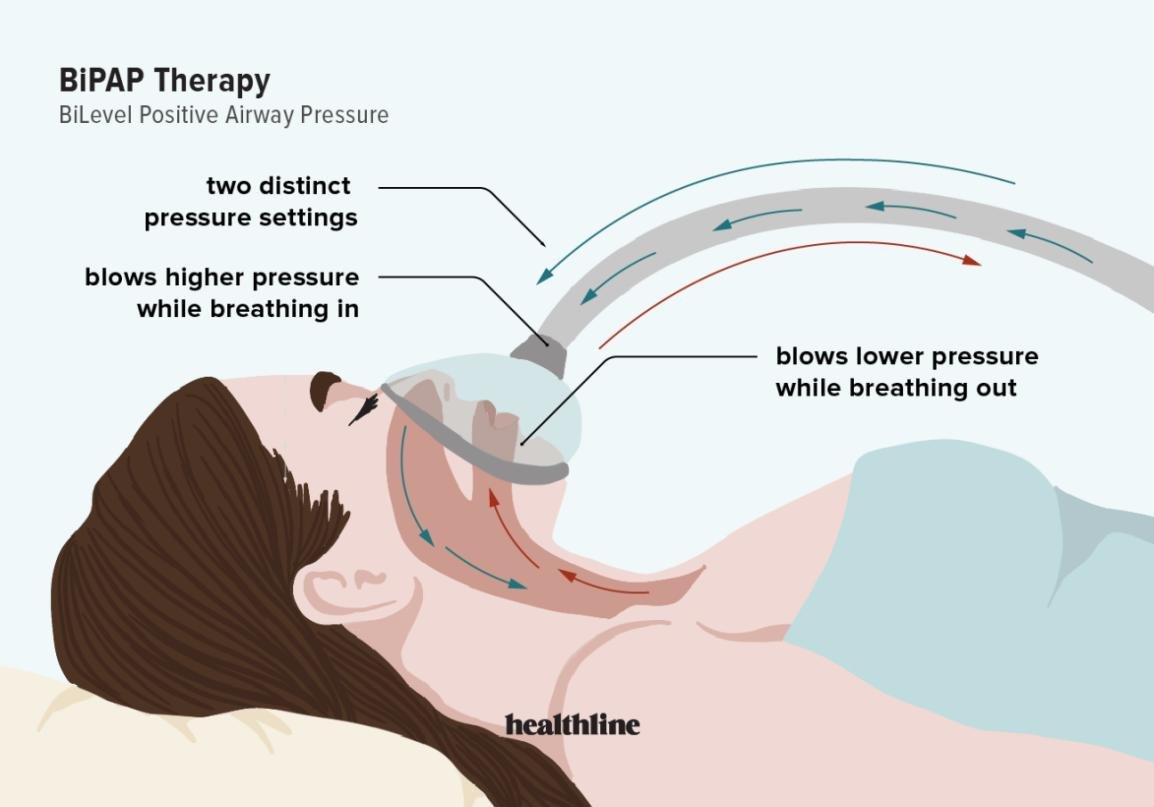
BiPAP supports the breathing cycle using two pressure levels. The difference between these pressures helps move air and assists ventilation, reducing some of the work required from the breathing muscles.
Understanding the Two Pressure Levels
Higher inspiratory pressure
Lower expiratory pressure
Conceptual visual only, not a pressure prescription or actual device reading. Settings vary by patient and treatment plan.
When Is BiPAP Used for COPD?
During a Severe Flare-Up
In hospital, non-invasive ventilation is often used for suitable patients with a COPD exacerbation causing acute respiratory failure, particularly when carbon dioxide is elevated and blood pH is low.
For Selected Long-Term Home Users
Home ventilation may be considered when carbon dioxide remains persistently elevated or chronic ventilatory failure is present. A clinician determines the need through individual assessment and follow-up.

BiPAP vs CPAP vs Oxygen Therapy
Although these treatments can be used in respiratory care, their purposes are different.
| Treatment | Main Purpose | Key Difference |
|---|---|---|
| BiPAP | Supports ventilation using two pressure levels. | May assist selected patients with carbon dioxide retention. |
| CPAP | Provides one continuous pressure. | Commonly used for obstructive sleep apnea. |
| Oxygen | Increases oxygen availability. | Does not independently provide ventilatory pressure support. |
Some patients need oxygen alongside BiPAP. The oxygen flow and target saturation must be prescribed because excessive oxygen can be harmful in some people with COPD.
Explore the Complete BiPAP Machine Guide
For a broader overview of BiPAP machines and their features, read our detailed guide.
View Complete BiPAP GuideGetting Comfortable With Home BiPAP
Correct fitting, training and regular follow-up can help patients use their prescribed device more comfortably.
- Check mask fit.
Ask for a fit review if air leaks or skin irritation occur. - Discuss dryness.
A compatible humidifier may help if your nose or mouth feels dry. - Learn device care.
Follow the manufacturer’s instructions for cleaning the mask and tubing. - Attend follow-ups.
Your clinician may review symptoms, machine usage and blood gas results.
Never change prescribed pressures, backup rate or oxygen flow on your own. Contact your healthcare team if the treatment feels uncomfortable.
Common Problems and Warning Signs
Dryness or Leaks
Ask about mask adjustment, correct sizing and compatible humidification.
Skin Discomfort
Review mask pressure and fitting with your equipment provider or care team.
Stomach Bloating
Report persistent discomfort or swallowed-air symptoms to your clinician.
Worsening Symptoms
Do not troubleshoot at home if breathing becomes significantly worse.
Rent or Buy a BiPAP Machine in Delhi NCR?
If your clinician has recommended home ventilation, compare the expected treatment duration, prescribed model and total equipment costs before deciding whether to rent or buy.
Rent a BiPAP
May suit temporary needs or when the expected duration is uncertain. Confirm deposit, accessories, servicing and rental terms.
Buy a BiPAP
May suit longer-term use. Compare purchase price, warranty, maintenance, mask compatibility and support.
Explore BiPAP Rental Options With Respikart
Enquire about available models, rental duration, accessories and delivery in Delhi NCR. Device selection and settings must follow your clinician’s prescription.
Explore Rentals → Call Respikart WhatsApp EnquiryKey Takeaways
✓ BiPAP provides higher pressure during inhalation and lower pressure during exhalation.
✓ It can support selected COPD patients who need help with ventilation.
✓ Home use requires a clinical assessment, training and follow-up.
✓ CPAP, BiPAP and oxygen therapy are not interchangeable.
✓ Severe breathlessness, confusion or bluish lips require urgent assessment.
Frequently Asked Questions
Can COPD patients use BiPAP at home?
Yes, selected patients may use home BiPAP when prescribed after a clinical assessment. Settings, training and follow-up are essential.
Is BiPAP better than CPAP for COPD?
Not in every situation. BiPAP provides two pressure levels and may support ventilation, while CPAP provides continuous pressure. The appropriate device depends on the diagnosis and clinical findings.
Can BiPAP cure COPD?
No. It can support ventilation but does not reverse the underlying lung damage or replace other prescribed COPD treatments.
How do doctors know if BiPAP is working?
They may review symptoms, blood gas results, machine usage and mask leaks. Worsening symptoms require prompt clinical review.
Can oxygen be used with BiPAP?
Some patients use prescribed oxygen with BiPAP. The oxygen flow and target saturation must be determined by their healthcare professional.
Can I enquire about BiPAP rental at Respikart?
Visit Respikart Rentals or call 98100 61827 to enquire about available equipment, rental terms and delivery arrangements.
