

Oxygen Concentrator, Stationary Oxygen Concentrators
Oxygen Concentrator Guide: Buying, Renting & Home Use
Oxygen Concentrator Guide: Buying, Renting & Home Use
An oxygen concentrator can make prescribed home oxygen therapy easier to manage. This practical guide explains how concentrators work, what 5 LPM and 10 LPM mean, when renting may make sense, how to set up a machine at home, and the safety points families should know before using one.
Quick Answer
An oxygen concentrator is generally useful when a patient has been prescribed supplemental oxygen for an extended period. If oxygen is required only temporarily, renting can be a practical option. The key factor is the prescribed oxygen flow—not simply choosing the machine with the highest LPM number.
Before buying or renting, consider the patient’s prescribed flow, expected duration of therapy, portability, electricity requirements, maintenance needs and backup arrangement.
Why Choosing the Right Concentrator Matters
Choosing an oxygen concentrator is not only about capacity. A machine with insufficient capability may not meet the prescribed requirement, while an unnecessarily large machine can add cost and take up more space than needed.
How Does an Oxygen Concentrator Work?
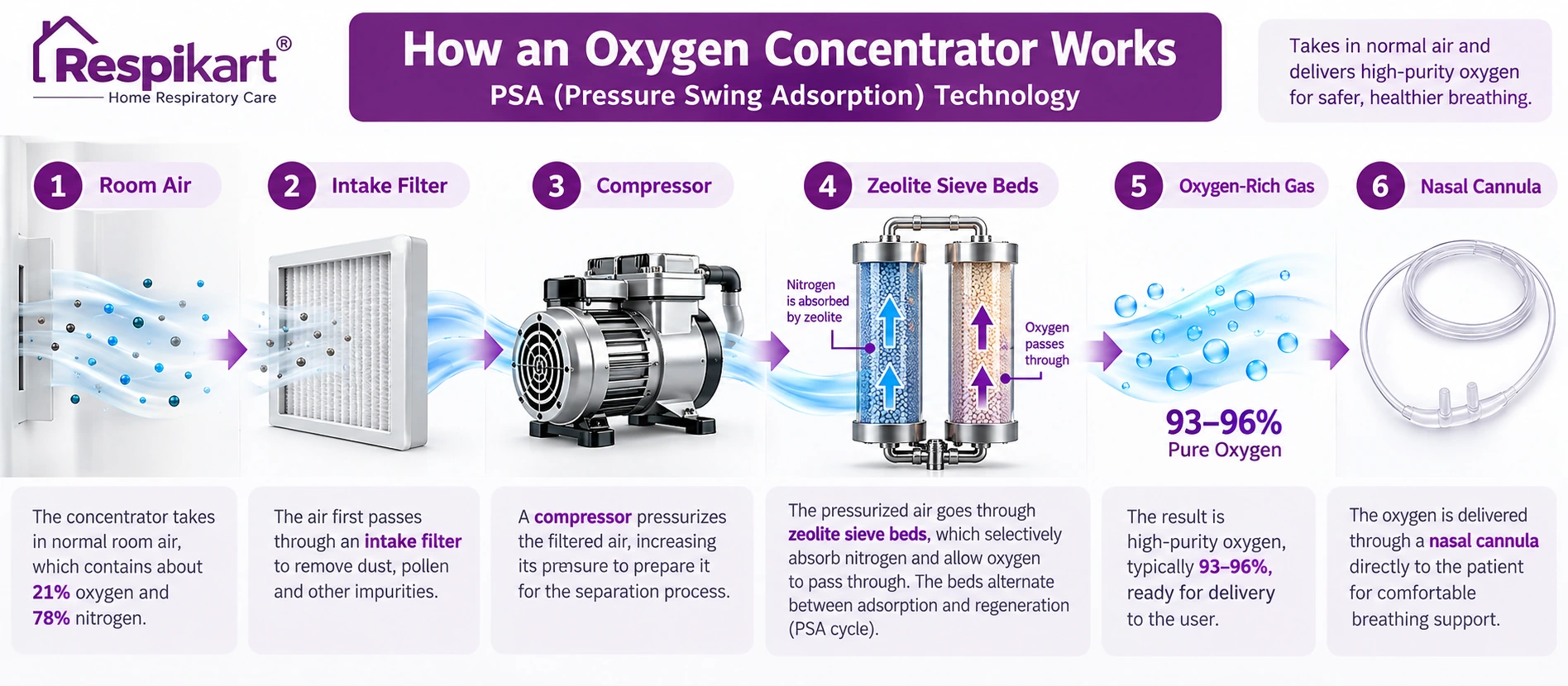
The machine draws room air through an intake filter and compresses it. The compressed air then passes through sieve beds containing zeolite. Zeolite preferentially absorbs nitrogen, leaving an oxygen-rich gas that is delivered through tubing to the patient.
This process is called pressure swing adsorption (PSA). Depending on the machine and its flow setting, oxygen concentration can typically be around 87% to 96%.
Unlike a cylinder, a concentrator does not store a large supply of compressed oxygen. It produces oxygen-rich gas while operating.
Oxygen Concentrator vs Oxygen Cylinder
Families often compare these two options after oxygen therapy has been prescribed. They work differently and can serve different practical roles.
| Oxygen Concentrator | Oxygen Cylinder |
|---|---|
| Uses electricity to produce oxygen-rich gas from room air. | Stores a finite supply of compressed oxygen. |
| Does not need routine oxygen refilling while operating. | Needs refilling or replacement after the oxygen supply is exhausted. |
| Requires electricity unless an appropriate battery/backup arrangement is available. | Does not require electricity to deliver oxygen. |
| Often convenient for regular home use when prescribed. | Can be useful as an emergency backup during power failures when recommended. |
Can you use both?
Yes. Some households use a concentrator for regular therapy and keep an oxygen cylinder as a backup for power failures. The exact arrangement should follow the patient’s prescription and healthcare advice.
Explore Oxygen Cylinders on Rent →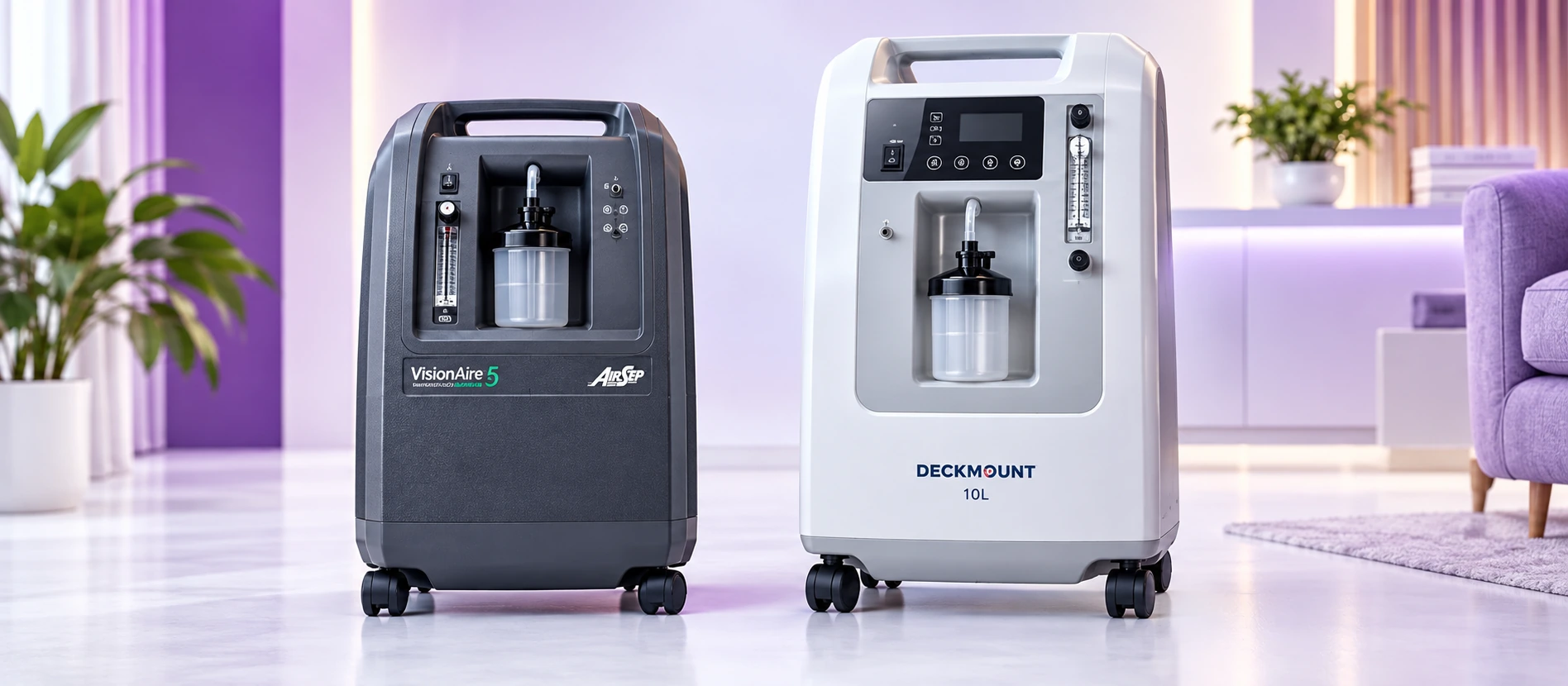
What Does 5 LPM vs 10 LPM Mean?
LPM means litres per minute. It describes the oxygen flow delivered by the device.
If you are comparing available rental options, you can view oxygen concentrators on rent in Delhi NCR on Respikart.
Benefits of Using an Oxygen Concentrator at Home
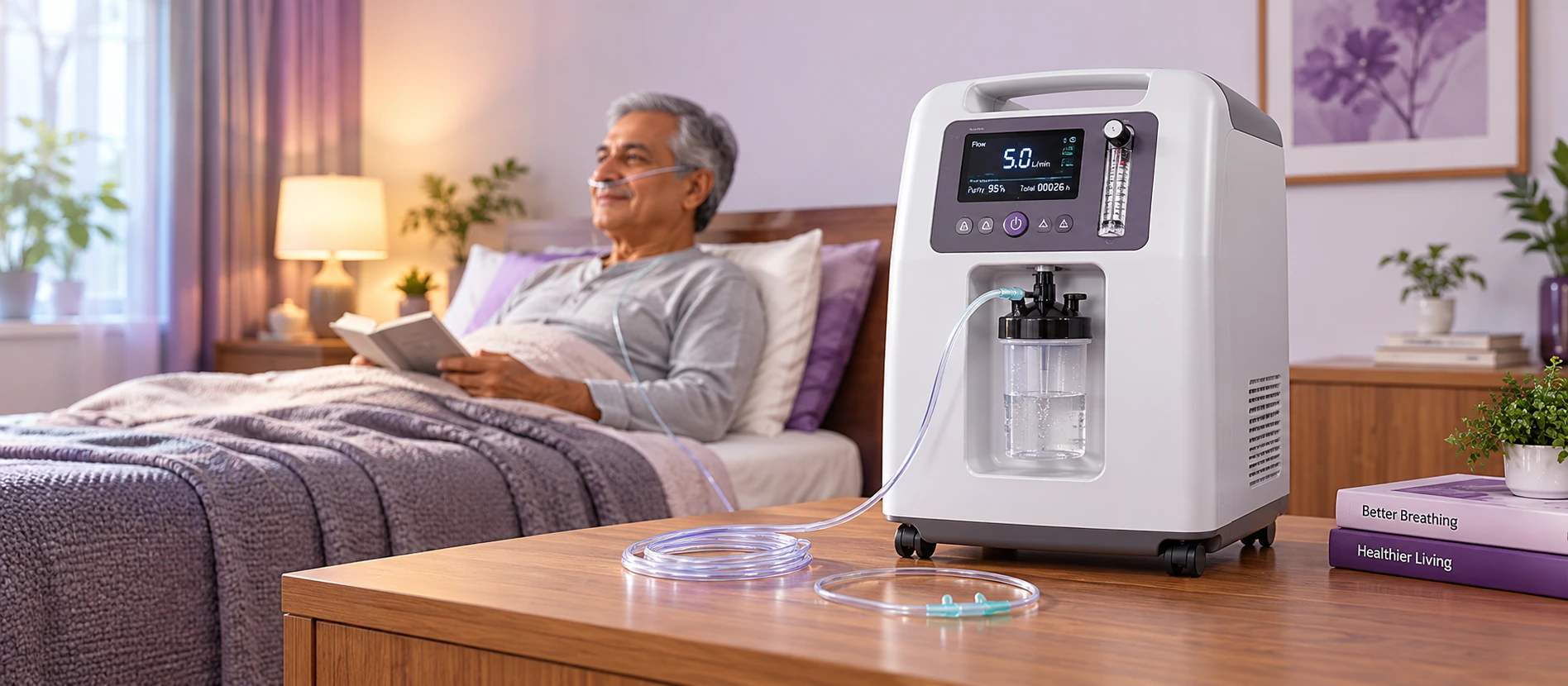
Step-by-Step: Setting Up an Oxygen Concentrator at Home
Place the concentrator on a stable, level surface with adequate space around the air vents.
Use a suitable grounded outlet and avoid overloading the same outlet with high-power appliances.
Use the type and quality of water recommended in the machine’s instructions.
Attach the nasal cannula or prescribed mask securely to the oxygen outlet.
Allow it to reach normal operating condition according to the manufacturer’s instructions.
Use only the flow rate recommended by the treating doctor.
Make sure there are no kinks, crushing points or obvious blockages.
Clean or replace filters and arrange servicing according to the manufacturer’s schedule.
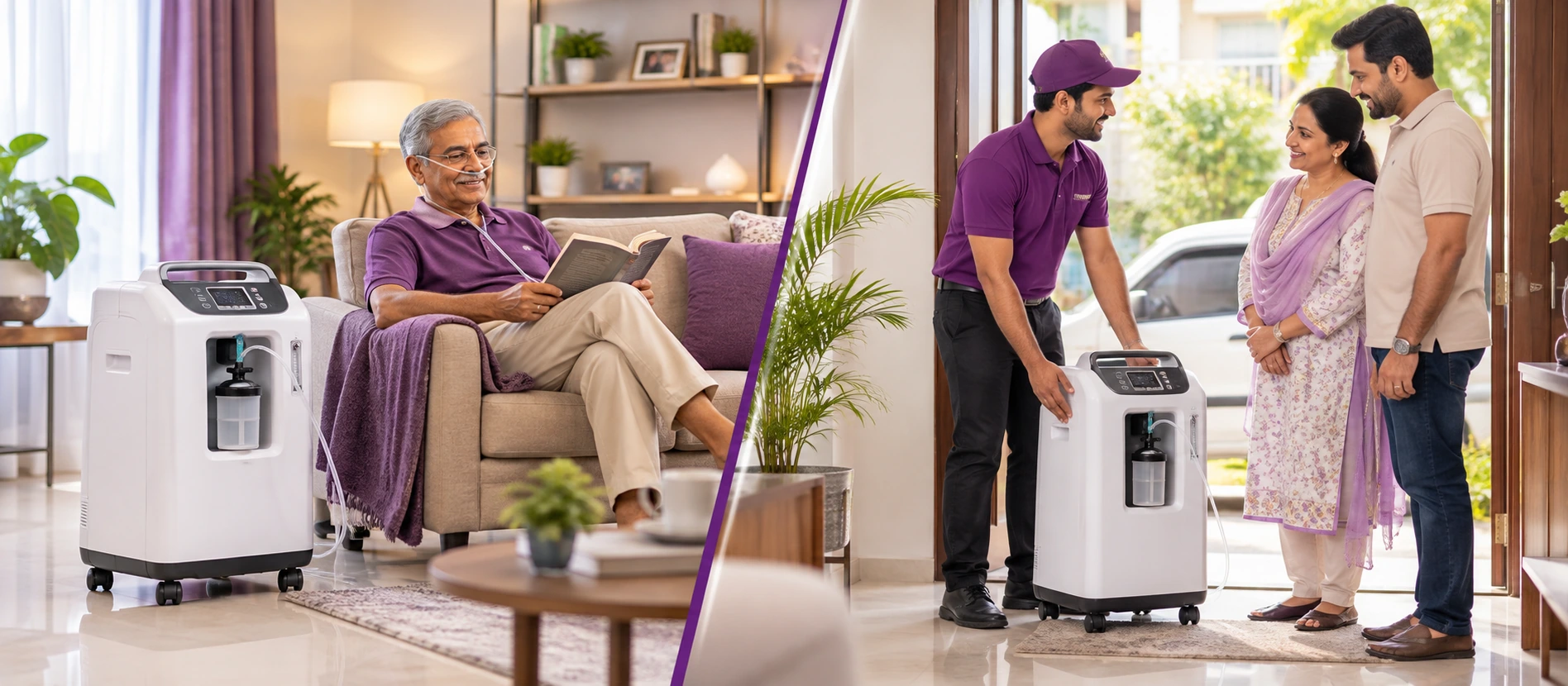
Buying vs Renting: Which Makes Sense?
The decision mainly depends on how long the patient is expected to need the machine. Buying may make sense when therapy is expected to continue for many months or years. Renting can be useful when the need is temporary or uncertain.
Respikart currently lists oxygen concentrator rental options for Delhi NCR, including 5 LPM and higher-capacity models. Availability and pricing can vary by model and rental terms. View current oxygen concentrator rental options →

What Has Changed in Oxygen Concentrator Technology?
Portable oxygen concentrators have become smaller and easier to carry than many older models. Depending on the device, some offer battery operation and pulse-dose oxygen delivery.
With pulse-dose delivery, oxygen is released when the machine detects an inhalation rather than delivering the same continuous flow at all times. This can help conserve battery power in suitable patients.
Some newer devices also include usage monitoring or connected features. However, technology should not be confused with medical suitability: a smaller or smarter machine is not necessarily appropriate for every patient.
For portable rental options, see Portable Oxygen Concentrators on Rent in Delhi NCR .
Common Mistakes to Avoid
Best Practices for Safe Home Use
Oxygen itself is not flammable, but it supports combustion and can make a fire burn much faster. Keep the equipment away from smoking and ignition sources.
- Keep oxygen equipment away from cigarettes, candles, gas flames and other ignition sources.
- Do not smoke near the patient or equipment.
- Keep the machine in a well-ventilated area.
- Leave sufficient space around air vents.
- Follow manufacturer cleaning and servicing instructions.
- Keep a suitable backup power arrangement or oxygen cylinder where recommended.
- Check tubing regularly and keep walkways clear.
- Use a pulse oximeter when your healthcare professional has advised oxygen saturation monitoring.
- Follow the prescribed flow rate rather than adjusting it based only on how the patient feels.
Expert Tips for Families
If you are unsure whether buying a machine is the right decision, renting one first can sometimes be practical, particularly when the expected duration of oxygen therapy is unclear.
A trial can also help the patient and caregiver become familiar with the machine, tubing, cannula, noise level and day-to-day handling.
When advised by the healthcare team, keeping a simple record of oxygen use and oxygen saturation readings can also be useful during follow-up appointments.
Need an Oxygen Concentrator in Delhi NCR?
Respikart offers oxygen concentrator rental options across Delhi NCR, with delivery and setup support depending on the selected service and location.
Check Oxygen Concentrators on Rent Call 9810061827Key Takeaways
- An oxygen concentrator takes room air and produces oxygen-rich gas without routine cylinder refilling.
- The required LPM should be based on a doctor’s prescription.
- A higher LPM rating does not automatically mean better treatment.
- Renting can be practical for temporary or uncertain needs.
- Buying may be worth considering when oxygen therapy is expected to continue long term.
- Standard concentrators require electricity, so a backup plan is important.
- Ventilation, filter maintenance, servicing and fire safety are essential.
- Portable and stationary concentrators have different capabilities and are not interchangeable for every patient.
Frequently Asked Questions
What is an oxygen concentrator used for?
An oxygen concentrator provides supplemental oxygen to patients who have been prescribed oxygen therapy. It takes in room air, concentrates oxygen and delivers it through a nasal cannula or mask.
Is an oxygen concentrator better than an oxygen cylinder?
Neither option is universally better. A concentrator can be convenient for regular long-term use because it does not require routine oxygen refilling, while a cylinder can continue supplying oxygen without electricity and may be useful as a backup.
How do I know if I need a 5 LPM or 10 LPM concentrator?
The required flow depends on the patient’s prescription. The appropriate model should be selected according to the flow prescribed by the treating doctor.
Should I rent or buy an oxygen concentrator?
Renting may be practical when oxygen is needed temporarily or when duration is uncertain. Buying may make more sense when long-term oxygen therapy is expected. Compare duration, rental charges, purchase price, maintenance and warranty.
Is it safe to use an oxygen concentrator at home?
It can be safe when the equipment is correctly installed and used according to medical and manufacturer instructions. Keep oxygen equipment away from smoking and open flames and follow the prescribed oxygen flow.
Can an oxygen concentrator work without electricity?
A standard oxygen concentrator requires electricity. Some portable models have batteries, but batteries need charging. Patients who depend on oxygen should have an appropriate backup plan for power failures.
How often does an oxygen concentrator need maintenance?
The exact schedule depends on the machine and manufacturer. Filters may need regular cleaning or replacement, while servicing should follow the user manual or supplier guidance.
Final Thoughts
Choosing an oxygen concentrator is less about finding the biggest or most expensive machine and more about finding the right machine for the patient’s prescription and daily routine.
Before buying or renting, check the required flow rate, expected duration of therapy, power requirements, portability, maintenance needs, warranty or rental terms and backup arrangements.
Most importantly, do not change the oxygen flow or start long-term oxygen therapy based only on information found online. The device, flow rate and duration of oxygen therapy should be decided with a qualified healthcare professional who understands the patient’s condition.
