

DeVilbiss Products, Home Healthcare, Oxygen Concentrator, Respiratory Equipment, Stationary Oxygen Concentrators
DeVilbiss 5 Liter Oxygen Concentrator: Features, Price & Buying Guide
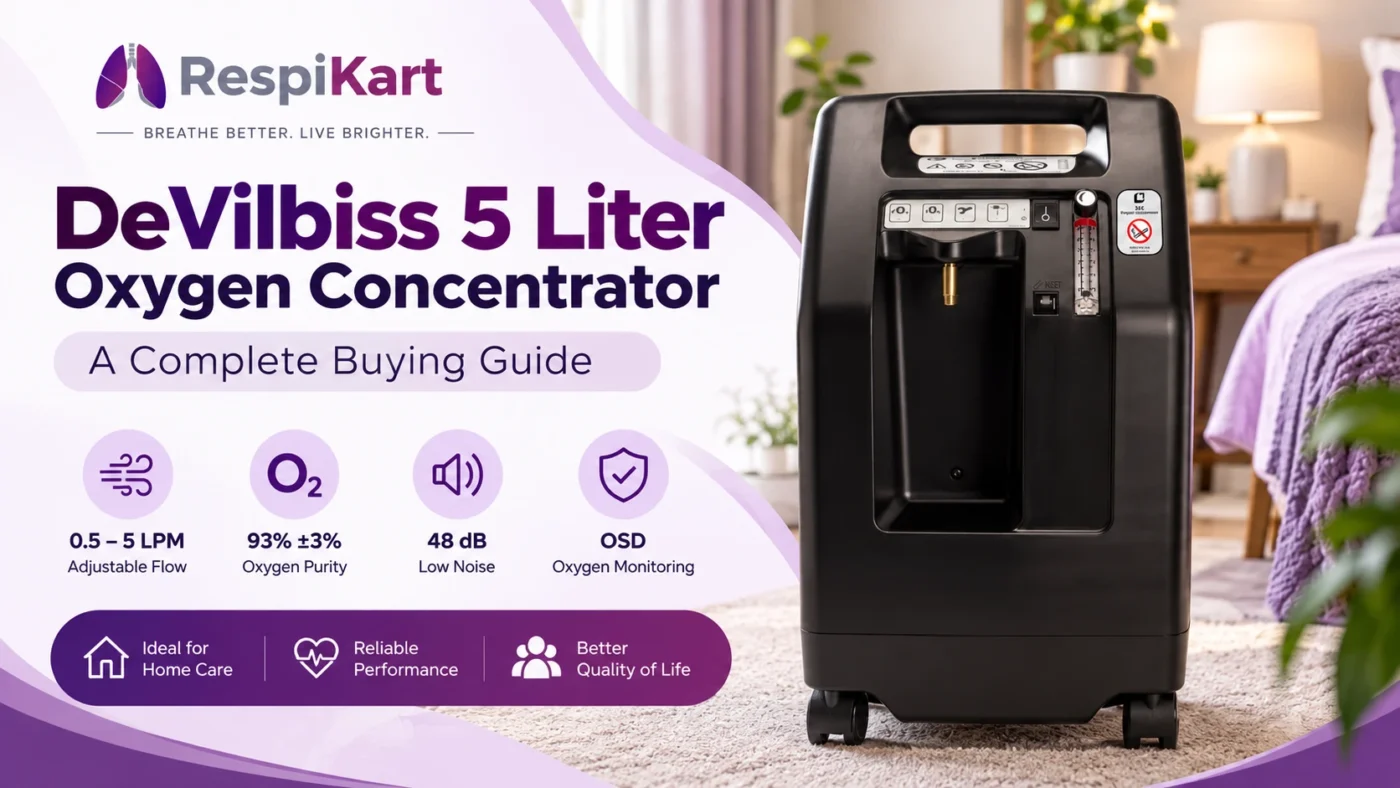
DeVilbiss 5 Liter Oxygen Concentrator: A Complete Buying Guide
A practical guide to oxygen flow, purity monitoring, safety features, maintenance and everyday home use.
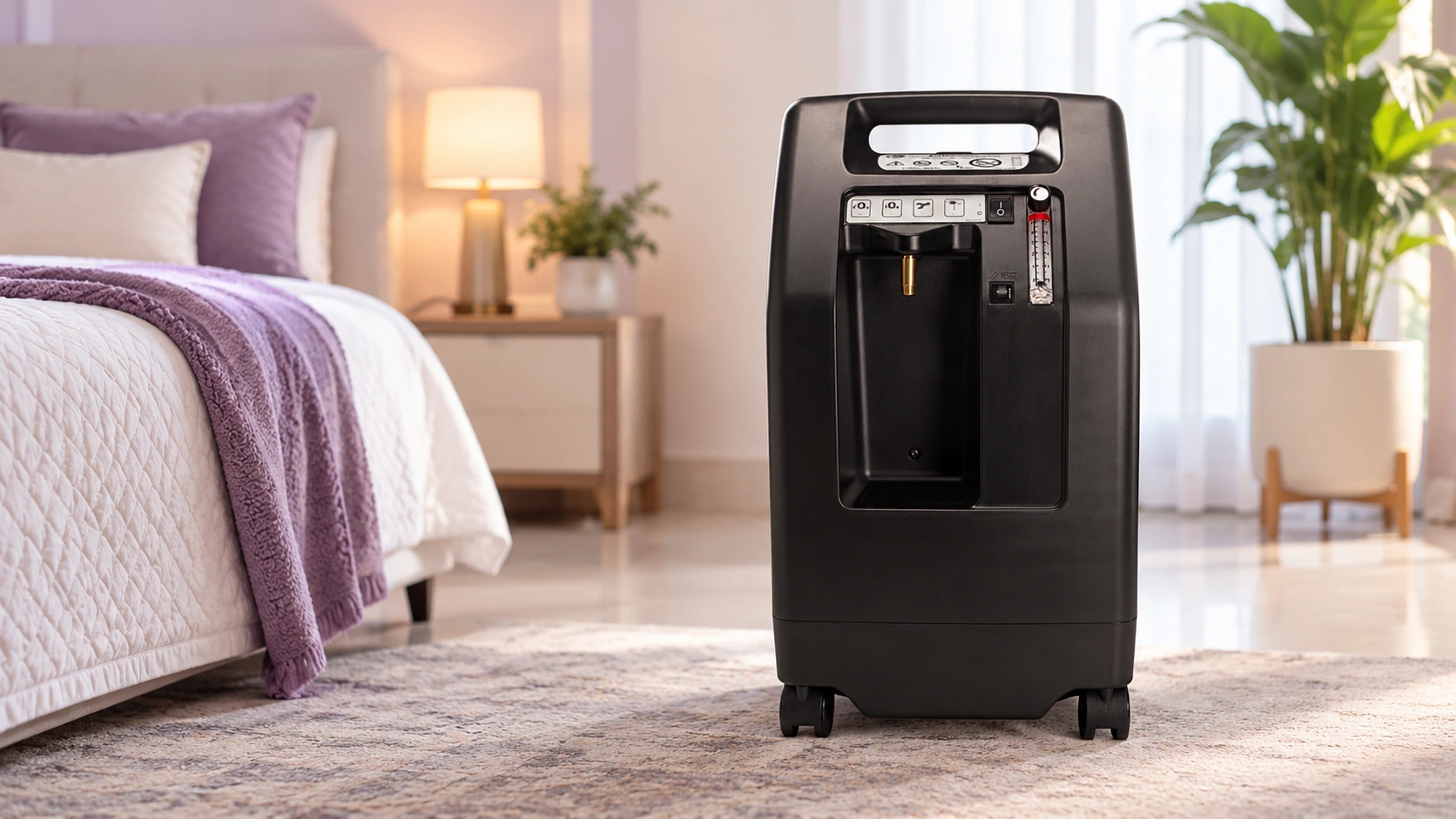
When oxygen therapy becomes part of everyday home care, choosing the right equipment becomes an important practical decision. A stationary oxygen concentrator may operate for many hours each day, making factors such as oxygen flow, purity monitoring, alarms, maintenance and ease of use important considerations.
The DeVilbiss 5 Liter Oxygen Concentrator is designed for continuous-flow oxygen delivery and is intended primarily for stationary home use.
Interested in this model?
View the DeVilbiss 5 Liter Oxygen Concentrator directly on Respikart.
View ProductNeed it temporarily?
If you need oxygen equipment for temporary homecare, explore Respikart’s rental options.
Explore Medical Equipment Rentals →How Does an Oxygen Concentrator Work?
An oxygen concentrator draws air from the surrounding environment and uses Pressure Swing Adsorption technology to separate nitrogen from the air. The concentrated oxygen is then delivered through oxygen tubing to the patient.
Unlike a cylinder, the concentrator does not store a fixed supply of oxygen. It produces concentrated oxygen while operating with an appropriate electrical supply.
Continuous Flow: What Does It Mean?
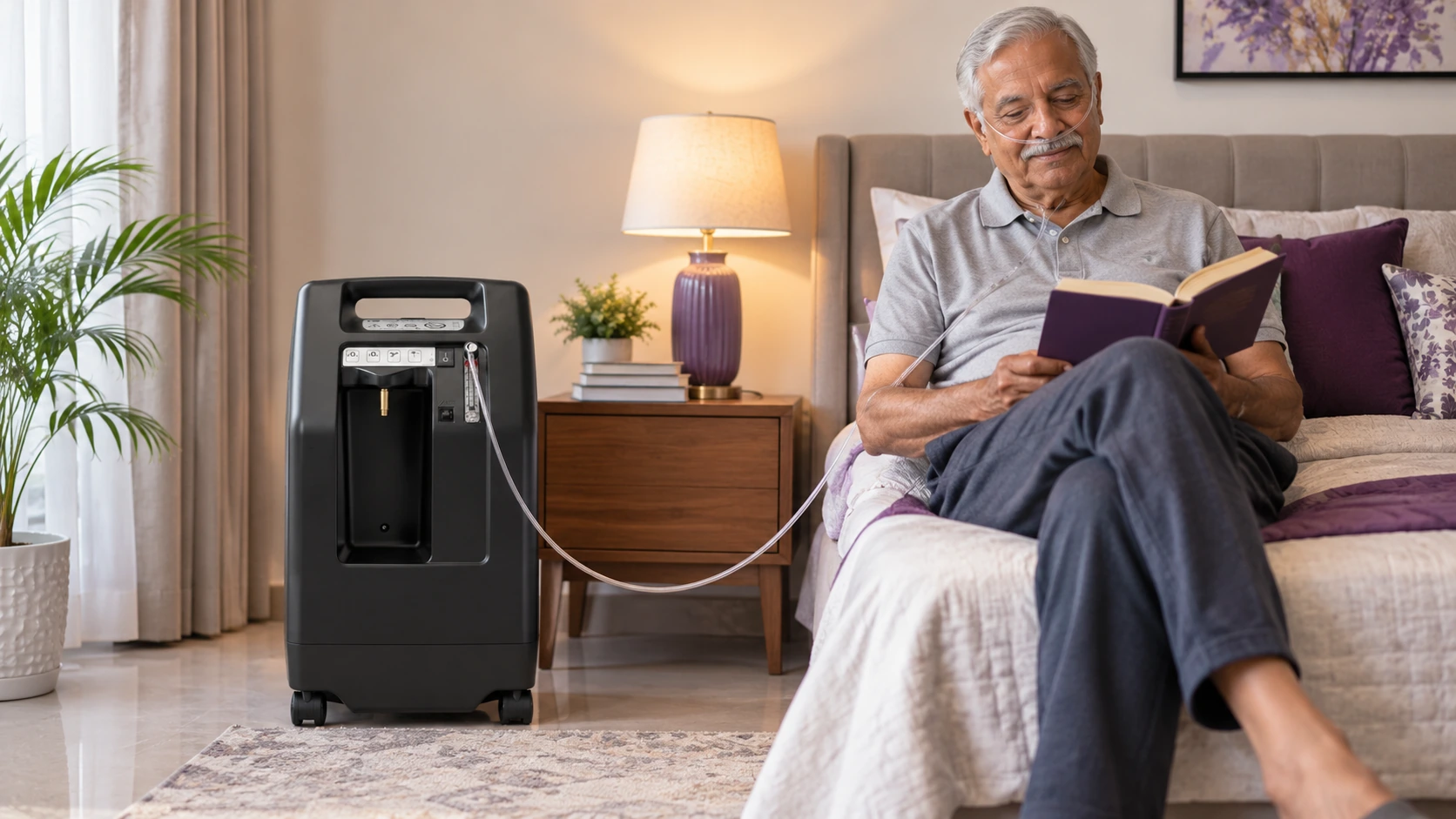
The DeVilbiss 5 Liter model described here provides continuous-flow oxygen rather than pulse-dose delivery. In continuous-flow therapy, oxygen is delivered at the selected flow rate rather than depending on breath detection for every inhalation.
Important
The prescribed oxygen flow should be determined by the treating healthcare professional. Patients should not independently change the flow setting based only on how they feel.
DeVilbiss 5 Liter: Key Specifications
Features That Matter in Everyday Use
Continuous Flow
Adjustable continuous oxygen delivery from 0.5 to 5 LPM.
OSD Monitoring
Oxygen concentration is monitored using the built-in Oxygen Sensing Device.
Alarm Indicators
Visual and audible indicators help identify certain operating problems.
Easy Movement
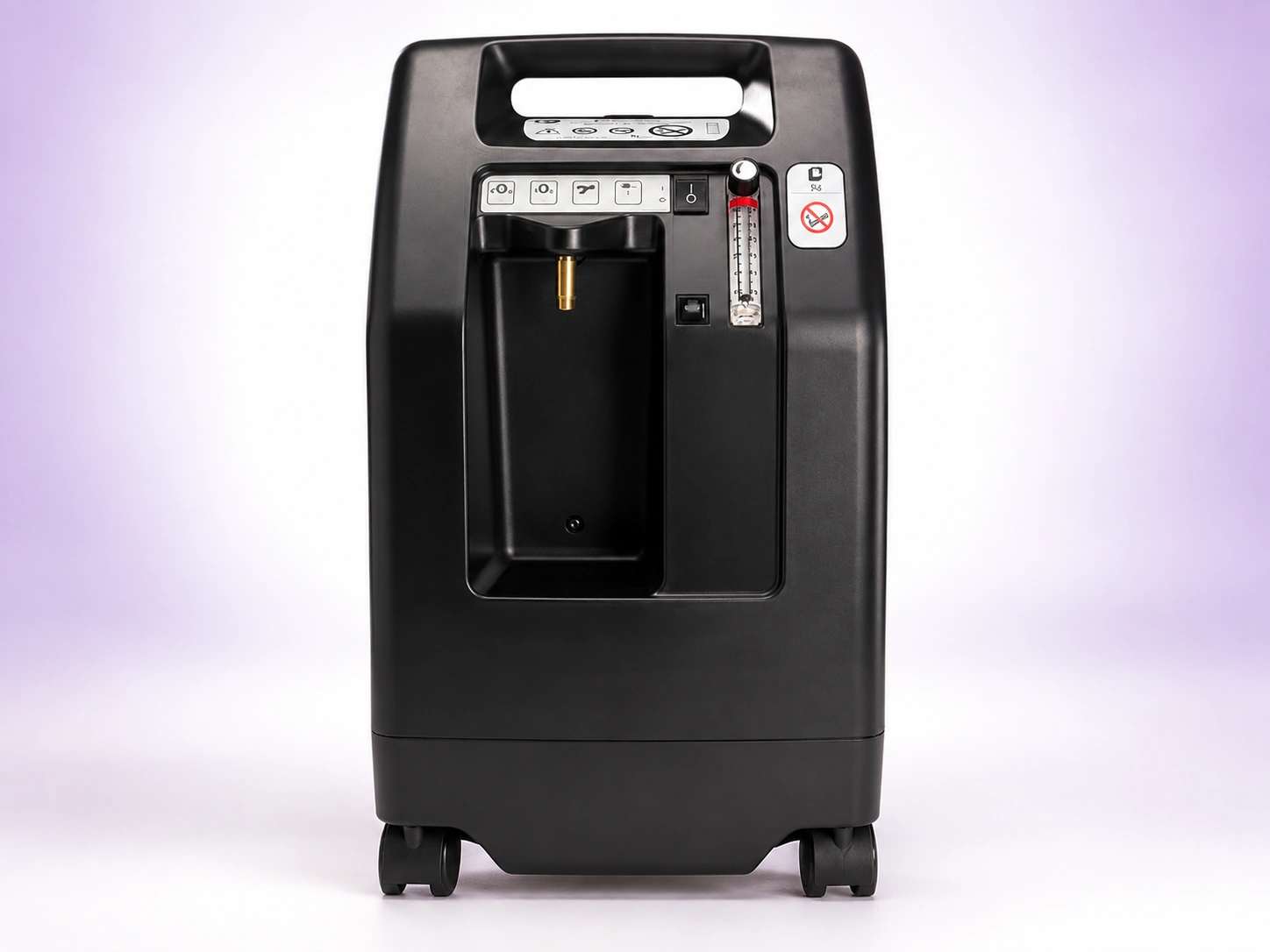
Wheels and handles make movement between rooms more convenient.
Humidifier Support
Designed with space for a humidification bottle when required.
Simple Controls
Front-facing controls make routine operation easier for caregivers.
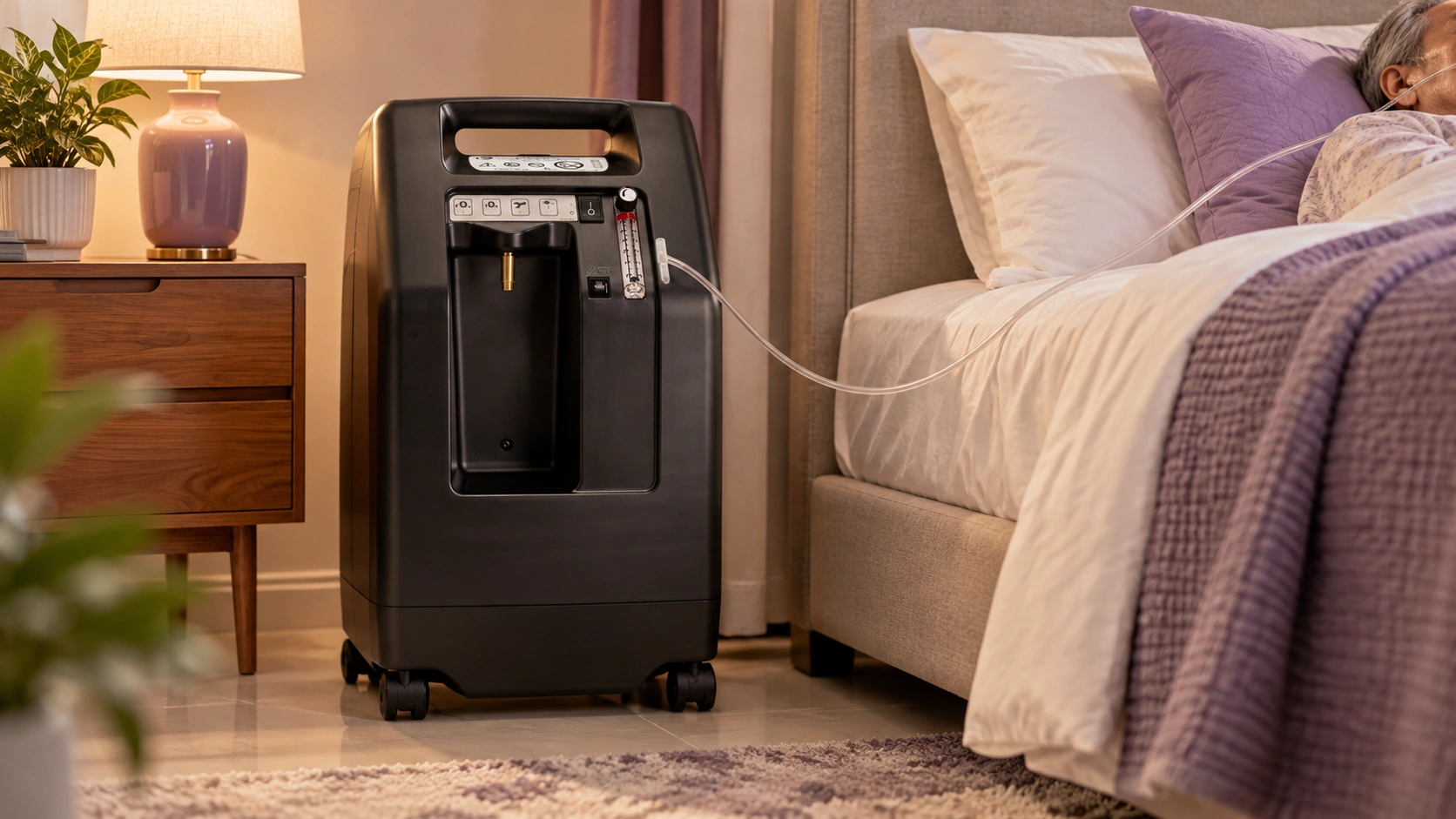
Who May Need a Stationary Oxygen Concentrator?
This type of equipment is intended for patients who have been prescribed supplemental oxygen and require a stationary, continuous-flow setup at home.
It may be used in homecare situations involving chronic respiratory conditions or other medical conditions where supplemental oxygen has been prescribed.
The correct flow rate and duration of therapy should always be determined by the treating healthcare professional.
Oxygen Concentrator Safety at Home
Important Safety Practices
- Keep oxygen equipment away from smoking and open flames.
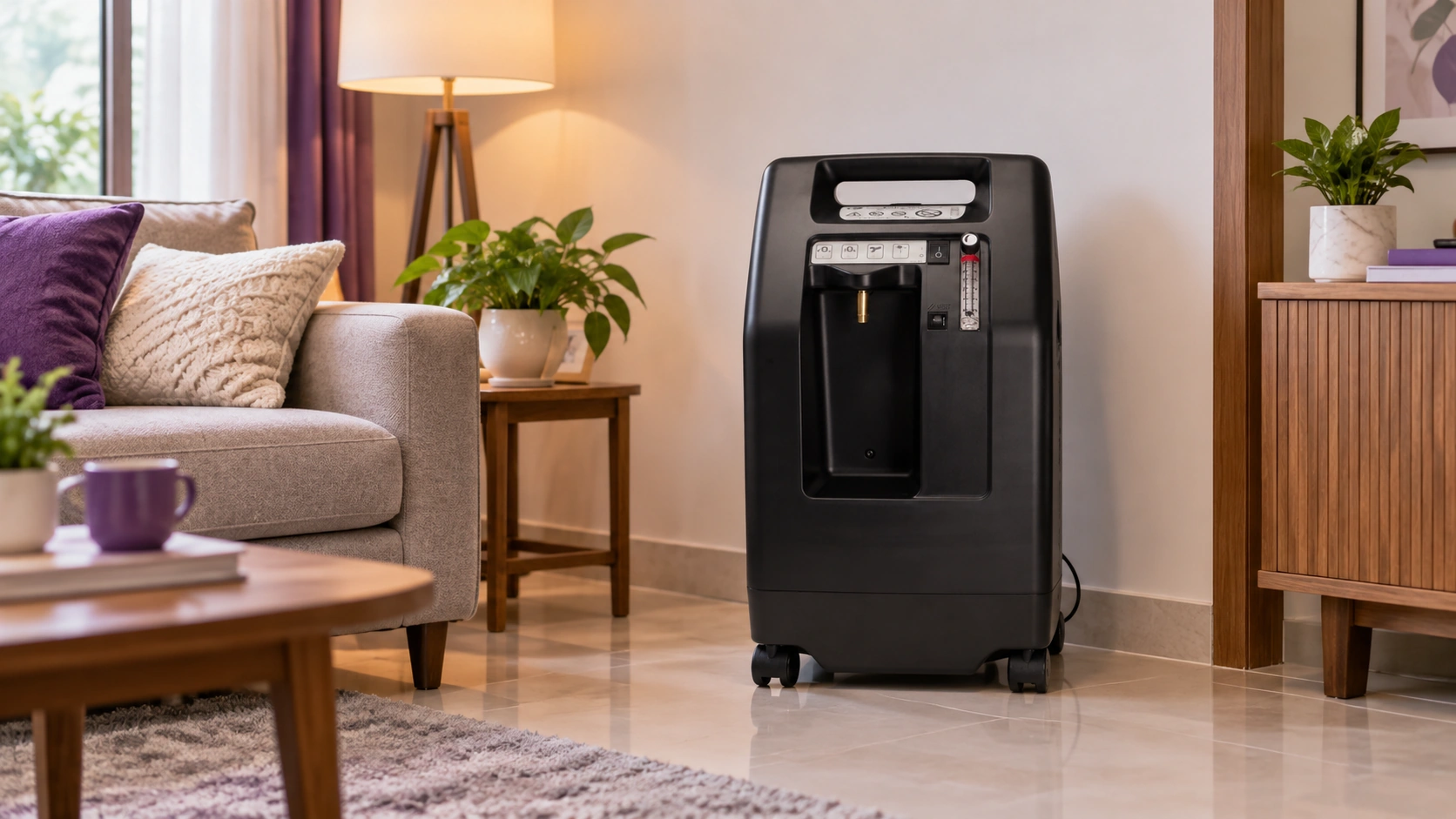
- Keep the concentrator in a properly ventilated area.
- Do not block the machine’s air intake or ventilation openings.
- Maintain an appropriate backup oxygen plan when required.
- Do not change the prescribed oxygen flow without medical advice.
Maintenance and Cleaning
Routine care generally involves keeping the outer cabinet clean and checking the filter and ventilation areas for dust accumulation. Proper airflow around the unit is important for normal operation.
Always follow the manufacturer’s instructions for cleaning, filter replacement and servicing.
Oxygen Concentrator vs Oxygen Cylinder
| Factor | Oxygen Concentrator | Oxygen Cylinder |
|---|---|---|
| Oxygen Source | Concentrates oxygen from room air | Stores compressed oxygen |
| Refilling | No routine oxygen refill | Requires refill/replacement |
| Electricity | Requires electrical power | Does not require electricity to supply stored oxygen |
| Home Use | Suitable for stationary home setups | Can be used as a stored oxygen source |
| Power Failure | Requires backup planning | Can continue while oxygen remains in the cylinder |
What to Check Before Buying
01. Prescribed Flow
Confirm the required oxygen flow with the treating doctor.
02. Power Supply
Consider the home’s electrical reliability and backup plan.
03. Placement
Choose a location with adequate ventilation and clearance.
04. Tubing Reach
Make sure tubing can comfortably reach the patient’s commonly used areas.
05. Service
Check warranty, servicing and after-sales support.
06. Usage Requirement
Make sure a stationary model matches the patient’s actual mobility and therapy needs.
Looking for the Right Oxygen Equipment?
Explore oxygen concentrators and other respiratory-care equipment available through Respikart.
Shop Oxygen Concentrators Explore RentalsFrequently Asked Questions
What is the price of the DeVilbiss 5 Liter Oxygen Concentrator?
What flow rate does it support?
What is the oxygen purity?
Is it portable?
Can it be used overnight?
