

Patient Monitor
Patient Monitor Buying Guide: ECG, SpO₂, NIBP & Temperature Explained
Patient Monitor Buying Guide: ECG, SpO₂, NIBP & Temperature Explained
Understand patient monitor parameters, 3-parameter vs 5-parameter monitors, ICU requirements, advanced monitoring features, accessories and the key specifications to check before buying a patient monitor in India.
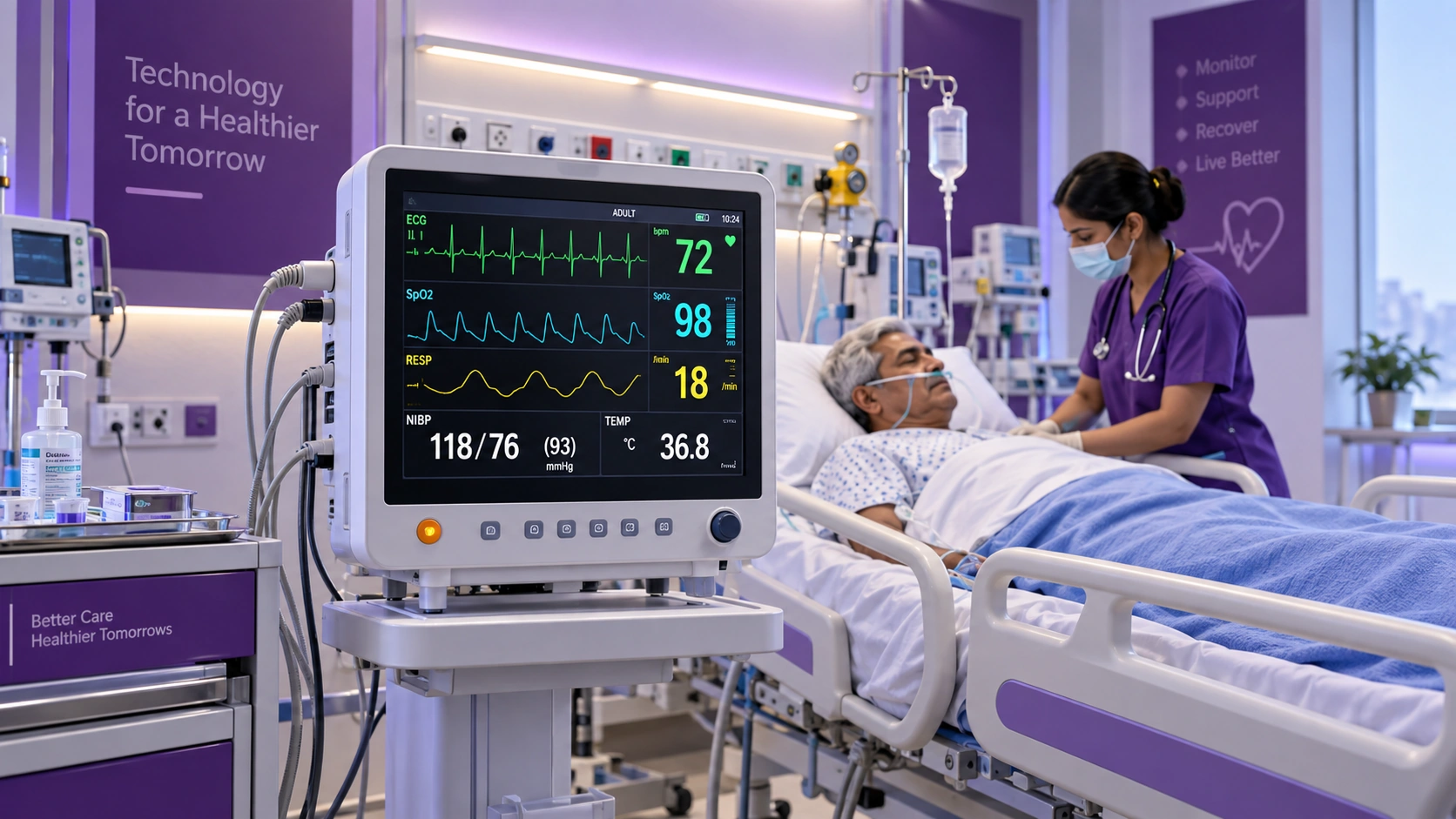
The right patient monitor depends on your clinical application, patient category and required parameters. A commonly used 5-parameter configuration includes ECG, SpO₂, NIBP, Respiration and Temperature. Advanced monitors may additionally support IBP, EtCO₂, arrhythmia analysis, ST analysis, central monitoring and network connectivity.
Choosing a patient monitor is an important decision for a hospital, ICU, emergency department, operation theatre, clinic, nursing home or healthcare facility. Unlike ordinary electronic equipment, a patient monitor is used as part of a clinical monitoring setup and needs to provide information in a format that healthcare professionals can read and operate efficiently.
Modern patient monitors are available in a wide range of configurations. Some are designed for basic vital-sign monitoring, while others provide multiple waveforms, trend information, alarms, advanced parameters and connectivity options.
This makes one question particularly important: how do you know which patient monitor is actually suitable for your requirement?
This comprehensive Respikart guide explains the major patient-monitoring parameters and the practical factors you should consider before purchasing a patient monitor.
In This Patient Monitor Buying Guide
- What Is a Patient Monitor?
- Understanding ECG, SpO₂, NIBP & Temperature
- Why Respiration Monitoring Matters
- Understanding Patient Monitor Waveforms
- What Is a 5-Parameter Patient Monitor?
- 3-Parameter vs 5-Parameter vs Multiparameter
- Choosing a Monitor for Different Departments
- IBP & EtCO₂ Explained
- What to Check Before Buying
- Accessories & Long-Term Cost
- Connectivity & Central Monitoring
- Common Buying Mistakes
- Patient Monitors at Respikart
- Frequently Asked Questions
What Is a Patient Monitor?
A patient monitor is a medical device used to measure and display one or more physiological parameters of a patient. Depending on the model, the monitor can present numerical readings, waveforms, trends and alarms.
The monitor receives information from different sensors, electrodes, cuffs and probes. It then processes and displays that information on its screen.
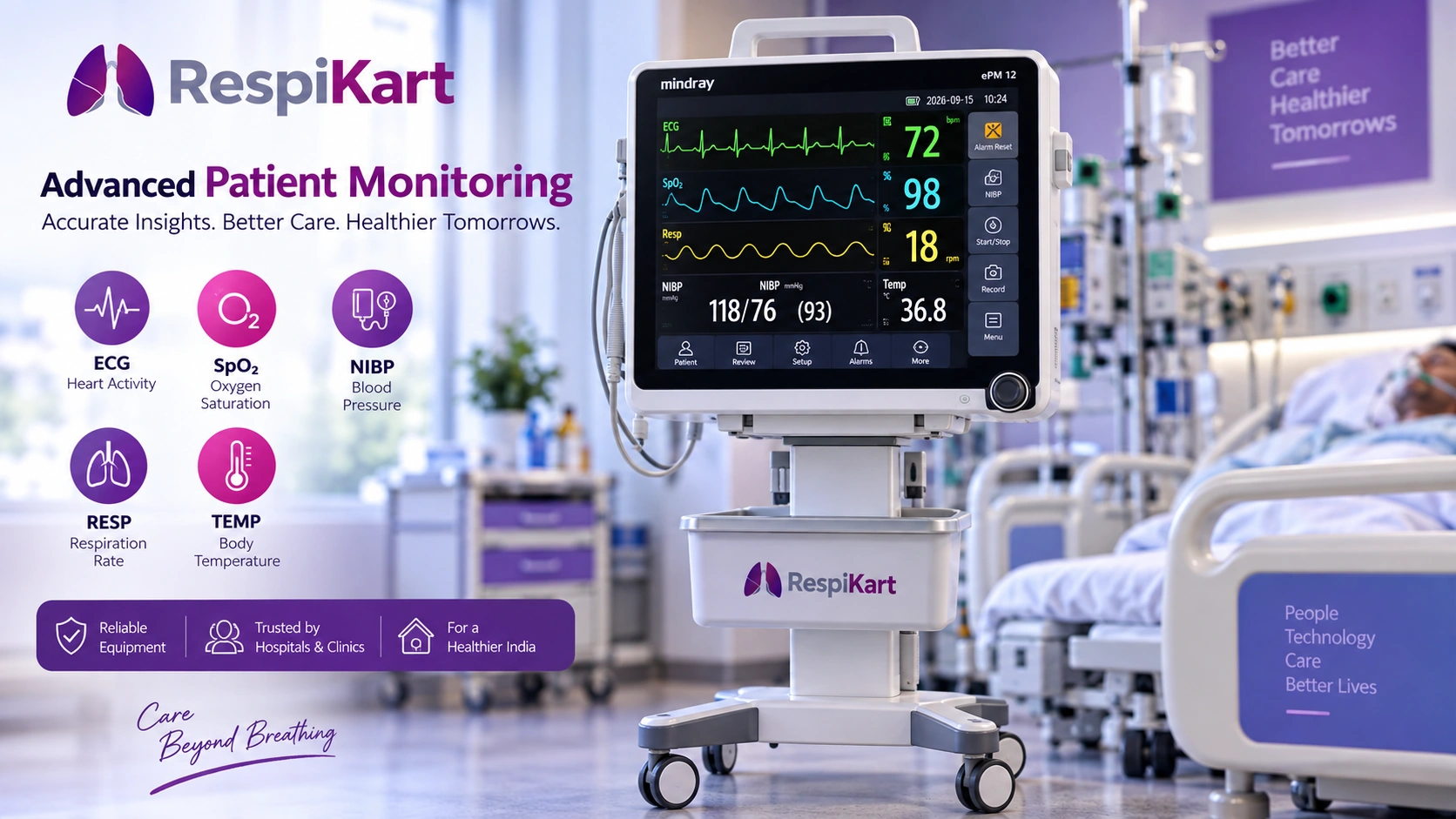
Depending on the configuration, you may see parameters such as heart rate, ECG, SpO₂, pulse rate, blood pressure, respiration rate, temperature, invasive blood pressure and EtCO₂.
Basic monitors are generally designed around essential vital-sign monitoring, while advanced multiparameter monitors can provide a much broader monitoring platform.
Common Parameters You May Find
- ECG: Electrical activity of the heart
- HR: Heart rate
- SpO₂: Peripheral oxygen saturation
- PR: Pulse rate
- NIBP: Non-invasive blood pressure
- RESP: Respiration rate
- TEMP: Temperature
- IBP: Invasive blood pressure on supported monitors
- EtCO₂: End-tidal carbon dioxide on supported monitors
Understanding the Main Patient Monitor Parameters
Before comparing brands or prices, understand what each parameter actually represents and why it may be required. This makes it easier to decide whether a basic, 3-parameter, 5-parameter or advanced multiparameter monitor is appropriate.
ECG – Electrocardiography
ECG records the electrical activity of the heart through electrodes attached to the patient’s body.
Depending on the monitor, ECG functionality can include waveform display, heart-rate monitoring, lead selection, arrhythmia analysis and ST-segment analysis.
SpO₂ – Oxygen Saturation
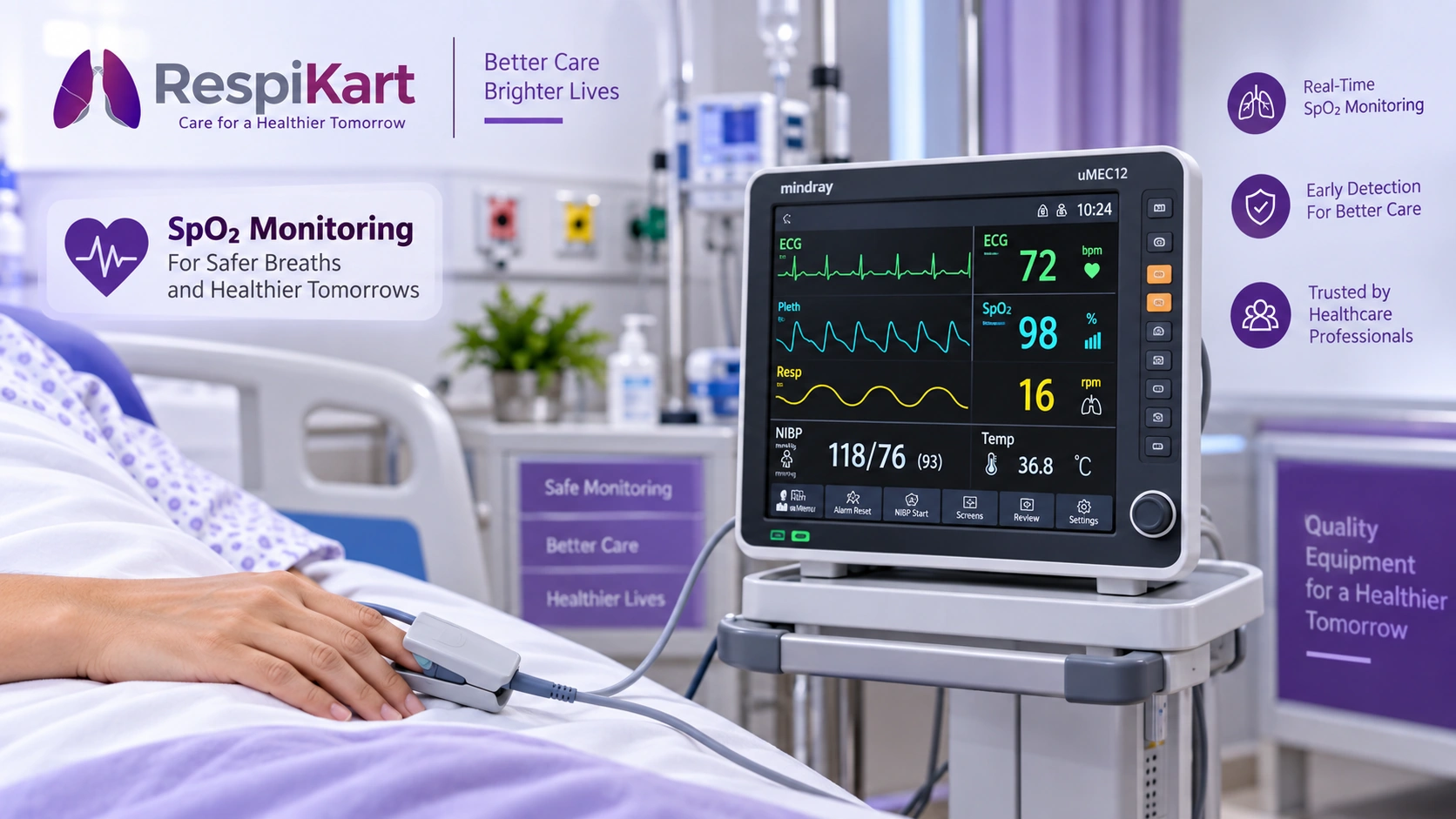
SpO₂ refers to peripheral oxygen saturation and is generally measured through a pulse-oximetry sensor.
The monitor may display SpO₂ percentage, pulse rate and a plethysmographic waveform.
NIBP – Blood Pressure
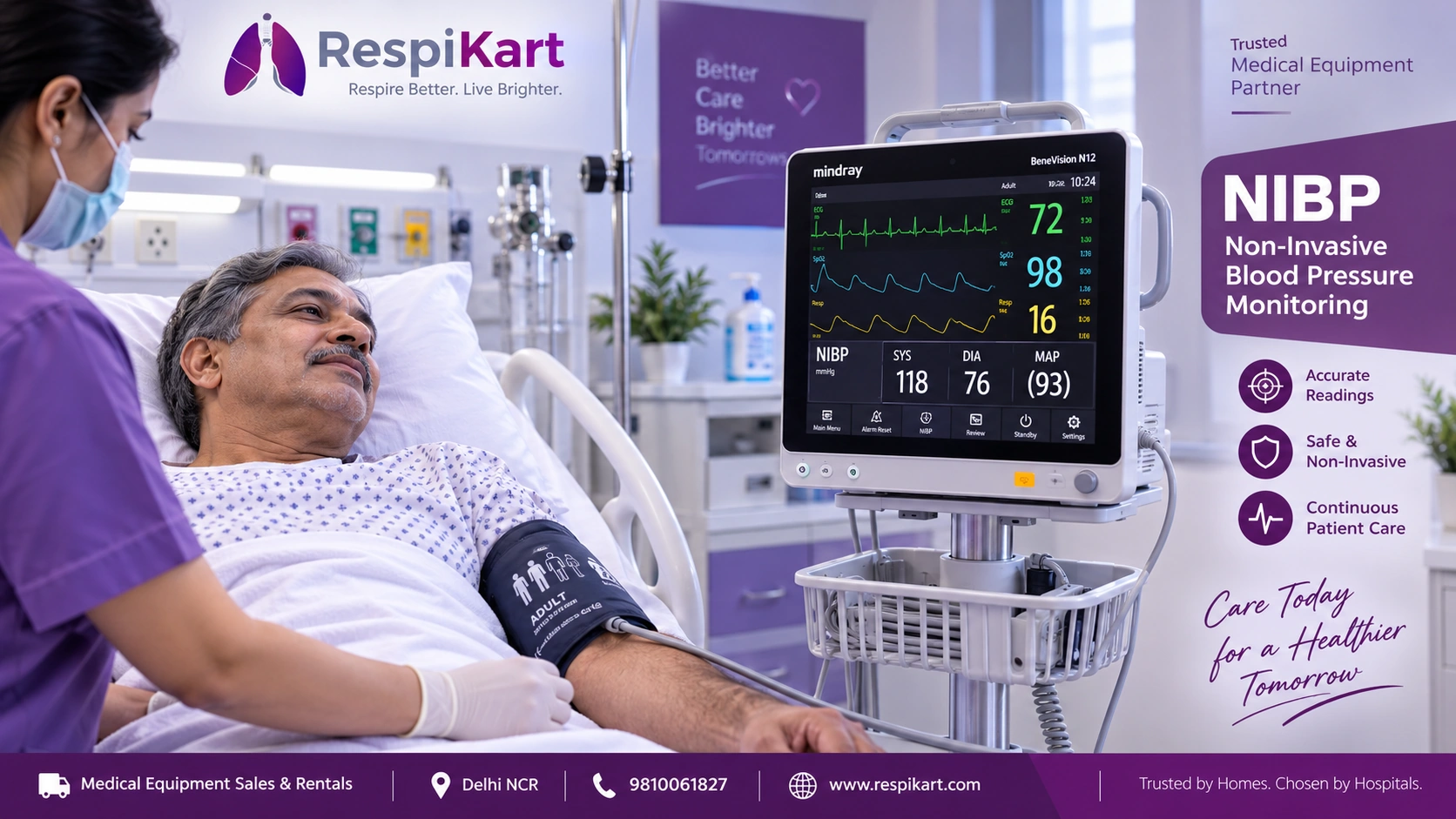
NIBP means Non-Invasive Blood Pressure. It uses an inflatable cuff to estimate blood pressure without invasive arterial access.
Typical readings include SYS, DIA and MAP.
TEMP – Temperature
Temperature monitoring allows healthcare professionals to observe changes in the patient’s body temperature.
Depending on the monitor, one or two temperature channels may be available.
1. ECG: What Should You Check?
ECG stands for Electrocardiography. The ECG system detects electrical signals generated by the heart through electrodes placed on the patient’s body.
A patient monitor can display an ECG waveform and calculate heart rate. More advanced models may provide additional ECG-related analysis.
Important ECG Features to Compare
- Number of ECG leads supported
- Number of ECG waveforms displayed
- Lead selection options
- Heart-rate monitoring
- Arrhythmia analysis where supported
- ST-segment analysis where supported
- ECG cable configuration
- Availability of replacement ECG cables and electrodes
If the monitor is being considered for critical-care applications, ask the supplier specifically about the ECG analysis capabilities instead of assuming that all monitors provide the same functionality.
2. SpO₂: Understanding Oxygen Saturation Monitoring
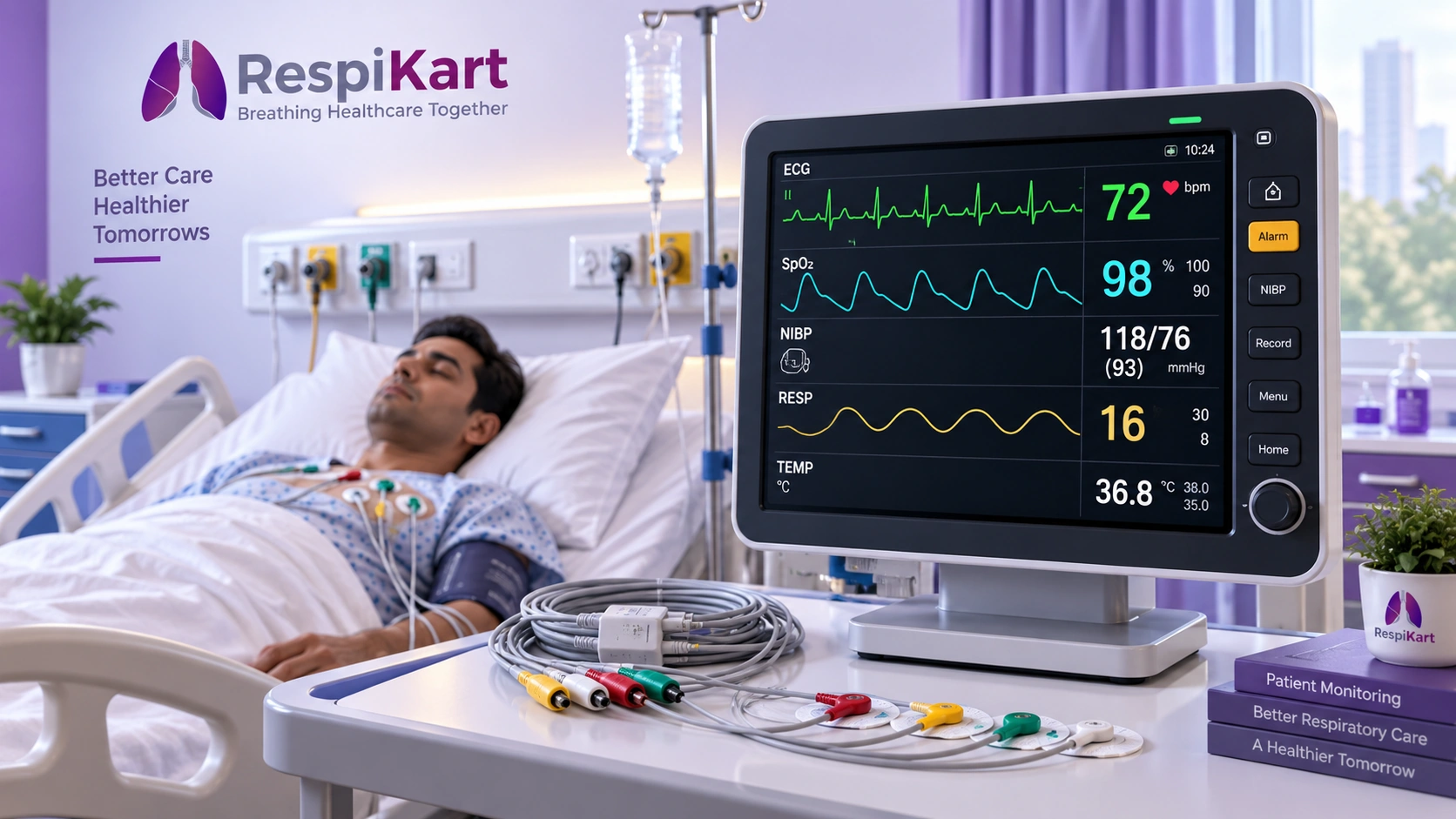
SpO₂ stands for peripheral oxygen saturation. A pulse-oximetry sensor generally uses light-based measurement to estimate oxygen saturation and pulse rate.
On a patient monitor, SpO₂ is generally accompanied by pulse-rate information and, on supported models, a plethysmographic waveform.
Where Is SpO₂ Monitoring Commonly Used?
- ICU
- Emergency department
- Operation theatre
- Recovery room
- Respiratory-care settings
- General wards
- Ambulance and transport applications
- Selected home-care environments
SpO₂ Sensor Compatibility Matters
Before purchasing, check whether the monitor supports the sensors required by your facility. Depending on the monitor, you may need adult, pediatric or neonatal sensors.
Also consider the cost and availability of replacement sensors. A patient monitor is only practical for long-term use when its essential accessories can be sourced easily.
3. NIBP: Non-Invasive Blood Pressure Explained
NIBP stands for Non-Invasive Blood Pressure. Unlike invasive blood-pressure monitoring, NIBP uses a cuff to estimate blood pressure.
Common NIBP Values
SYS
Systolic blood pressure is the upper pressure value displayed by the monitor.
DIA
Diastolic blood pressure is the lower pressure value displayed by the monitor.
MAP
Mean arterial pressure may also be displayed depending on the monitor configuration.
Automatic NIBP
Supported monitors can perform measurements at selected intervals according to the clinical setup.
Important NIBP Buying Tip
Do not purchase a monitor without checking the availability of appropriate NIBP cuff sizes. Adult, large-adult, pediatric and neonatal requirements can differ.
4. Temperature: Why TEMP Matters
Temperature is another commonly available parameter in multiparameter patient monitors.
Depending on the monitor, temperature functionality may include one or two temperature channels and may use reusable or disposable probes.
Before Buying, Check:
- Number of temperature channels
- Temperature probe type
- Connector compatibility
- Reusable or disposable probe options
- Replacement probe availability
If your procurement specification specifically requires dual-temperature monitoring, verify that capability in the manufacturer’s technical specification before placing an order.
Respiration Rate: The Often-Overlooked Parameter
Buyers often focus on ECG, SpO₂ and NIBP when comparing monitors. However, respiration rate (RESP) can also be an important monitoring parameter.
On supported patient monitors, respiration may be derived through ECG electrodes and presented as a respiratory rate and waveform.
RESP Monitoring May Include:
- Respiratory rate
- Respiration waveform
- High and low respiration alarms
- Trend information on supported monitors
Understanding Waveforms on a Patient Monitor
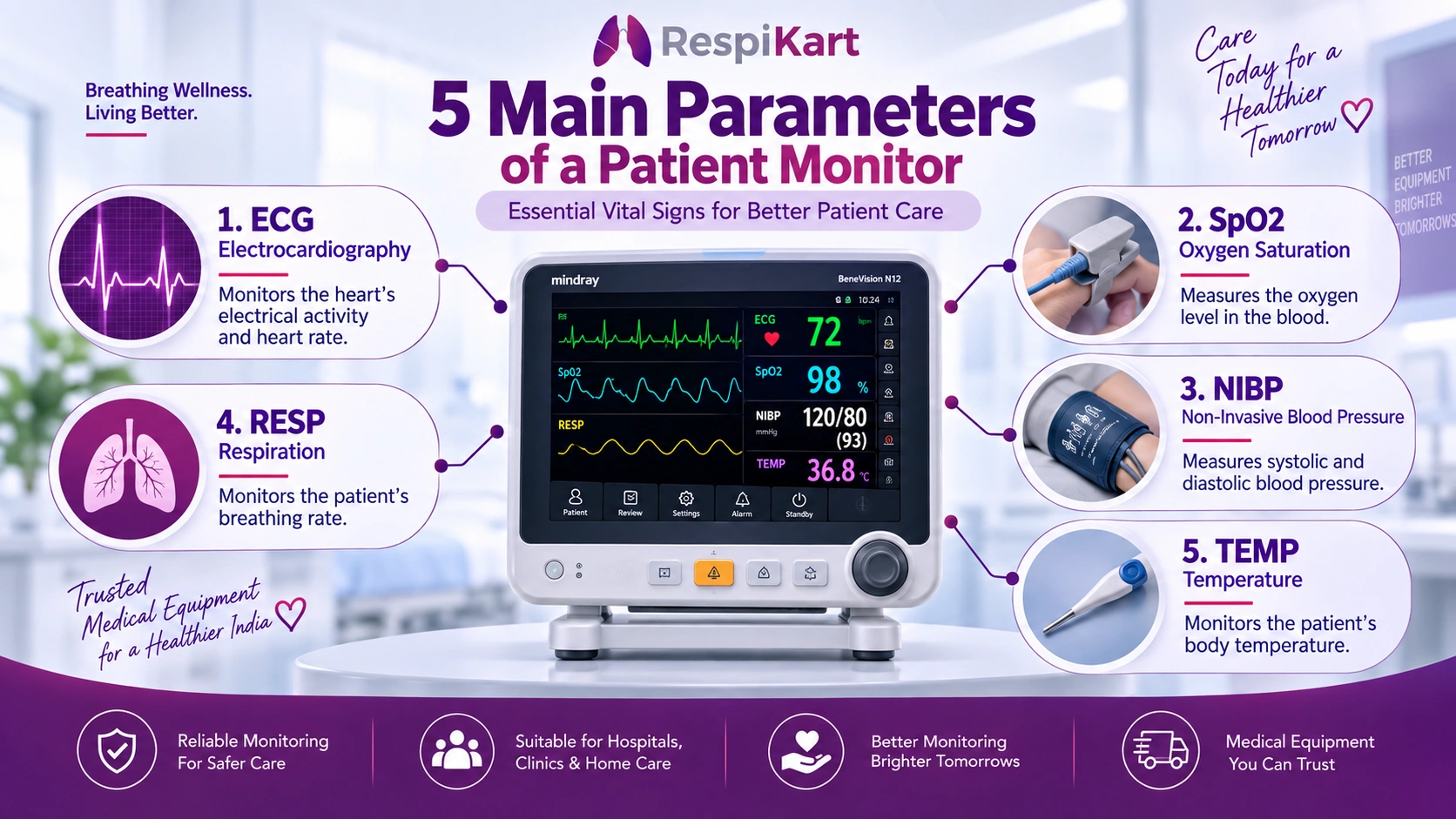
A patient monitor doesn’t only display numbers. Many monitors also provide graphical waveforms that help healthcare professionals observe patterns.
Common Waveforms Include:
- ECG waveform
- SpO₂ plethysmographic waveform
- Respiration waveform
- IBP waveform on supported monitors
- EtCO₂ waveform on supported monitors
The number of waveforms that can be displayed simultaneously depends on the monitor’s screen size, configuration and manufacturer specifications.
When comparing monitors for ICU use, don’t look only at the number of parameters. Also check how clearly the waveforms and numerical values can be viewed together.
What Is a 5-Parameter Patient Monitor?
The term 5-parameter patient monitor commonly refers to a monitor capable of measuring five commonly used physiological parameters.
A Common 5-Parameter Configuration
ECG + SpO₂ + NIBP + RESP + TEMP
However, the term “5-parameter” should not be treated as a universal technical standard across every manufacturer. Different manufacturers may describe their configurations differently.
Therefore, when comparing two products advertised as “5-parameter patient monitors”, always compare their actual technical specifications.
3-Parameter vs 5-Parameter vs Advanced Multiparameter Monitor
| Monitor Type | Common Parameters | Typical Application | What to Check |
|---|---|---|---|
| 3-Parameter | ECG, SpO₂, NIBP | Basic bedside and vital-sign monitoring | Essential parameters, display, alarms and accessories |
| 5-Parameter | ECG, SpO₂, NIBP, RESP, TEMP | Hospitals, wards, recovery areas and broader bedside monitoring | Patient category, waveforms, alarms, trends and accessories |
| Advanced Multiparameter | ECG, SpO₂, NIBP, RESP, TEMP + IBP / EtCO₂ where supported | ICU, critical care, OT and advanced applications | Advanced modules, connectivity, central monitoring and clinical requirements |
Choosing the Right Patient Monitor for Different Departments
There is no single patient monitor that is automatically the best choice for every department. The right configuration depends on how and where the equipment will be used.
Patient Monitor for General Wards
General ward applications may focus on essential vital-sign monitoring. Depending on the facility’s requirements, this may include SpO₂, NIBP, pulse rate and temperature, with ECG where clinically required.
Patient Monitor for Clinics
Clinics may need a compact and easy-to-operate monitor for routine patient assessment and observation. Portability, display readability and essential parameters can be important.
Patient Monitor for Emergency Departments
Emergency environments may benefit from a monitor that can quickly present ECG, SpO₂, NIBP and respiration information. Clear alarms, battery backup and portability may also be important considerations.
Patient Monitor for ICU
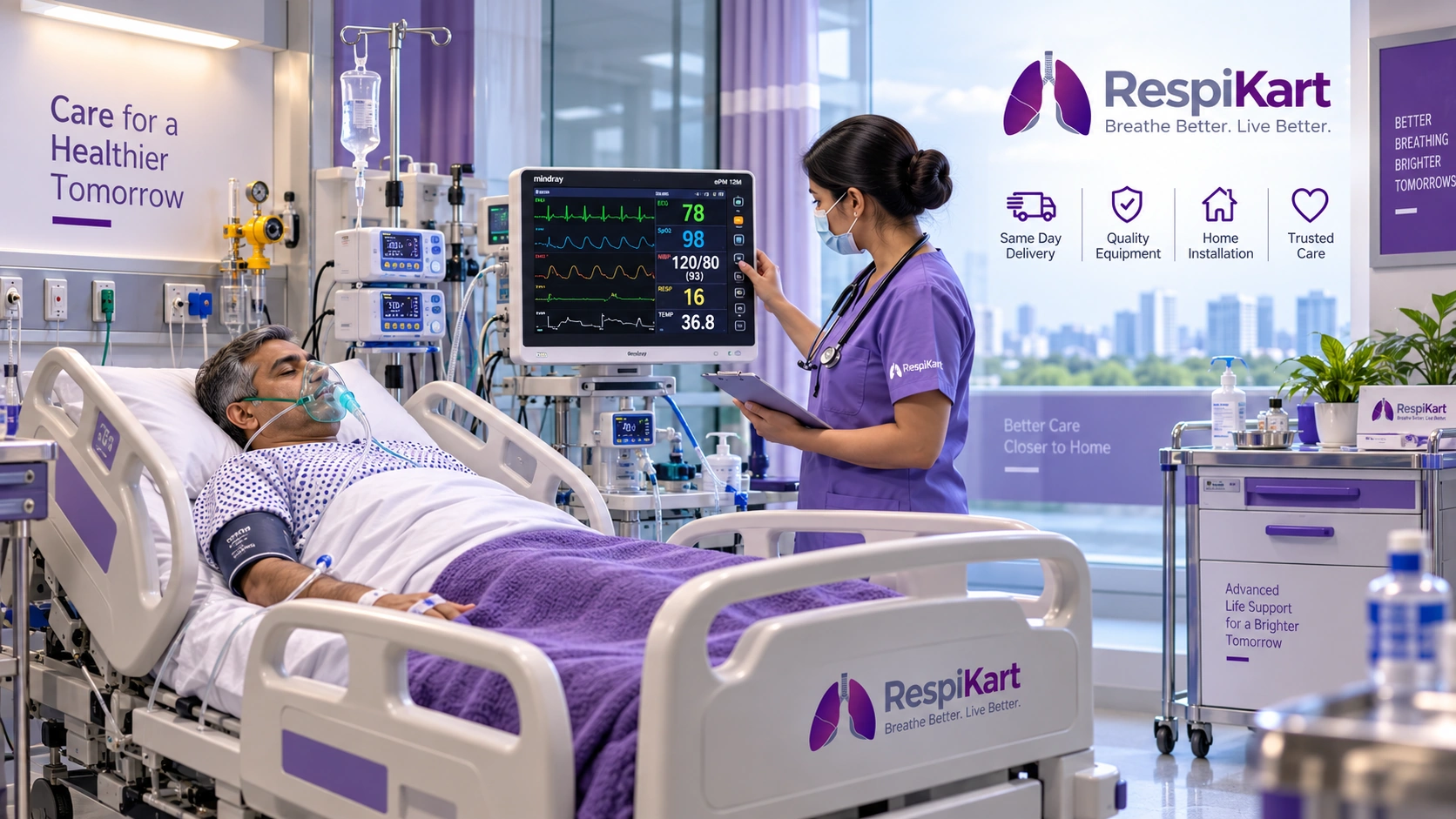
ICU monitoring requirements can be more demanding. Depending on the patient population and clinical requirements, an ICU monitor may need ECG, SpO₂, NIBP, respiration, temperature, advanced ECG analysis, IBP and EtCO₂.
Patient Monitor for Operation Theatre
OT monitoring should be selected according to the procedure and anesthesia requirements. Depending on the application, ECG, SpO₂, NIBP, respiration, temperature and EtCO₂ may be required.
Patient Monitor for Recovery Room
Recovery areas may require observation of several vital parameters after procedures. Display visibility, alarms, portability and ease of operation can be important.
Advanced Patient Monitor Parameters: IBP & EtCO₂
What Is IBP?
IBP stands for Invasive Blood Pressure. Unlike NIBP, invasive pressure monitoring uses an invasive pressure-monitoring system connected to the patient.
Advanced ICU monitors may support one or more IBP channels. Depending on the configuration, these channels can be used for different pressure measurements.
If IBP is required for your application, check the number of supported channels and compatible accessories before purchasing.
What Is EtCO₂?
EtCO₂ means End-Tidal Carbon Dioxide. It measures carbon dioxide concentration at the end of exhalation.
EtCO₂ can be relevant to applications such as anesthesia, critical care, ventilation monitoring and emergency care.
Not every patient monitor includes EtCO₂ as a standard feature. Some systems may provide it through an optional module.
Buying Tip for Advanced Parameters
If IBP or EtCO₂ is part of your requirement, confirm whether the parameter is standard, optional or unavailable on the specific model you are considering.
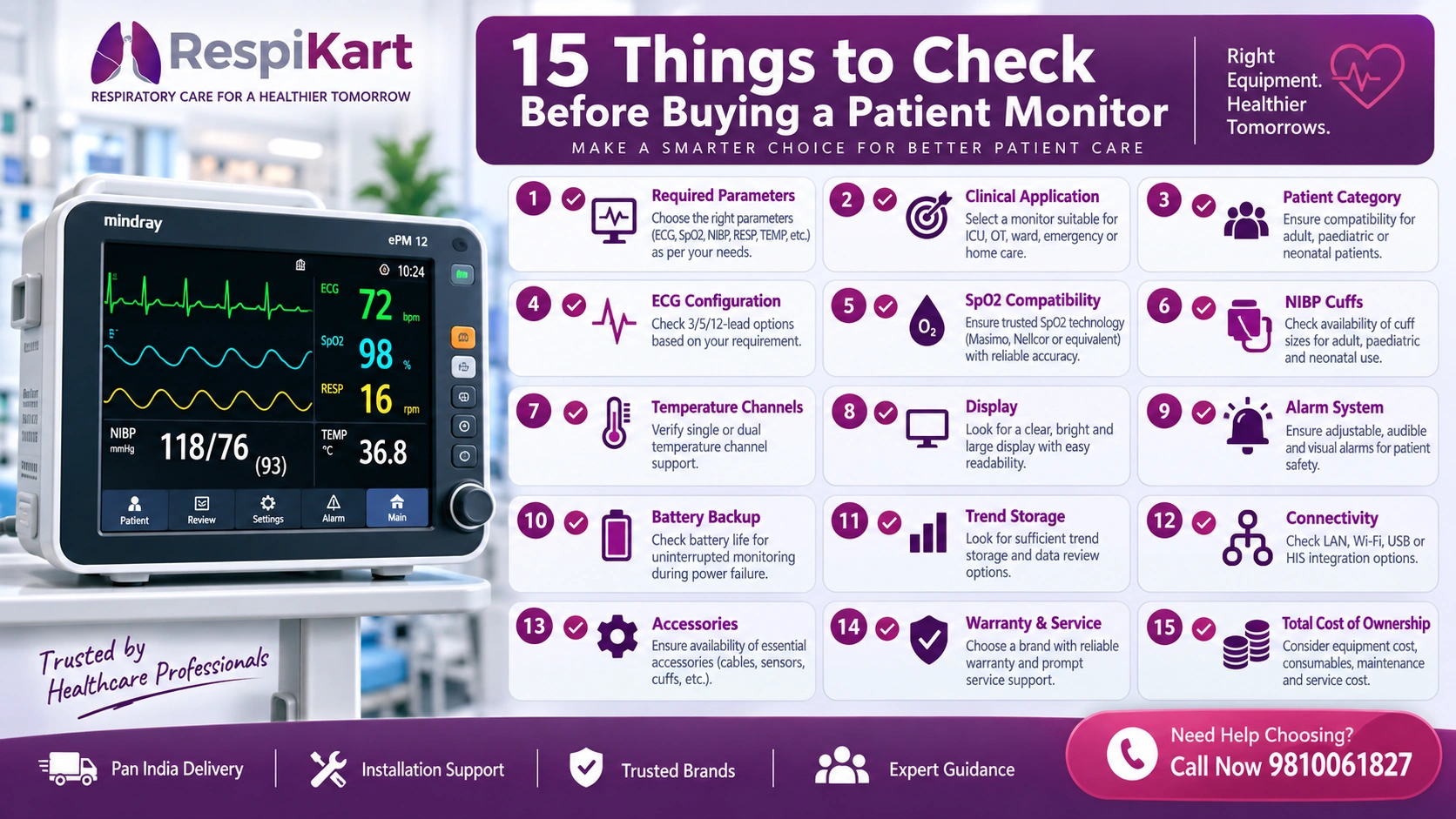
15 Things to Check Before Buying a Patient Monitor
Once you understand the parameters, the next step is to compare the actual equipment. The following checklist can help hospitals and healthcare buyers evaluate different models.
- 1. Required Parameters: Identify exactly which physiological parameters are required.
- 2. Clinical Application: Consider whether the monitor is intended for ICU, ward, OT, emergency, clinic or transport use.
- 3. Patient Category: Check adult, pediatric and neonatal compatibility.
- 4. ECG Configuration: Check ECG leads, waveforms, arrhythmia and ST analysis.
- 5. SpO₂ Compatibility: Check supported sensors and replacement availability.
- 6. NIBP Cuffs: Confirm appropriate cuff sizes for your patient population.
- 7. Temperature Channels: Check whether one or two temperature channels are available.
- 8. Display: Compare screen size, resolution, waveform visibility and numeric readability.
- 9. Alarm System: Check audible and visual alarm functionality and configurable limits.
- 10. Battery Backup: Important for patient transport and power interruptions.
- 11. Trend Storage: Check whether historical parameter information can be reviewed.
- 12. Connectivity: Check central monitoring and network requirements.
- 13. Accessories: Confirm availability of cables, sensors, cuffs and probes.
- 14. Warranty & Service: Ask about warranty coverage and technical support.
- 15. Total Cost of Ownership: Consider accessories, batteries, maintenance and service—not only the initial purchase price.
Why Patient Monitor Display Size Matters
Screen size is not simply a cosmetic feature. A monitor’s display needs to present vital-sign values, waveforms, alarm messages and trend information clearly.
For ICU environments where multiple waveforms may need to be viewed simultaneously, display size and resolution can become particularly important.
Compare:
- Screen size
- Resolution
- Number of simultaneous waveforms
- Numerical value size
- Alarm visibility
- Viewing angle
- Touchscreen responsiveness where applicable
Patient Monitor Alarm System: What Should You Look For?
Alarms are an important component of patient monitoring. A monitor may provide audible and visual alerts when configured limits are exceeded.
Common Alarm Categories May Include:
- High or low heart rate
- High or low SpO₂
- Blood-pressure limits
- Respiration limits
- Temperature limits
- Technical or sensor-related alarms
Depending on the model, the alarm system may also provide different priority levels, adjustable limits and alarm history.
Battery Backup & Portability
Battery operation can be particularly useful when a monitor needs to move with the patient.
Battery Backup Can Matter For:
- Patient transportation
- Emergency situations
- Ambulance use
- Movement between departments
- Power interruptions
Instead of simply asking whether a battery is included, check the expected operating time, charging arrangement and battery replacement availability.
Central Monitoring & Connectivity
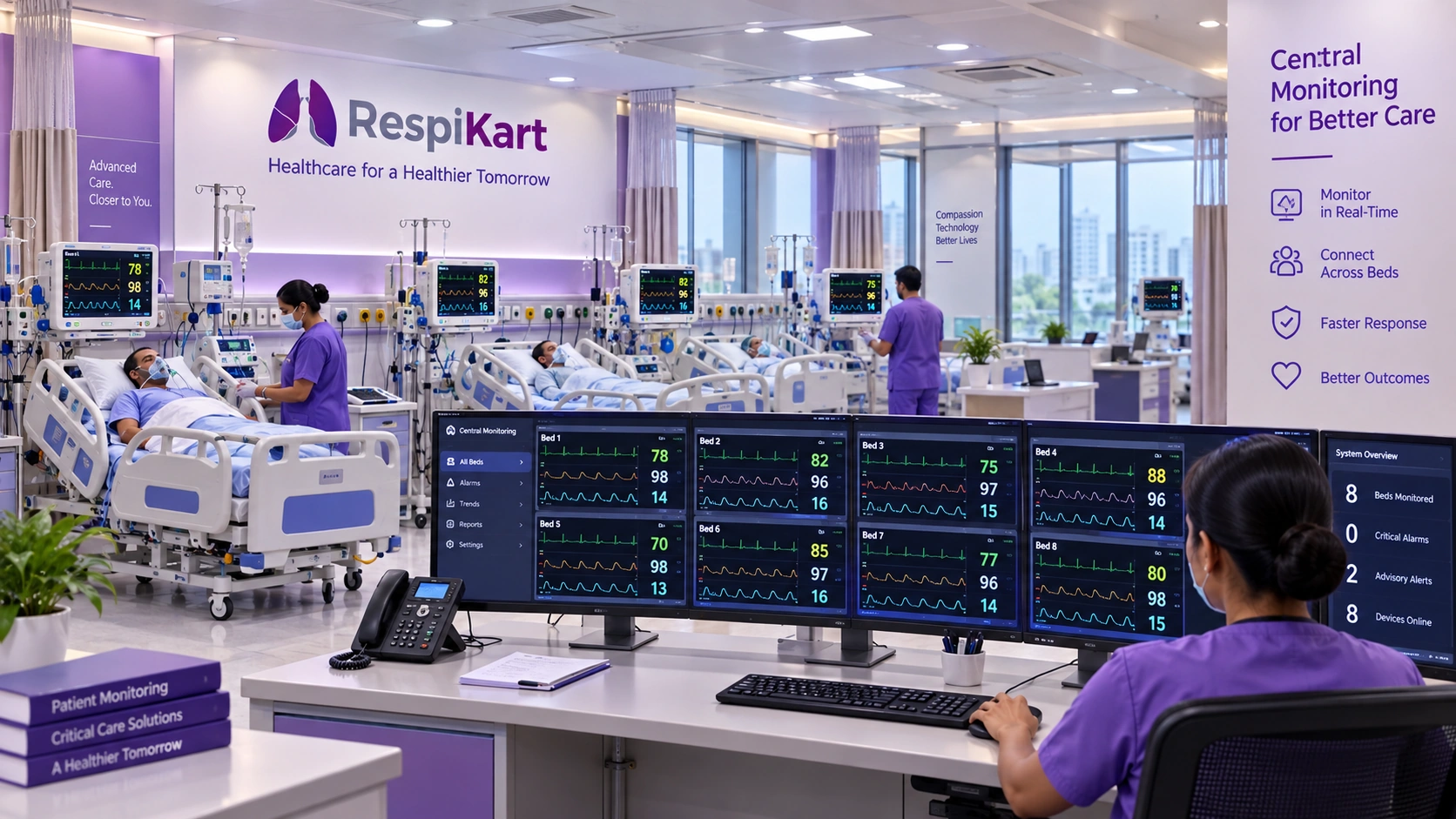
Larger hospitals may need several bedside monitors to work as part of a connected monitoring environment.
Some patient-monitoring systems can connect multiple bedside monitors to a central monitoring station.
Connectivity May Include:
- Central monitoring
- Network connectivity
- Data transfer
- Hospital information systems
- Electronic medical record integration
- Supported communication protocols
If connectivity is an important requirement, ask the supplier specifically about the network interface, communication protocol, software requirements and compatibility.
Patient Monitor Accessories You Should Consider
One common purchasing mistake is to focus only on the monitor itself. Accessories are essential to everyday use and should be considered as part of the purchase.
ECG Accessories
- ECG cable
- Lead wires
- ECG electrodes
SpO₂ Accessories
- Adult SpO₂ sensor
- Pediatric sensor
- Neonatal sensor
NIBP Accessories
- Adult cuff
- Large adult cuff
- Pediatric cuff
- Neonatal cuff
Temperature Accessories
- Temperature probe
- Reusable sensors
- Disposable sensors
Don’t Compare Patient Monitors by Price Alone
A patient monitor’s purchase price is only one part of its overall cost. For hospitals and facilities using the equipment regularly, accessories and maintenance can also affect the long-term cost.
Total Cost of Ownership
Purchase Price + Accessories + Sensors + Cuffs + Batteries + Maintenance + Service + Optional Modules
A monitor with a lower initial price may not necessarily be the most economical option if replacement accessories are expensive or difficult to source.
New vs Refurbished Patient Monitor: What Should You Consider?
Budget can influence the purchasing decision, especially when a hospital or healthcare facility needs multiple units.
New Patient Monitor
- Manufacturer warranty
- New accessories
- Current configuration
- Long-term support considerations
Refurbished Patient Monitor
- Potentially lower acquisition cost
- Device condition should be verified
- Testing/calibration should be confirmed
- Battery condition should be checked
- Warranty and service support should be confirmed
If considering refurbished equipment, ask about the refurbishment process, device testing, accessories, battery condition, warranty and availability of spare parts.
Buying Multiple Patient Monitors for a Hospital
Hospitals purchasing multiple units should think beyond individual product selection.
Standardizing models or selecting compatible equipment across departments can simplify staff training, accessory management, maintenance and troubleshooting.
For Bulk Procurement, Ask About:
- Bulk pricing
- Warranty coverage
- Installation support
- Product training
- AMC options
- Spare accessories
- Delivery timeline
- Technical support
10 Common Mistakes When Buying a Patient Monitor
1. Choosing Only on Price
The cheapest monitor may not provide the parameters, accessories or support required by your facility.
2. Assuming All 5-Parameter Monitors Are the Same
Different manufacturers can offer different specifications under similar parameter classifications.
3. Ignoring Accessories
Sensors, cables, cuffs and probes are essential for normal operation and should be considered before purchasing.
4. Not Checking Patient Categories
If pediatric or neonatal monitoring is required, confirm compatibility before finalizing the model.
5. Ignoring Battery Requirements
Battery performance can become important during patient transportation and power interruptions.
6. Not Checking Alarm Features
Confirm that the alarm functionality matches your intended application.
7. Buying Features You Don’t Need
More parameters are not automatically better. Choose according to actual clinical requirements.
8. Ignoring Service Support
Medical equipment requires dependable technical support, especially when it is used regularly.
9. Forgetting Compatibility
Check whether sensors, cables, cuffs and optional modules are compatible with the exact model.
10. Not Comparing Total Ownership Cost
Consider accessories, battery replacement, maintenance and service—not just the initial equipment price.
Printable Patient Monitor Buying Checklist
- ☐ Intended department identified
- ☐ Required parameters identified
- ☐ Adult/pediatric/neonatal requirement checked
- ☐ ECG leads verified
- ☐ SpO₂ sensor compatibility verified
- ☐ NIBP cuff sizes verified
- ☐ RESP capability verified
- ☐ Temperature channels verified
- ☐ IBP requirement checked
- ☐ EtCO₂ requirement checked
- ☐ Display size evaluated
- ☐ Waveform visibility evaluated
- ☐ Alarm system evaluated
- ☐ Battery backup checked
- ☐ Trend storage checked
- ☐ Connectivity checked
- ☐ Central monitoring requirement checked
- ☐ Accessories confirmed
- ☐ Warranty confirmed
- ☐ Service support confirmed
- ☐ Total cost of ownership compared
Patient Monitors at Respikart
Respikart provides medical equipment for hospitals, clinics, nursing homes and healthcare facilities, with a range of patient monitoring equipment available in different configurations.
The patient-monitoring range includes models from brands such as Philips, BPL and Contec, allowing healthcare buyers to compare options according to parameters, application and technical requirements.
- Philips Goldway GS20 Basic 5 Para Patient Monitor
- Philips Goldway G30E Multipara Patient Monitor
- BPL Magna 3 Para Patient Monitor
- BPL Ultima Prime D Patient Monitor
- Contec CMS5100 Patient Monitor
- Contec CMS8000 Multipara Monitor
- Contec CMS9000 Multipara Patient Monitor
If you are not sure whether your requirement calls for a 3-parameter, 5-parameter or advanced multiparameter monitor, it is better to identify the department, patient category and required parameters first.
→ Explore Patient Monitors on Respikart
Explore More Medical Equipment from Respikart
Respikart Home | Monitoring Devices | Medical Equipment
Looking for the Right Patient Monitor?
Whether you need a patient monitor for an ICU, hospital ward, emergency department, clinic, operation theatre or healthcare facility, choosing the right configuration is the first step.
Compare the required parameters, accessories, display, alarms, battery backup, connectivity, warranty and after-sales support before making your decision.
View Patient Monitors Call 9810061827Frequently Asked Questions About Patient Monitors
What is a patient monitor?
A patient monitor is a medical device that measures and displays one or more physiological parameters such as ECG, SpO₂, NIBP, respiration and temperature. Advanced models may also support IBP and EtCO₂.
What are the main parameters of a patient monitor?
Common parameters include ECG, SpO₂, NIBP, respiration and temperature. Depending on the model, additional parameters such as IBP and EtCO₂ may be available.
What is a 5-parameter patient monitor?
A 5-parameter patient monitor commonly refers to a monitor supporting ECG, SpO₂, NIBP, respiration and temperature. However, exact configurations can vary by manufacturer.
What is the difference between a 3-parameter and 5-parameter monitor?
A 3-parameter monitor commonly includes ECG, SpO₂ and NIBP, while a 5-parameter monitor commonly adds respiration and temperature. Always verify the manufacturer’s specifications.
Is a 5-parameter monitor suitable for ICU use?
A 5-parameter monitor may be suitable for certain ICU applications. However, some critical-care applications may require advanced parameters such as IBP or EtCO₂ and additional ECG analysis.
What should I check before buying a patient monitor?
Check the required parameters, patient category, ECG configuration, SpO₂ sensors, NIBP cuffs, display, waveforms, alarms, battery backup, trend storage, connectivity, accessories, warranty and service support.
Can a patient monitor be used for pediatric patients?
Some patient monitors support adult, pediatric and neonatal patients. Always verify the manufacturer’s specified patient categories and use compatible accessories.
Does every patient monitor support EtCO₂?
No. EtCO₂ is not available on every patient monitor. Some advanced monitors may offer EtCO₂ as an optional module. Check the exact model specification before purchasing.
What is IBP in a patient monitor?
IBP stands for Invasive Blood Pressure. It is an advanced monitoring capability available on selected patient monitors and uses an invasive pressure-monitoring system.
Why are patient monitor accessories important?
Accessories such as ECG cables, SpO₂ sensors, NIBP cuffs and temperature probes are essential for operation. Their availability and replacement cost should therefore be considered when purchasing a monitor.
Where can I buy a patient monitor in India?
Respikart offers patient monitoring equipment for healthcare facilities. You can explore the available patient-monitor range and compare models according to your requirements.
Where can I buy a patient monitor in Delhi NCR?
You can explore patient monitors through Respikart’s monitoring equipment range and contact the team regarding your requirement.
Final Takeaway: How to Choose the Right Patient Monitor
Choosing a patient monitor should start with your clinical requirement, not simply the product price or the number of parameters advertised.
Start by identifying where the monitor will be used, which patient categories need to be supported and which parameters are required.
For many standard applications, a configuration including ECG, SpO₂, NIBP, respiration and temperature can provide broader bedside monitoring. More advanced ICU, critical-care and OT applications may require additional capabilities such as IBP, EtCO₂, advanced ECG analysis and connectivity.
Once the clinical requirement is clear, compare the display, waveforms, alarms, battery backup, trend storage, accessories, connectivity, warranty and service support.
The best patient monitor is not necessarily the one with the most features. It is the one whose configuration, usability and support match the actual requirements of your healthcare facility.
Explore Patient Monitors on Respikart →
